

Tuesday, October 27, 2026
Science
No Result
View All Result
  • Login
  • HOME
  • SCIENCE NEWS
  • CONTACT US
  • HOME
  • SCIENCE NEWS
  • CONTACT US
No Result
View All Result
Scienmag
No Result
View All Result
Home Science News Cancer

STAM protein suppresses kidney cancer through a dual EGFR and AKT mechanism

October 27, 2026
in Cancer
Nathaniel Bowman
By Nathaniel Bowman Scienmag Editorial Profile - Precision Oncology
Reading Time: 3 mins read
0
STAM protein suppresses kidney cancer through a dual EGFR and AKT mechanism

STAM protein suppresses kidney cancer through a dual EGFR and AKT mechanism

65
SHARES
587
VIEWS
Share on FacebookShare on Twitter
ADVERTISEMENT

A protein called signal transducing adaptor molecule, or STAM, appears to fight clear cell renal cell carcinoma through two separate routes at once, according to a peer-reviewed study published in Cancer Cell International. The research, led by Zugen Chen, Leqi Liang and colleagues with senior author Tuo Deng, builds on earlier work showing that STAM holds back the progression of this aggressive kidney cancer, but the new study is the first to map how the protein does it.

Clear cell renal cell carcinoma is the most common and aggressive subtype of kidney cancer, and it is known for resisting first-line therapy. The team’s previous research had identified an upstream regulatory circuit, the MAGI2AS3/miR-142-3p/STAM axis, that controls STAM levels in the cancer. What remained unclear was precisely how STAM, once present, exerts its tumor-suppressive effect inside the cell.

To answer that question, the researchers used laboratory models of the disease. They induced STAM overexpression in two clear cell renal cell carcinoma cell lines, OSRC-2 and ACHN, and then measured what happened to cell proliferation, migration and invasion. They tracked EGFR endocytosis, autophagy and key signaling pathways using immunofluorescence and western blotting, and they tested tumor growth in a subcutaneous xenograft mouse model.

The results showed that raising STAM levels enhanced the uptake of EGFR, the epidermal growth factor receptor, into the cell through endocytosis, and simultaneously boosted autophagy, the cellular recycling process. Together these changes inhibited the proliferation, migration and invasion of the cancer cells in culture.

The mechanistic picture that emerged has two arms. In the first, STAM inactivates EGFR, which in turn suppresses the MAPK/ERK signaling pathway, a cascade that drives cancer cell growth. In the second, STAM acts on AKT, a central node of the PI3K/AKT survival pathway: the protein reduced the abundance of AKT messenger RNA and also promoted the degradation of AKT protein through both the ubiquitin-proteasome system and the autophagy-lysosome pathway. By depleting AKT on two fronts, STAM inhibits PI3K/AKT signaling and thereby induces autophagy.

The xenograft experiments in mice provided support for this dual mechanism in living tumors. When the researchers activated ERK or inhibited autophagy, the tumor suppression mediated by STAM was reversed, confirming that both arms of the pathway are needed for the full anti-tumor effect.

The authors conclude that STAM functions as a critical tumor suppressor in clear cell renal cell carcinoma through two coordinated mechanisms: inactivation of EGFR to suppress MAPK/ERK signaling, and reduction of AKT mRNA alongside promotion of AKT protein degradation to inhibit PI3K/AKT signaling and induce autophagy. They suggest these findings support STAM as a promising dual-target therapeutic strategy for the disease.

It is important to read these results in context. The evidence comes from cell lines and a mouse xenograft model, not from human patients, so the findings represent preclinical laboratory research rather than demonstrated clinical benefit. The study was published as an open-access article on 27 October 2026, and the publisher notes that this early version is subject to further edits before the final version of record. Even so, the work clarifies why STAM loss may matter in kidney cancer and points to EGFR, AKT and autophagy as linked targets that a future therapy might exploit together.

Subject of Research: Tumor-suppressive mechanisms of STAM in clear cell renal cell carcinoma

Article Title: The dual tumor-suppressive mechanisms of STAM in clear cell renal cell carcinoma: EGFR inactivation and autophagy activation via AKT regulation

Article References: Chen, Z., Liang, L., Peng, L., Liao, M., Lv, W., Ao, S., Peng, Z., Lei, M., Gu, D., Liu, Y., Zeng, G., & Deng, T. (2026). The dual tumor-suppressive mechanisms of STAM in clear cell renal cell carcinoma: EGFR inactivation and autophagy activation via AKT regulation. Cancer Cell International. https://doi.org/10.1186/s12935-026-04491-0

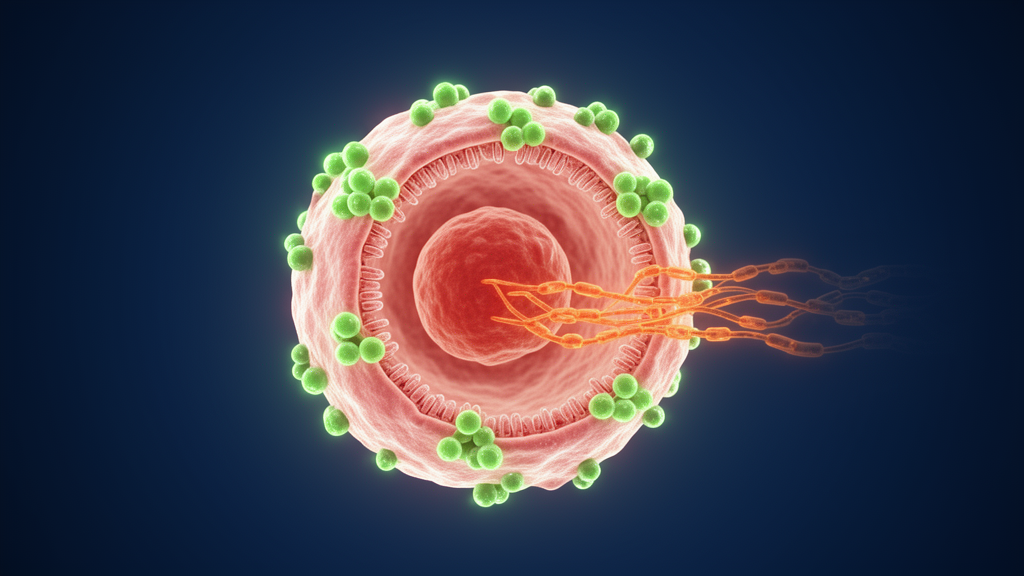
Image Credits: AI Generated

DOI: 10.1186/s12935-026-04491-0

Keywords: STAM, clear cell renal cell carcinoma, kidney cancer, EGFR, AKT, autophagy, MAPK/ERK, PI3K/AKT signaling, tumor suppressor, xenograft model, Cancer Cell International, dual

Cite Scienmag News

Nathaniel Bowman. (October 27, 2026). STAM protein suppresses kidney cancer through a dual EGFR and AKT mechanism. Scienmag. https://scienmag.com/stam-protein-suppresses-kidney-cancer-through-a-dual-egfr-and-akt-mechanism/


Nathaniel Bowman. "STAM protein suppresses kidney cancer through a dual EGFR and AKT mechanism." Scienmag, 27 October 2026, https://scienmag.com/stam-protein-suppresses-kidney-cancer-through-a-dual-egfr-and-akt-mechanism/. Accessed 27 October 2026.

Nathaniel Bowman. "STAM protein suppresses kidney cancer through a dual EGFR and AKT mechanism." Scienmag. October 27, 2026. https://scienmag.com/stam-protein-suppresses-kidney-cancer-through-a-dual-egfr-and-akt-mechanism/

Tags: AKTautophagyCancer Cell Internationalclear cell renal cell carcinomaclear cell renal cell carcinoma treatmentdualdual EGFR and AKT pathway inhibitionEGFREGFR endocytosis and autophagy in cancerkidney cancerKidney cancer suppression mechanismslaboratory models of kidney cancerMAPK/ERKmolecular signaling pathways in kidney cancerPI3K-AKT signalingregulatory circuits controlling tumor suppressor expressionsTAMSTAM protein in renal cell carcinomaSTAM role in cell proliferation and invasiontargeted therapy for renal cell carcinomatumor suppressortumor suppressor proteins in kidney cancerxenograft modelxenograft mouse models in cancer research
Share26Tweet16
Previous Post

Visceral Fat Linked to Higher Thyroid Nodule Risk in 21,000-Person Screening Study

Next Post

Handheld X-ray scanner matches lab tests on contaminated soils 94% of the time

Related Posts

TIGIT receptor drives NKT-like cell exhaustion in high-HBV liver cancer patients
Cancer

TIGIT receptor drives NKT-like cell exhaustion in high-HBV liver cancer patients

October 27, 2026
Rising Cancer Stemness Drives Prostate Cancer Progression and Treatment Resistance
Cancer

Rising Cancer Stemness Drives Prostate Cancer Progression and Treatment Resistance

October 27, 2026
Ultrasound patterns may help tell IgG4-positive Hashimoto’s thyroiditis apart from thyroid lymphoma
Cancer

Ultrasound patterns may help tell IgG4-positive Hashimoto’s thyroiditis apart from thyroid lymphoma

October 27, 2026
Diabetes Drugs Linked to Sharply Lower Lymphedema Risk After Breast Cancer Surgery
Cancer

Diabetes Drugs Linked to Sharply Lower Lymphedema Risk After Breast Cancer Surgery

October 27, 2026
PD-L1 Levels Fail to Predict ALK Inhibitor Benefit in Lung Cancer Cohort
Cancer

PD-L1 Levels Fail to Predict ALK Inhibitor Benefit in Lung Cancer Cohort

October 27, 2026
Before Treatment Begins, Lung and Head and Neck Cancer Patients Know Little About Exercise
Cancer

Before Treatment Begins, Lung and Head and Neck Cancer Patients Know Little About Exercise

October 27, 2026
Next Post
Handheld X-ray scanner matches lab tests on contaminated soils 94% of the time

Handheld X-ray scanner matches lab tests on contaminated soils 94% of the time

  • Mothers who receive childcare support from maternal grandparents show more optimized

    Mothers who receive childcare support from maternal grandparents show more parental warmth, finds NTU Singapore study

    27656 shares
    Share 11059 Tweet 6912
  • University of Seville Breaks 120-Year-Old Mystery, Revises a Key Einstein Concept

    1061 shares
    Share 424 Tweet 265
  • Bee body mass, pathogens and local climate influence heat tolerance

    682 shares
    Share 273 Tweet 171
  • Researchers record first-ever images and data of a shark experiencing a boat strike

    546 shares
    Share 218 Tweet 137
  • Groundbreaking Clinical Trial Reveals Lubiprostone Enhances Kidney Function

    531 shares
    Share 212 Tweet 133
Science

Embark on a thrilling journey of discovery with Scienmag.com—your ultimate source for cutting-edge breakthroughs. Immerse yourself in a world where curiosity knows no limits and tomorrow’s possibilities become today’s reality!

RECENT NEWS

  • Beyond Earth: Why Deep-Space Medicine Must Be Rebuilt From First Principles
  • Dual-Stream AI Network Predicts Battery Heat and Health to Warn of Thermal Risks Early
  • Baby Boys Face Higher Odds of Acidemia and Neurological Complications at Birth, Swedish Cohort Finds
  • Rare RUNX1 Gene Amplification Marks a Aggressive, Treatment-Resistant Case of Leukemia in a Young Man

Categories

  • Agriculture
  • Anthropology
  • Archaeology
  • Athmospheric
  • Biology
  • Biotechnology
  • Blog
  • Bussines
  • Cancer
  • Chemistry
  • Climate
  • Earth Science
  • Editorial Policy
  • Marine
  • Mathematics
  • Medicine
  • Pediatry
  • Policy
  • Psychology & Psychiatry
  • Science Education
  • Science News
  • Social Science
  • Space
  • Technology and Engineering

Subscribe to Blog via Email

Enter your email address to subscribe to this blog and receive notifications of new posts by email.

Join 5,151 other subscribers

© 2025 Scienmag - Science Magazine

Welcome Back!

Login to your account below

Forgotten Password?

Retrieve your password

Please enter your username or email address to reset your password.

Log In
No Result
View All Result
  • HOME
  • SCIENCE NEWS
  • CONTACT US

© 2025 Scienmag - Science Magazine

Discover more from Science

Subscribe now to keep reading and get access to the full archive.

Continue reading