


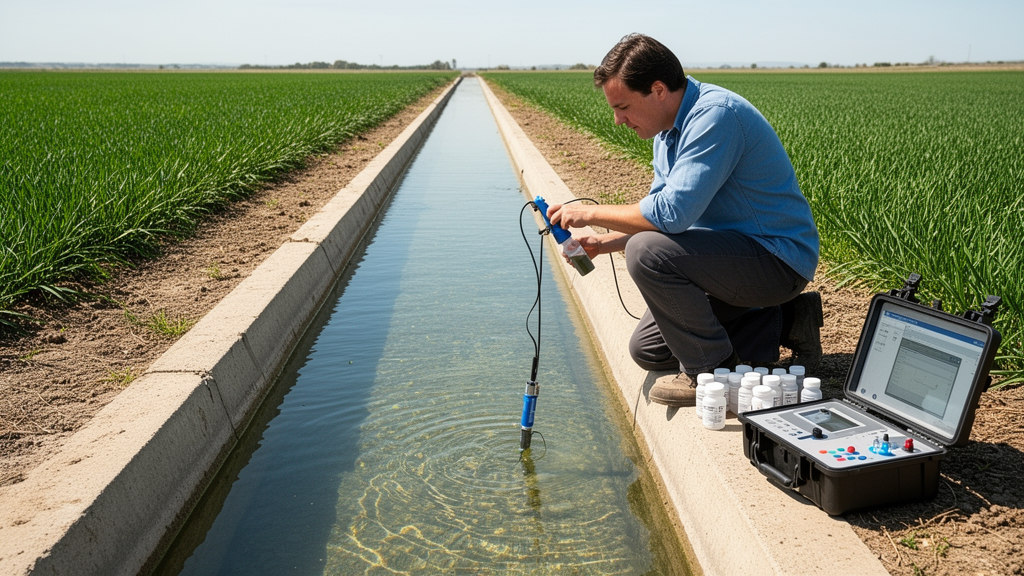
A baseline field assessment of irrigation water in Ethiopia’s Meli gold mining area found that samples were neutral to slightly alkaline and generally low to moderately saline, but every sample exceeded the study’s permissible limits for the selected heavy metals. Researchers in Tigray analyzed water samples using physicochemical measurements, major-ion chemistry and four contaminants—copper, zinc, lead and arsenic—then evaluated irrigation suitability with conventional hydrochemical indices alongside pollution measures. The results, reported in Discover Sustainability, show that broad water-quality classifications can look reassuring even when mining-related metal contamination is substantial.
The study sampled water in an area where intensified gold mining has raised concern about irrigation quality. Investigators measured pH, electrical conductivity, total dissolved solids and major ions, while separately determining concentrations of copper, zinc, lead and arsenic using standard analytical procedures. The reported pH range was 6.9–8.4. Electrical conductivity ranged from 0.6 to 1.89 dS/m, and total dissolved solids ranged from 392.6 to 1227.2 mg/L, indicating that the sampled waters were classified as low to moderately saline.
Conventional irrigation indicators gave a favorable overall picture. The researchers applied the sodium adsorption ratio, sodium percentage, residual sodium carbonate, permeability index, magnesium ratio, Kelly index, potential salinity and irrigation water quality index. These hydrochemical measures classified the samples as excellent to good for irrigation, with irrigation water quality index values between 76.8 and 81.7. This part of the assessment suggests that the sampled water’s general salinity and ion balance would not, by themselves, indicate major constraints on agricultural use.
The heavy-metal results told a different story. Pollution index values ranged from 229.5 to 846.5, while the metal index ranged from 5.5 to 16.3, and all samples exceeded permissible limits for the metals examined. The contrast means that an irrigation water assessment based only on pH, salinity, dissolved solids and common ion indices may miss a significant contamination issue. The study therefore supports an integrated approach in which conventional hydrochemical suitability is evaluated alongside metal-specific pollution indicators, particularly in landscapes affected by mining.
The authors describe the work as the first integrated baseline assessment of irrigation water quality in the Meli gold mining area. It establishes a reference point for future monitoring and pollution mitigation, but it is a baseline rather than a longitudinal study, so the evidence does not by itself establish whether metal concentrations are rising or falling. The findings also come from the sampled sites and selected contaminants; they do not demonstrate crop yield losses, effects on human health or benefits from any particular agricultural practice. What they demonstrate clearly is that apparently acceptable salinity and hydrochemical indices coexisted with heavy-metal concentrations above permissible limits in every analyzed sample.
Subject of Research: Baseline assessment of irrigation-water chemistry and selected heavy-metal pollution in Ethiopia’s Meli gold mining area.
Article Title: Baseline assessment of water quality suitability for irrigation using hydrochemical and heavy metal pollution indices in the Meli gold mining area, Tigray, Ethiopia
Article References: Weleabzgi, B., Abadi, H. T., Girmay, W., & Mhretu, A. (2026). Baseline assessment of water quality suitability for irrigation using hydrochemical and heavy metal pollution indices in the Meli gold mining area, Tigray, Ethiopia. Discover Sustainability. https://doi.org/10.1007/s43621-026-04689-2
Image Credits: AI Generated
DOI: 10.1007/s43621-026-04689-2
Keywords: irrigation water quality, heavy-metal pollution, gold mining, hydrochemical indices, Tigray Ethiopia, arsenic contamination, mining pollution, environmental monitoring, Baseline, assessment, water, quality
Cite Scienmag News
Violet Maxwell. (October 22, 2026). Baseline assessment finds low salinity but heavy-metal pollution in Meli irrigation water. Scienmag. https://scienmag.com/baseline-assessment-finds-low-salinity-but-heavy-metal-pollution-in-meli-irrigation-water/
Violet Maxwell. "Baseline assessment finds low salinity but heavy-metal pollution in Meli irrigation water." Scienmag, 22 October 2026, https://scienmag.com/baseline-assessment-finds-low-salinity-but-heavy-metal-pollution-in-meli-irrigation-water/. Accessed 22 October 2026.
Violet Maxwell. "Baseline assessment finds low salinity but heavy-metal pollution in Meli irrigation water." Scienmag. October 22, 2026. https://scienmag.com/baseline-assessment-finds-low-salinity-but-heavy-metal-pollution-in-meli-irrigation-water/


