


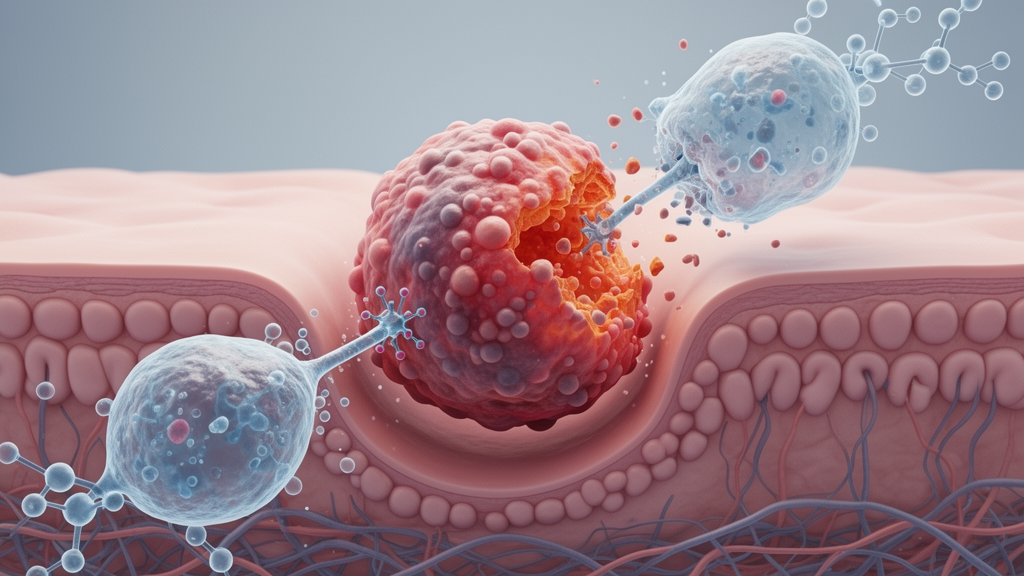
A review of oropharyngeal squamous cell carcinoma concludes that programmed cell death can either promote immune evasion or support antitumour immunity, depending on the pathway involved and the tumour context. The analysis examines apoptosis, ferroptosis, pyroptosis and autophagy, while also identifying necroptosis and cuproptosis as emerging areas of interest. It emphasizes that the immune consequences of tumour-cell death are not predetermined by the mode of death alone.
Immunologically silent cell death can dampen antitumour processes by reducing tumour immunogenicity, impairing antigen processing and presentation, and limiting T-cell recognition. In contrast, immunogenic cell death can release damage-associated molecular patterns, improve antigen presentation and activate adaptive immune responses. These contrasting effects help explain how programmed cell death may contribute both to immune escape and to immune control of oropharyngeal cancer.
The review also examines differences between human papillomavirus-positive and HPV-negative oropharyngeal squamous cell carcinoma. These subgroups can differ in tumour-cell-intrinsic characteristics, remodelling of the tumour immune microenvironment, immune-checkpoint activation and treatment resistance. The authors discuss the translational relevance of these distinctions for precision immunotherapy, as well as for subgroup-based combination approaches intended to improve radiosensitization or chemosensitization. These are proposed directions for further research rather than demonstrated clinical benefits.
Evidence specific to oropharyngeal cancer is limited for several of the emerging cell-death pathways, so the review also draws mechanistic context from studies of head and neck squamous cell carcinoma more broadly. The work is a narrative review rather than a new clinical trial or experimental study, and it does not establish that targeting any single programmed-cell-death pathway improves patient outcomes. Its contribution is a framework for understanding how cell death, antigen visibility, immunostimulatory signals and immune-cell activity interact in oropharyngeal cancer, while identifying the need for more OPC-specific evidence.
Subject of Research: Programmed cell death and antitumour immunity in oropharyngeal squamous cell carcinoma
Article Title: Mechanisms by which programmed cell death mediates immune evasion and antitumour immunity in oropharyngeal cancer
Article References: Yang, S., & Zhou, P. (2026). Mechanisms by which programmed cell death mediates immune evasion and antitumour immunity in oropharyngeal cancer. Frontiers in Cell and Developmental Biology, 14, Article 1966827. https://doi.org/10.3389/fcell.2026.1966827
Image Credits: AI Generated
DOI: 10.3389/fcell.2026.1966827
Keywords: oropharyngeal cancer, programmed cell death, antitumour immunity, immune evasion, immunogenic cell death, HPV-positive cancer, tumour microenvironment, immunotherapy, apoptosis, ferroptosis, Mechanisms, programmed
Cite Scienmag News
Nathaniel Bowman. (October 20, 2026). Mechanisms by which programmed cell death mediates immune evasion and antitumour immunity in oropharyngeal cancer. Scienmag. https://scienmag.com/mechanisms-by-which-programmed-cell-death-mediates-immune-evasion-and-antitumour-immunity-in-oropharyngeal-cancer/
Nathaniel Bowman. "Mechanisms by which programmed cell death mediates immune evasion and antitumour immunity in oropharyngeal cancer." Scienmag, 20 October 2026, https://scienmag.com/mechanisms-by-which-programmed-cell-death-mediates-immune-evasion-and-antitumour-immunity-in-oropharyngeal-cancer/. Accessed 20 October 2026.
Nathaniel Bowman. "Mechanisms by which programmed cell death mediates immune evasion and antitumour immunity in oropharyngeal cancer." Scienmag. October 20, 2026. https://scienmag.com/mechanisms-by-which-programmed-cell-death-mediates-immune-evasion-and-antitumour-immunity-in-oropharyngeal-cancer/


