

Tuesday, October 20, 2026
Science
No Result
View All Result
  • Login
  • HOME
  • SCIENCE NEWS
  • CONTACT US
  • HOME
  • SCIENCE NEWS
  • CONTACT US
No Result
View All Result
Scienmag
No Result
View All Result
Home Science News Social Science

Model maps India’s earthquake energy hazard for structural design

October 20, 2026
in Social Science
Violet Maxwell
By Violet Maxwell Scienmag Editorial Profile - Natural Hazards
Reading Time: 2 mins read
0
Model maps India’s earthquake energy hazard for structural design

Model maps India’s earthquake energy hazard for structural design

65
SHARES
587
VIEWS
Share on FacebookShare on Twitter
ADVERTISEMENT

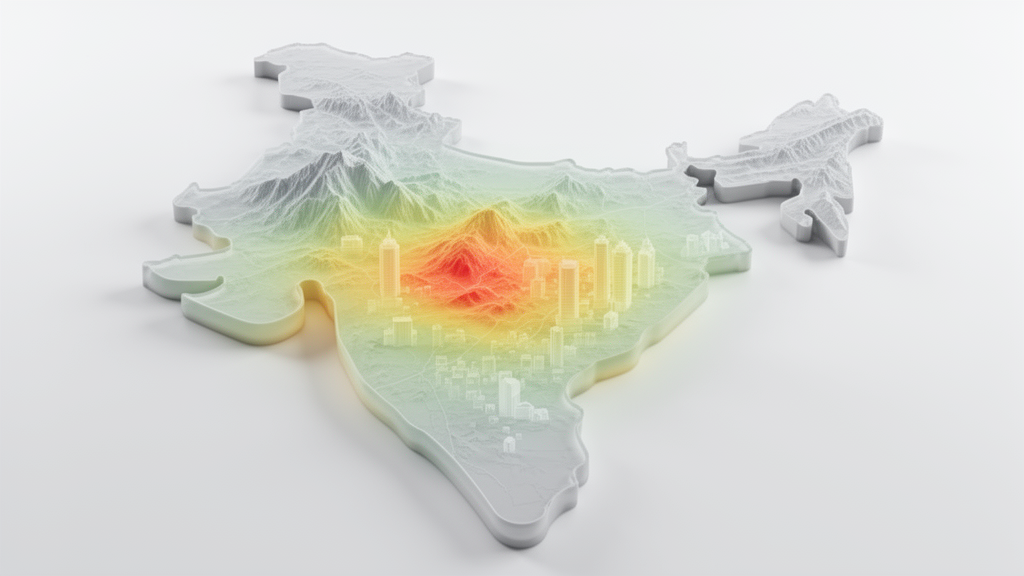
A probabilistic assessment of seismic energy demand across the Indian subcontinent identifies relatively high modeled hazard along the Himalayan arc, the Indo-Burma ranges and the Andaman–Nicobar Islands, while the Peninsular Shield shows comparatively lower hazard. The study, published in Natural Hazards , also divides India into five seismic-energy zones and develops design-specific energy spectra for different site classes. Earthquake-resistant design commonly uses force-based methods, but the authors argue that these approaches do not fully capture the cumulative effects of ground motion on structures.

Their alternative incorporates input-energy demand into the seismic design procedure. Using an updated earthquake catalogue, the researchers conducted a Probabilistic Earthquake Hazard Assessment for the Indian subcontinent and represented epistemic uncertainty with a logic-tree framework. Three region-specific energy-based ground-motion models represented the Himalayan active crustal region, the Indo-Burma subduction zone and the stable continental region of Peninsular India.

The assessment generated energy-based hazard curves for major Indian cities. To represent local geological variation, the researchers derived site-amplification factors for metamorphic, alluvium and sediment formations using the Horizontal-to-Vertical Spectral Ratio, or HVSR, method. Energy-based uniform hazard maps were then prepared at several natural periods for a return period of 2,475 years.

These maps delineate the high-hazard regions along the Himalayan arc, through the Indo-Burma ranges and around the Andaman–Nicobar Islands, with relatively lower hazard mapped across the Peninsular Shield. The final proposed zone map classifies the Indian landmass into five distinct seismic-energy zones and provides corresponding design specific energy spectra for each site class. The paper presents a national-scale modeling framework rather than a direct assessment of earthquake losses, structural performance or the number of buildings exposed to damaging shaking.

The supplied study abstract does not report numerical energy-demand values for individual cities, field validation against earthquake damage, or evidence that the proposed spectra will improve structural outcomes. Its maps and design spectra are model-based products whose interpretation depends on the earthquake catalogue, assumptions within the regional energy-based ground-motion models, the logic-tree treatment of uncertainty and the site-amplification factors derived for the three formation types. Within those limits, the study links regional ground-motion modeling, probabilistic hazard assessment, local site characterization and energy-based design into a single set of maps and spectra for India.

It is intended to provide a basis for evaluating structural seismic design against input-energy demand across the country’s varied seismotectonic and geological settings. The principal reported result is therefore a modeled hazard pattern: higher energy-hazard regions along the Himalayan arc, the Indo-Burma ranges and the Andaman–Nicobar Islands, and relatively lower values in the Peninsular Shield, organized into five proposed seismic-energy zones.

Subject of Research: Probabilistic mapping of earthquake input-energy demand for structural design across India

Article Title: Specific energy earthquake hazard of India for energy-based design of structures

Article References: Pathak, A. K., Gurjar, N., Raghukanth, S. T. G., & Murty, C. V. R. (2026). Specific energy earthquake hazard of India for energy-based design of structures. Natural Hazards, 122(22), Article 685. https://doi.org/10.1007/s11069-026-08476-0

Image Credits: AI Generated

DOI: 10.1007/s11069-026-08476-0

Keywords: earthquake energy hazard, input energy, seismic design, probabilistic hazard assessment, Himalayan arc, Indo-Burma ranges, Andaman–Nicobar Islands, Peninsular India, ground-motion models, site amplification, Specific, energy

Cite Scienmag News

Violet Maxwell. (October 20, 2026). Model maps India’s earthquake energy hazard for structural design. Scienmag. https://scienmag.com/model-maps-indias-earthquake-energy-hazard-for-structural-design/

Violet Maxwell. "Model maps India’s earthquake energy hazard for structural design." Scienmag, 20 October 2026, https://scienmag.com/model-maps-indias-earthquake-energy-hazard-for-structural-design/. Accessed 20 October 2026.

Violet Maxwell. "Model maps India’s earthquake energy hazard for structural design." Scienmag. October 20, 2026. https://scienmag.com/model-maps-indias-earthquake-energy-hazard-for-structural-design/


Tags: Andaman–Nicobar Islandsearthquake energy demand analysisearthquake energy hazardearthquake magnitude and return period mappingearthquake risk assessment for Himalayan and Indo-Burma regionsearthquake-resistant structural designenergyenergy-based seismic hazard maps Indiaground motion energy-based hazard curvesground motion modelsHimalayan arcHVSR method for seismic site characterizationIndo-Burma rangesinput energyPeninsular Indiaprobabilistic earthquake modelingprobabilistic hazard assessmentregional seismic hazard zones Indiaseismic designseismic energy spectra for Indian sitesSeismic hazard assessment Indiasite amplificationsite amplification factors for Indian geologyspecific
Share26Tweet16
Previous Post

Research report: Genome-wide association study identifies PPP2R2B as a modifier of positive symptom improvement in schizophrenia patients treated with aripiprazole

Next Post

Machine learning reconstructs gaps in global rainfall maps

Related Posts

Social transition evolves as trans young people refine their goals
Social Science

Social transition evolves as trans young people refine their goals

October 20, 2026
Observational study links Chinese police tactics to shorter weaponless encounters
Social Science

Observational study links Chinese police tactics to shorter weaponless encounters

October 20, 2026
Lebanon survey links emotional intelligence to engagement through satisfaction and balance
Social Science

Lebanon survey links emotional intelligence to engagement through satisfaction and balance

October 20, 2026
Explaining socioeconomic inequalities in cervical and breast cancer screening among women in Ghana using decomposition analysis
Social Science

Explaining socioeconomic inequalities in cervical and breast cancer screening among women in Ghana using decomposition analysis

October 20, 2026
Identity, individuality and naming
Social Science

Identity, individuality and naming

October 20, 2026
Guangzhou Study Maps Coupled Carbon and Water Footprints Across Six Districts
Social Science

Guangzhou Study Maps Coupled Carbon and Water Footprints Across Six Districts

October 20, 2026
Next Post
Georgia Builds a Dynamic Checklist of Its Vascular Plants

Georgia Builds a Dynamic Checklist of Its Vascular Plants

  • Mothers who receive childcare support from maternal grandparents show more optimized

    Mothers who receive childcare support from maternal grandparents show more parental warmth, finds NTU Singapore study

    27656 shares
    Share 11059 Tweet 6912
  • University of Seville Breaks 120-Year-Old Mystery, Revises a Key Einstein Concept

    1061 shares
    Share 424 Tweet 265
  • Bee body mass, pathogens and local climate influence heat tolerance

    682 shares
    Share 273 Tweet 171
  • Researchers record first-ever images and data of a shark experiencing a boat strike

    546 shares
    Share 218 Tweet 137
  • Groundbreaking Clinical Trial Reveals Lubiprostone Enhances Kidney Function

    531 shares
    Share 212 Tweet 133
Science

Embark on a thrilling journey of discovery with Scienmag.com—your ultimate source for cutting-edge breakthroughs. Immerse yourself in a world where curiosity knows no limits and tomorrow’s possibilities become today’s reality!

RECENT NEWS

  • Georgia Builds a Dynamic Checklist of Its Vascular Plants
  • Machine learning reconstructs gaps in global rainfall maps
  • Model maps India’s earthquake energy hazard for structural design
  • Research report: Genome-wide association study identifies PPP2R2B as a modifier of positive symptom improvement in schizophrenia patients treated with aripiprazole

Categories

  • Agriculture
  • Anthropology
  • Archaeology
  • Athmospheric
  • Biology
  • Biotechnology
  • Blog
  • Bussines
  • Cancer
  • Chemistry
  • Climate
  • Earth Science
  • Editorial Policy
  • Marine
  • Mathematics
  • Medicine
  • Pediatry
  • Policy
  • Psychology & Psychiatry
  • Science Education
  • Science News
  • Social Science
  • Space
  • Technology and Engineering

Subscribe to Blog via Email

Enter your email address to subscribe to this blog and receive notifications of new posts by email.

Join 5,150 other subscribers

© 2025 Scienmag - Science Magazine

Welcome Back!

Login to your account below

Forgotten Password?

Retrieve your password

Please enter your username or email address to reset your password.

Log In
No Result
View All Result
  • HOME
  • SCIENCE NEWS
  • CONTACT US

© 2025 Scienmag - Science Magazine

Discover more from Science

Subscribe now to keep reading and get access to the full archive.

Continue reading