


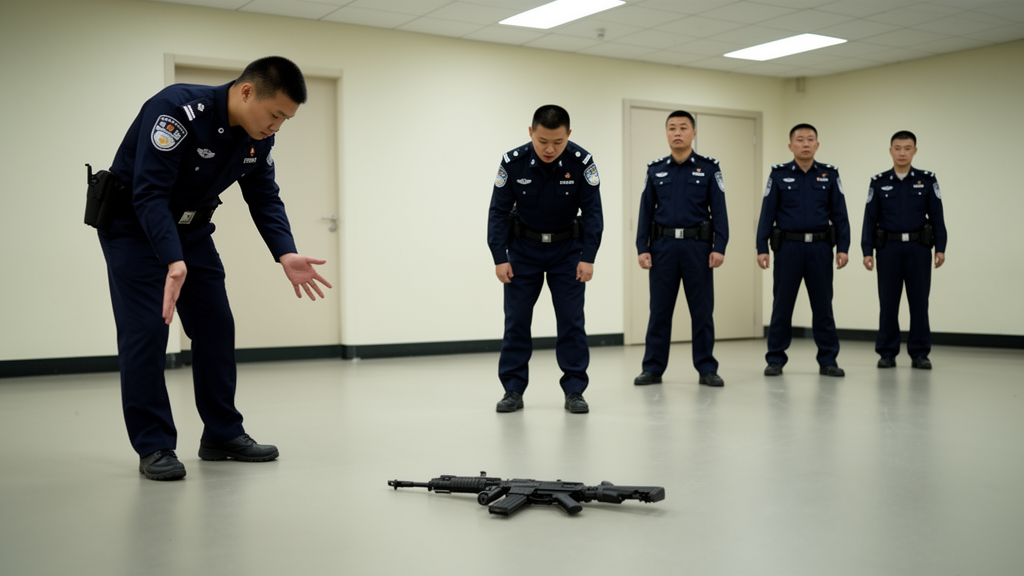
An observational study of 102 weaponless physical encounters involving police and suspects in China found that suspect resistance and officers’ tactics were associated with how quickly the confrontations were resolved. Police takedowns and tactical surprise tactics were linked to shorter encounters, while prolonged encounters were associated with suspect shoving, ground scuffling and hiding their arms. Ground-control tactics were also associated with markedly lower failure risks.
Researchers Pan Wang and Yidan Li investigated the dynamics of these encounters by combining combat sports analytics with systematic social observation of video data. Their cases came from a nationally curated Chinese database and covered use-of-force incidents in 2023. The study used a coding framework to examine the changing interaction among position, resistance and action rather than treating each confrontation solely as an event with a final outcome.
The coding distinguished suspects’ positions as standing or on the ground and classified their actions as defensive or aggressive. Officer tactics were evaluated alongside those features, allowing the researchers to compare patterns in encounter duration and failure risk. The analysis identified takedowns, tactical surprise and ground control as factors associated with more rapid resolutions, whereas longer confrontations occurred in cases featuring shoving, ground scuffling or concealed arms. Male suspects were also associated with faster resolutions.
Because the research was based on coded observational cases rather than a controlled comparison of tactics, the reported relationships should not automatically be read as proof that any particular maneuver caused an encounter to end more quickly. Nevertheless, the results provide a quantitative account of how resistance and tactical decisions can coincide with different outcomes. The findings are presented in Humanities and Social Sciences Communications as evidence for refining the analysis and training of weaponless physical encounters, while the study’s scope remains centered on 102 recorded cases from China in a single year.
Subject of Research: Police tactics and suspect resistance in Chinese weaponless physical encounters
Article Title: Time, position, and action: how suspect resistance and officer tactics shape weaponless physical encounter outcomes in China
Article References: Wang, P., & Li, Y. (2026). Time, position, and action: how suspect resistance and officer tactics shape weaponless physical encounter outcomes in China. Humanities and Social Sciences Communications. https://doi.org/10.1057/s41599-026-09429-5
Image Credits: AI Generated
DOI: 10.1057/s41599-026-09429-5
Keywords: police tactics, use of force, suspect resistance, encounter duration, ground control, takedowns, behavior coding, China, observational research, Time, position, action
Cite Scienmag News
Courtney Benton. (October 20, 2026). Observational study links Chinese police tactics to shorter weaponless encounters. Scienmag. https://scienmag.com/observational-study-links-chinese-police-tactics-to-shorter-weaponless-encounters/
Courtney Benton. "Observational study links Chinese police tactics to shorter weaponless encounters." Scienmag, 20 October 2026, https://scienmag.com/observational-study-links-chinese-police-tactics-to-shorter-weaponless-encounters/. Accessed 20 October 2026.
Courtney Benton. "Observational study links Chinese police tactics to shorter weaponless encounters." Scienmag. October 20, 2026. https://scienmag.com/observational-study-links-chinese-police-tactics-to-shorter-weaponless-encounters/


