


Hepatocellular carcinoma remains one of the most lethal forms of cancer worldwide, largely because the tumor microenvironment actively suppresses the immune system’s ability to attack malignant cells. While current first-line therapies such as Sorafenib and Lenvatinib offer some benefit, they often fail to overcome the profound immune tolerance established by the tumor. Researchers have long sought to understand the specific mechanisms that allow liver cancer to evade immune surveillance, with a particular focus on the balance between different subsets of CD4+ T lymphocytes. These immune cells are critical for coordinating the body’s defense against cancer, but their function can be hijacked by the tumor to create a protective shield around the malignancy.
Central to this immune evasion is the delicate equilibrium between regulatory T cells, known as Tregs, and pro-inflammatory Th17 cells. Tregs, characterized by the expression of the Foxp3 transcription factor, act as the brakes of the immune system, inhibiting the activation and proliferation of other T cells to maintain homeostasis. Conversely, Th17 cells, driven by the RORγt transcription factor, secrete cytokines that promote inflammation and are generally associated with anti-tumor immunity. In healthy individuals, these two cell types exist in a dynamic balance, but in patients with hepatocellular carcinoma, this balance is severely distorted, with Tregs becoming dominant and Th17 cells suppressed.
A recent study published in iScience by Jianwei Yi, Zhonghuo Chen, and colleagues from Nanchang University has identified a novel metabolic-epigenetic axis that drives this imbalance. The researchers discovered that lactate, a byproduct of aerobic glycolysis that accumulates in high concentrations within the tumor microenvironment, plays a pivotal role in reshaping the immune landscape. By triggering a specific form of histone modification known as lactylation, lactate effectively reprograms the gene expression of T cells, favoring the differentiation of immunosuppressive Tregs over anti-tumor Th17 cells. This finding provides a crucial link between cellular metabolism and epigenetic regulation in the context of cancer immunity.
The study utilized RNA sequencing and CUT&Tag profiling to map the genome-wide distribution of histone lactylation in peripheral blood mononuclear cells from HCC patients and healthy controls. The results revealed a global increase in histone lactylation marks in HCC patients, with the most pronounced elevation observed at the H3K18 site, referred to as H3K18la. This specific modification was significantly enriched in the regulatory regions of genes associated with immune function. By integrating transcriptomic data with epigenetic profiles, the researchers identified PTPRM, a receptor-type protein tyrosine phosphatase, as a key target of H3K18la-mediated regulation. PTPRM was found to be upregulated in HCC patients, correlating with the observed shift in T cell subsets.
To determine the functional significance of PTPRM, the team conducted a series of in vitro and in vivo experiments. They demonstrated that silencing PTPRM in primary human CD4+ T cells led to a significant reduction in Foxp3 expression and a corresponding increase in RORγt expression. This molecular shift resulted in a measurable decrease in the proportion of Tregs and an increase in Th17 cells, effectively reversing the immunosuppressive phenotype. These findings suggest that PTPRM acts as a promoter of Treg differentiation and an inhibitor of Th17 lineage commitment, thereby contributing to the immune tolerance seen in liver cancer.
The mechanism by which PTPRM exerts its influence involves the STAT3 signaling pathway. PTPRM is known to mediate the dephosphorylation of STAT3 at the Y705 residue, a process that typically suppresses STAT3 activity. However, the study revealed that in the context of HCC, the upregulation of PTPRM by lactylation leads to a complex modulation of STAT3 signaling that favors Treg stability. When PTPRM was knocked down, STAT3 phosphorylation was altered, leading to the observed changes in T cell differentiation. The use of LLL12, a small-molecule inhibitor of STAT3, further validated this pathway, as it reversed the effects of PTPRM silencing on Foxp3 and RORγt expression.
In vivo validation was performed using a syngeneic mouse model of hepatocellular carcinoma. Mice injected with Hepa1-6 cells expressing shRNA against PTPRM exhibited significantly reduced tumor growth compared to control mice. Analysis of tumor-infiltrating lymphocytes and spleens from these mice confirmed the in vitro findings, showing decreased Treg frequencies and increased Th17 frequencies following PTPRM silencing. This reduction in tumor growth suggests that restoring the Treg/Th17 balance by targeting the PTPRM-STAT3 axis could be a viable therapeutic strategy for enhancing anti-tumor immunity in liver cancer patients.
The implications of these findings extend beyond the specific mechanism of PTPRM regulation. The study highlights the broader concept of metabolic epigenetics, where metabolic intermediates like lactate serve as direct substrates for chromatin modifications that alter gene expression. This process allows the tumor to adapt its microenvironment to suppress immune responses, a phenomenon that is increasingly recognized as a major barrier to effective immunotherapy. By identifying H3K18la and PTPRM as key players in this process, the research opens new avenues for developing targeted therapies that can disrupt the tumor’s ability to manipulate the immune system.
Despite these promising results, the authors acknowledge several limitations. The study primarily relied on bioinformatics analyses and limited experimental validation, and the precise molecular mechanisms linking PTPRM activation to STAT3 phosphorylation require further investigation. Additionally, sex-specific effects were not assessed, and the findings need to be validated in larger, independent cohorts to ensure their robustness and generalizability. Nevertheless, the identification of the H3K18la-PTPRM-STAT3 axis represents a significant step forward in understanding the immunometabolic landscape of hepatocellular carcinoma.
This research underscores the importance of integrating metabolic and epigenetic perspectives in cancer biology. As the field of immunometabolism continues to grow, studies like this one provide critical insights into how tumors exploit metabolic reprogramming to evade immune detection. By targeting the specific epigenetic modifications that drive immune imbalance, future therapies may be able to enhance the efficacy of existing immunotherapies, offering new hope for patients with hepatocellular carcinoma and potentially other cancers with similar immunosuppressive microenvironments.
Subject of Research: Metabolic epigenetic regulation of Treg/Th17 balance in hepatocellular carcinoma
Article Title: H3K18 lactylation promotes Treg/Th17 imbalance via PTPRM-STAT3 axis in hepatocellular carcinoma
Article References: Yi, J., Chen, Z., Zhu, H., Liang, R., Guan, J., Qiu, Y., Zhou, B., Wu, H., Yu, X., Zou, S., Wang, K., & Hu, Z. (2026). H3K18 lactylation promotes Treg/Th17 imbalance via PTPRM-STAT3 axis in hepatocellular carcinoma. iScience, 29(11), Article 117896. https://doi.org/10.1016/j.isci.2026.117896
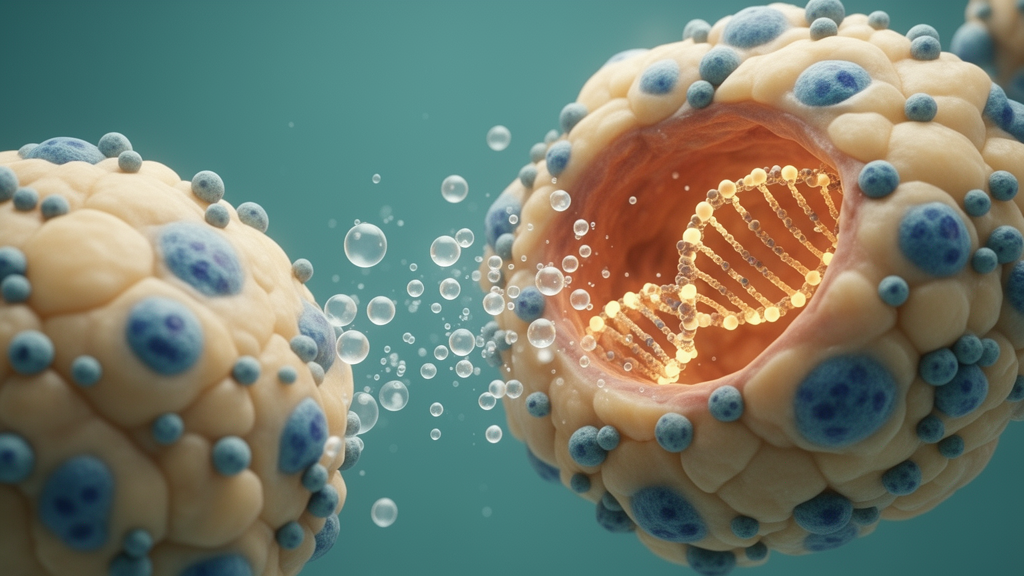
Image Credits: AI Generated
DOI: 10.1016/j.isci.2026.117896
Keywords: hepatocellular carcinoma, histone lactylation, Treg/Th17 imbalance, PTPRM, STAT3 signaling, immune evasion, lactate metabolism, epigenetics, tumor microenvironment, immunotherapy, H3K18, lactylation
Cite Scienmag News
Nathaniel Bowman. (October 18, 2026). Lactate-Driven Epigenetic Shifts Reshape Liver Cancer Immunity. Scienmag. https://scienmag.com/lactate-driven-epigenetic-shifts-reshape-liver-cancer-immunity/
Nathaniel Bowman. "Lactate-Driven Epigenetic Shifts Reshape Liver Cancer Immunity." Scienmag, 18 October 2026, https://scienmag.com/lactate-driven-epigenetic-shifts-reshape-liver-cancer-immunity/. Accessed 18 October 2026.
Nathaniel Bowman. "Lactate-Driven Epigenetic Shifts Reshape Liver Cancer Immunity." Scienmag. October 18, 2026. https://scienmag.com/lactate-driven-epigenetic-shifts-reshape-liver-cancer-immunity/


