


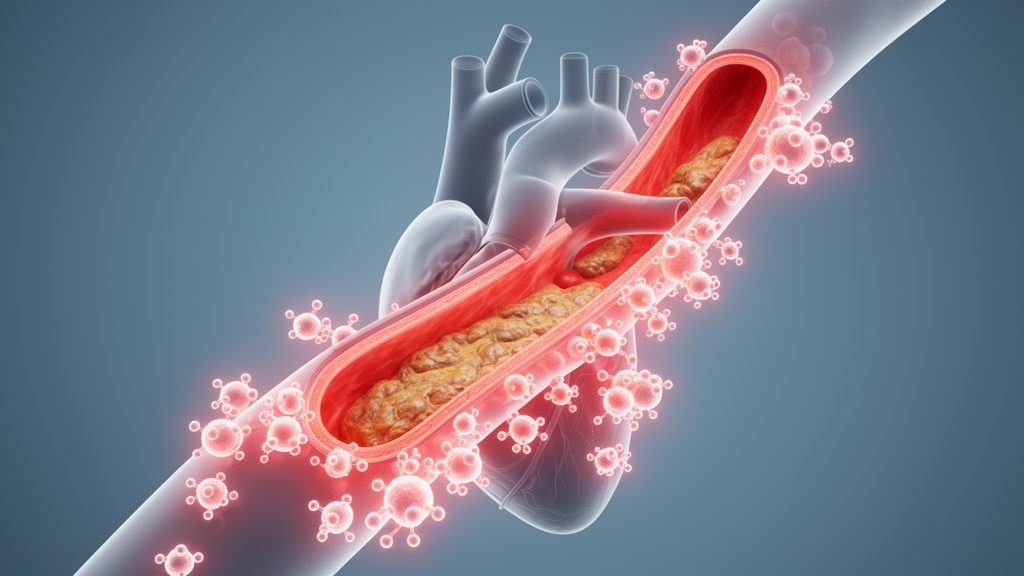
For decades, the greatest threat to people living with systemic lupus erythematosus was the disease itself: flares of uncontrolled inflammation, kidney failure, and acute organ damage that once claimed lives within years of diagnosis. Modern immunosuppressive therapies have transformed that picture, pushing early mortality steadily downward. Yet as clinicians have celebrated these gains, a quieter killer has risen through the ranks. Cardiovascular disease now stands as one of the leading causes of late illness and death in lupus patients, and a new collection of research published in Frontiers in Lupus argues that the standard tools used to predict heart attacks are dangerously blind to why.
The scale of the problem is stark. Individuals with SLE face a five- to six-fold increased risk of major adverse cardiovascular events compared with the general population. This elevated vulnerability produces a well-documented bimodal mortality pattern: deaths cluster early in the disease course from active lupus and acute damage, and then again later from premature coronary artery disease, subclinical atherosclerosis, and myocardial dysfunction that silently erode life expectancy. In practical terms, a thirty-five-year-old woman with lupus may carry the cardiac risk profile of someone decades older, not because of bad luck, but because the disease rewires the very biology of her blood vessels.
What makes this especially frustrating for cardiologists and rheumatologists alike is that conventional risk calculators, most notably the Framingham Risk Score, consistently underestimate the true burden. These algorithms weigh familiar variables such as cholesterol levels, blood pressure, smoking status, and age. In lupus, however, the traditional culprits, dyslipidemia, hypertension, obesity, and metabolic syndrome, do not operate in isolation. They intersect dynamically with a second, disease-specific layer of risk: sustained pro-inflammatory cytokine cascades, characteristic autoantibody profiles, oxidative stress, cumulative toxicity from drugs such as long-term corticosteroids, and underlying genetic and epigenetic variations. The result is a risk landscape that no general-population formula was built to read.
That gap motivated an editorial team at the University of Guadalajara and collaborating institutions, led by Ulises De la Cruz-Mosso, to assemble a Research Topic synthesizing how traditional and non-traditional drivers converge to shape cardiovascular outcomes in SLE. The collection spans clinical risk prediction, immunometabolic mechanisms, biomarker discovery, and novel pathophysiological pathways, and together the contributions sketch a roadmap for a fundamentally different approach to protecting the lupus heart.
The clinical side of that roadmap is laid out in a narrative review by Aflaki and Bargman, who assess the utility of emerging risk prediction tools tailored specifically to lupus. Their central argument is that closing the gap left by standard algorithms requires weaving disease activity indices, accumulated damage scores, and therapeutic exposures into cardiovascular models alongside traditional parameters. A patient with chronically active disease and heavy cumulative steroid exposure is not equivalent to a patient with the same cholesterol and blood pressure but quiescent lupus, and risk scoring should reflect that. The review also spotlights the cardiovascular protective properties of antimalarial drugs, a class long used to control lupus itself, and considers whether newer metabolic therapies, including sodium-glucose cotransporter 2 inhibitors and glucagon-like peptide-1 receptor agonists, could be repurposed to manage metabolic-cardiovascular risk in this population. Both drug families have revolutionized care in diabetes and obesity medicine, but their role in lupus remains an open and tantalizing question.
Beneath the clinical picture lies a remarkable story of molecular crosstalk, explored in depth by Bilodeau and Tselios. Their account traces how immune dysregulation and dyslipidemia feed each other in a vicious cycle. Chronic activation of the type I interferon axis, a signaling pathway central to lupus pathology, reshapes lipid metabolism and immune cell behavior. Meanwhile, high-density lipoproteins lose their protective function and become dysfunctional, oxidized low-density lipoproteins accumulate in vessel walls, and neutrophil extracellular traps, web-like structures that neutrophils normally deploy against pathogens, instead promote vascular inflammation. Together these processes drive endothelial dysfunction, push macrophages into foam cell transformation, and destabilize atherosclerotic plaques, accelerating atherogenesis far beyond what ordinary cholesterol levels would predict.
New clinical data from Phothisane and colleagues add an unexpected twist to the oxidative stress story. The team measured serum IgG antibodies against isolevuglandins, highly reactive products of lipid peroxidation, and found them elevated in lupus patients compared with healthy controls. Intriguingly, higher anti-IsoLG antibody levels correlated inversely with twenty-four-hour ambulatory blood pressure, hinting at a possible protective role: the antibodies may help clear reactive lipid peroxidation products before they can damage blood vessels. The authors are careful to note that the underlying mechanisms remain to be established, but the finding suggests that the immune system’s response to oxidation products could become both a biomarker and, perhaps someday, a therapeutic target in lupus-related hypertension and vascular disease.
The fourth contribution, from Li and colleagues, showcases the growing power of computational immunology. Applying advanced bioinformatics and machine learning algorithms to translational datasets, the researchers identified shared immune-related biomarkers linking SLE to dilated cardiomyopathy, a disease of the heart muscle itself rather than the coronary arteries. Two genes emerged as central: HERC6, an E3 ubiquitin-protein ligase, and IFI44L, an interferon-induced protein, both strongly implicated in interferon signaling. From these molecular signatures the team constructed a diagnostic nomogram with high predictive accuracy, offering candidate biomarkers for further investigation of the molecular bridge between lupus and cardiac disease. The work exemplifies how machine learning can sift vast transcriptomic landscapes for the handful of signals that genuinely connect two seemingly distinct disorders.
The unifying message across all four studies is that interferon signaling, the same pathway that defines lupus immunology, appears repeatedly in cardiovascular pathology, from dysfunctional HDL and neutrophil traps to hub genes shared with cardiomyopathy. That convergence strengthens the case for treating the heart as an organ under direct immunological assault, not merely a bystander damaged by conventional risk factors. It also implies that tightly controlling disease activity itself, rather than only managing lipids and blood pressure, may be one of the most powerful cardiovascular interventions available to lupus patients.
For patients and clinicians, the practical translation is a call for personalized, multi-targeted care. Optimal cardiovascular protection in SLE, the editorial concludes, demands the integration of tight disease activity control, advanced biomarker assessment, anti-inflammatory strategies, and early lifestyle and pharmacological interventions, tailored to each individual’s disease signature. The era of applying a one-size-fits-all cardiac prevention checklist to lupus patients is drawing to a close. In its place, researchers hope, will come risk models that see the whole patient, biomarkers that catch damage before symptoms appear, and therapies that calm the immune storm responsible for both the lupus and the heart disease it leaves behind.
Subject of Research: Cardiovascular risk factors and mechanisms in systemic lupus erythematosus
Article Title: Editorial: Unraveling the complex interplay of risk factors in SLE-associated cardiovascular disease
Article References: Editorial: Unraveling the complex interplay of risk factors in SLE-associated cardiovascular disease. (n.d.). https://doi.org/10.3389/flupu.2026.1991587
Image Credits: AI Generated
DOI: 10.3389/flupu.2026.1991587
Keywords: systemic lupus erythematosus, cardiovascular disease, atherosclerosis, interferon signaling, oxidative stress, biomarkers, risk prediction, dyslipidemia, autoantibodies, endothelial dysfunction, immunometabolism, machine learning
Cite Scienmag News
Frances Kline. (October 15, 2026). Lupus quietly doubles down on heart disease, and standard risk scores miss it. Scienmag. https://scienmag.com/lupus-quietly-doubles-down-on-heart-disease-and-standard-risk-scores-miss-it/
Frances Kline. "Lupus quietly doubles down on heart disease, and standard risk scores miss it." Scienmag, 15 October 2026, https://scienmag.com/lupus-quietly-doubles-down-on-heart-disease-and-standard-risk-scores-miss-it/. Accessed 15 October 2026.
Frances Kline. "Lupus quietly doubles down on heart disease, and standard risk scores miss it." Scienmag. October 15, 2026. https://scienmag.com/lupus-quietly-doubles-down-on-heart-disease-and-standard-risk-scores-miss-it/


