


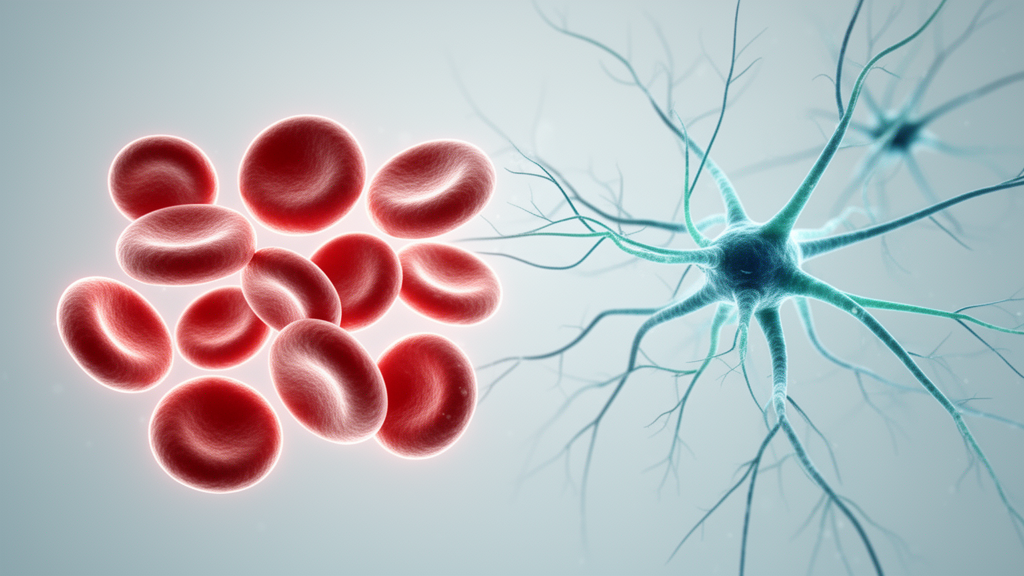
In a laboratory at the University of Bonn, blood cells donated by an 80-year-old donor have been coaxed into becoming neural stem cells whose molecular signatures resemble those of a person barely out of their teens. Researchers from the University Hospital of Bonn and the University of Bonn report that they directly reprogrammed red blood cell precursors into induced neural stem cells, and that in the course of this transformation the epigenetic clocks that record a cell’s age were reset to a molecular age of less than 20 years. The study, published in the journal Aging Cell, offers scientists an unusually slow and therefore unusually observable version of a process that has long fascinated biologists: the reversal of cellular aging.
The human body contains hundreds of distinct cell types, and every one of them descends from the same fertilized egg, carrying the same genome. What distinguishes a skin cell from a liver cell, or a blood cell from a nerve cell, is not genetic information but the selective reading of that information. During development, cells become committed to specific fates, and under normal circumstances that commitment is irreversible. A blood cell cannot naturally become a nerve cell, and a skin cell cannot become a liver cell. This stability of identity is one of the defining features of multicellular life, and for most of the history of biology it was considered fixed.
That assumption changed with the advent of cellular reprogramming. By introducing a cocktail of transcription factors, researchers can force a mature cell to read a different set of genetic instructions and embark on a different developmental path. Nerve tissue can now be grown from skin cells, an achievement with obvious implications for treating neurodegenerative diseases, where specific populations of neurons are lost and replacement tissue is scarce. The Bonn group, led by Prof. Dr. Oliver Brüstle, director of the Institute of Reconstructive Neurobiology at the University Hospital of Bonn, has been working at this frontier for years. In earlier studies, his team showed that nerve cells produced through such reprogramming can form connections with existing neurons after transplantation into mouse brains, a critical proof of functional integration.
In the new study, the team applied a direct conversion strategy. Using transcription factor cocktails, they transformed red blood cell precursors straight into induced neural stem cells, bypassing the intermediate stage that most reprogramming protocols require. The resulting cells are restricted to the neural lineage, meaning that only brain cells can emerge from them, but they retain the proliferative capacity and developmental potential characteristic of stem cells. According to Brüstle, this direct route was the key to the study’s most striking finding, because it changed not only what the cells became but how quickly they shed the molecular marks of their age.
To measure rejuvenation, the researchers relied on molecular clocks, tools that track chemical modifications to DNA that accumulate in predictable patterns over a lifetime. These modifications, known collectively as epigenetic marks, do not alter the genetic information itself; instead, they influence how frequently particular genes are read. Because the patterns of these marks change in an orderly way as organisms age, they can be used to estimate the biological age of a cell with remarkable precision. When the Bonn team applied these clocks to their reprogrammed cells, the results were dramatic: cells derived from an 80-year-old donor emerged from the process with a molecular age of less than 20 years, a reduction of roughly six decades.
Crucially, the researchers report that this epigenetic reset is not merely cosmetic. As Brüstle notes, the rejuvenated cells actually behave like young cells, adopting the functional characteristics expected of youthful neural stem cells rather than simply displaying young-looking chemical signatures. This distinction matters, because the central question in the field of cellular rejuvenation is whether the erasure of age-related epigenetic marks corresponds to a genuine restoration of youthful function, or whether it is a superficial byproduct of reprogramming. The Bonn results support the former interpretation, at least for this conversion pathway.
What makes the study genuinely novel, however, is not the fact of rejuvenation but its tempo. Rejuvenation during reprogramming had been observed before, but only in two-step protocols, in which a blood cell is first converted into a pluripotent stem cell, a state in which virtually every career path in the body remains open, and that pluripotent cell is then directed to become a neural stem cell. In that conventional approach, rejuvenation happens very rapidly, compressed into the early phase of the conversion, and is therefore difficult to dissect experimentally. The direct conversion used in Bonn unfolded very differently. Because the blood cells were transformed into neural stem cells without passing through the pluripotent stage, the epigenetic clocks were reset gradually, and the researchers were able to track the process for more than 100 days.
This protracted timeline is what transforms the system from a curiosity into a tool. Rejuvenation that extends over weeks rather than days provides an experimental window through which the underlying mechanisms can be observed in real time. As the researchers point out, because the epigenetic clocks are slowly reset over an extended period, the model can be used to test which factors and active substances accelerate or slow down the rejuvenation process. In effect, the slow conversion turns cellular de-aging into something that can be measured, perturbed, and modulated in the laboratory, opening the door to systematic screens for compounds that influence how cells shed their age-related marks.
The implications extend well beyond basic developmental biology, and the Bonn team is explicit about where they see the greatest relevance. Age is the single most important risk factor for neurodegenerative diseases such as Alzheimer’s, and understanding how the aging process is encoded in cells, and how that encoding can be reversed, is central to any long-term strategy for prevention or treatment. A model in which human cells visibly and gradually de-age over months offers neuroscientists a way to ask precise questions about which molecular events accompany the loss of aging signatures, and whether intervening in those events could protect vulnerable cell types in the aging brain.
The research was carried out by groups from the University Hospital of Bonn, the University of Bonn, and RWTH Aachen University, with funding from the European Union’s Horizon 2020 program, the German Research Foundation, and the Federal Ministry of Research, Technology, and Space. The work, published under the title describing protracted fate acquisition and epigenetic de-aging during induced neural stem cell conversion of human blood cells, adds a new dimension to the growing field of cellular reprogramming. It suggests that the road from an aged blood cell to a youthful brain cell can be made long enough to study, and that in that length lies an opportunity: the chance to finally watch, step by step, what it means for a cell to grow young again.
Subject of Research: Direct reprogramming of human blood cells into induced neural stem cells with epigenetic age reversal
Article Title: Researchers transform old blood cells into young brain cells
Article References: Researchers transform old blood cells into young brain cells. (n.d.). Original publication
Image Credits: AI Generated
DOI: Not provided
Keywords: cellular reprogramming, epigenetic clocks, neural stem cells, aging, red blood cell precursors, induced neural stem cells, neurodegenerative disease, Alzheimer's disease, University of Bonn, Aging Cell, transcription factors, epigenetics
Cite Scienmag News
Cassandra Pierce. (October 10, 2026). Blood Cells From 80-Year-Olds Rejuvenated Into Brain Cells With Molecular Age Under 20. Scienmag. https://scienmag.com/blood-cells-from-80-year-olds-rejuvenated-into-brain-cells-with-molecular-age-under-20/
Cassandra Pierce. "Blood Cells From 80-Year-Olds Rejuvenated Into Brain Cells With Molecular Age Under 20." Scienmag, 10 October 2026, https://scienmag.com/blood-cells-from-80-year-olds-rejuvenated-into-brain-cells-with-molecular-age-under-20/. Accessed 10 October 2026.
Cassandra Pierce. "Blood Cells From 80-Year-Olds Rejuvenated Into Brain Cells With Molecular Age Under 20." Scienmag. October 10, 2026. https://scienmag.com/blood-cells-from-80-year-olds-rejuvenated-into-brain-cells-with-molecular-age-under-20/


