


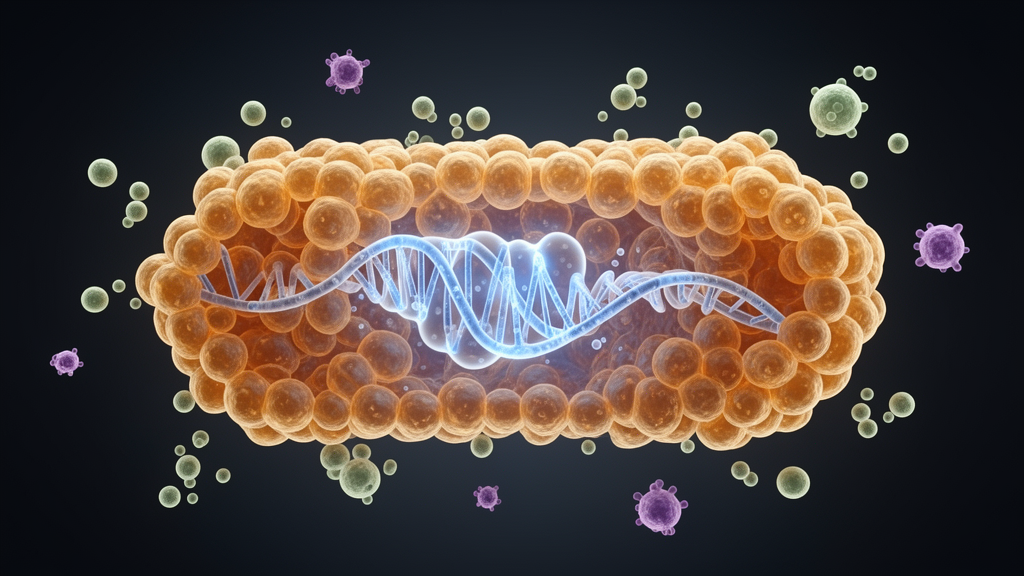
Deep inside every dividing cell, a strange molecular structure forms and dissolves thousands of times over: a three-stranded tangle in which newly made RNA threads itself back into the DNA double helix that produced it. These structures, known as R-loops, are neither purely good nor purely bad. In healthy cells they help switch genes on and off, but when they accumulate unchecked they can snap the genome apart, fueling the mutations and chromosomal chaos that drive cancer. Now a team of researchers in China has carried out the first systematic map of how R-loop biology behaves in esophageal squamous cell carcinoma, one of the deadliest and least well-understood malignancies worldwide, and their findings suggest that these RNA-DNA hybrids could hold the key to predicting which patients will survive and which immune strategies might actually work against their tumors.
The study, published in BMC Cancer, was led by Cui Meng and Hong Su, with Yanfeng Xi of Shanxi Province Cancer Hospital as corresponding author. The team set out to answer a deceptively simple question: if R-loops are master regulators of genome stability, can the genes that control them be woven into a score that tells clinicians something meaningful about an individual patient’s disease? To do this, they compiled a curated list of R-loop-related genes and cross-referenced it against bulk transcriptomic data and single-cell RNA sequencing datasets from patients with esophageal squamous cell carcinoma, the dominant form of esophageal cancer in East Asia and a histological subtype notorious for late diagnosis and five-year survival rates that remain grim even after decades of effort.
Using a battery of bioinformatic algorithms, the researchers distilled the R-loop-related gene landscape down to seven genes that tracked with patient prognosis. Within that set, three emerged as core players: BRIX1, CHEK1, and NUP155. Each of these genes has a plausible biochemical connection to the R-loop world. CHEK1, also known as Chk1, is a checkpoint kinase that pauses the cell cycle when DNA damage is detected, buying time for repair machinery that must contend with RNA-DNA hybrids at replication forks. BRIX1 participates in ribosome biogenesis, a process that generates enormous transcriptional traffic through repetitive ribosomal DNA and is a well-known hotspot for R-loop formation. NUP155 encodes a component of the nuclear pore complex, the gateway that coordinates traffic between the nucleus and cytoplasm and increasingly appears to influence genome architecture and transcription itself.
Crucially, the team did not stop at computational predictions. They validated their findings in the laboratory using reverse transcription quantitative polymerase chain reaction, Western blotting, immunohistochemistry, and immunofluorescence on patient tissue samples. All three core genes were significantly upregulated in esophageal squamous cell carcinoma tissues compared with adjacent non-tumor controls, confirming that the computational signal reflected genuine molecular changes in the tumors themselves. The work was approved by the Shanxi Provincial Tumor Hospital Institutional Ethics Committee, and written informed consent was obtained from all participants, grounding the molecular story in ethically sourced human material.
Pathway analysis added another layer of coherence to the picture. BRIX1, CHEK1, and NUP155 were co-enriched in DNA replication, pyrimidine metabolism, RNA degradation, and MYC target pathways. That convergence matters because each of these processes is intimately tied to R-loop biology. Rapid DNA replication leaves little slack for resolving RNA-DNA hybrids that form behind the transcription machinery; pyrimidine metabolism governs the nucleotide supply that feeds both DNA and RNA synthesis; RNA degradation pathways clear away transcripts that would otherwise invade the genome; and MYC, one of the most notorious oncogenes, drives the hypertranscription that makes cancer cells especially prone to R-loop accumulation. The authors suggest this points to potential crosstalk between the three genes and broader R-loop regulatory networks, though they are careful to note that functional validation remains a task for future studies.
Perhaps the most clinically striking result came when the researchers split patients into groups based on their R-loop-related gene score. Counterintuitively, patients in the low-score group had significantly worse overall survival. Yet when the team interrogated the tumor immune microenvironment of those low-scoring patients, they found something paradoxical: an immune landscape that appeared more active but also more dysfunctional. In other words, the tumors were crowded with immune cells, but those cells seemed unable to mount an effective anti-tumor response. This kind of immune activation without immune success is a familiar frustration in oncology, and it hints that R-loop biology may help determine whether the immune system’s presence inside a tumor translates into immune system’s victory over it.
To dig deeper into where the R-loop signal actually originates within the tumor, the researchers turned to single-cell RNA sequencing, which resolves gene expression cell by cell rather than averaging across a whole tissue. Applying five independent algorithms, they consistently identified squamous epithelium cells as the cell type carrying the highest R-loop-related gene scores. This is a biologically satisfying result, since esophageal squamous cell carcinoma arises from precisely these epithelial cells, and it suggests that the R-loop signature is not merely a bystander effect of infiltrating immune or stromal cells but is written into the malignant cells themselves.
Within the malignant squamous epithelium population, cells with high R-loop-related gene scores showed two defining features. First, they displayed enhanced stemness, a measure of how closely a cell resembles stem-like progenitors that can self-renew and seed new tumor growth. Stemness is strongly associated with treatment resistance and relapse, so a molecular signature that flags it could help identify patients at risk of aggressive disease. Second, these high-scoring cells showed activation of the JAK-STAT signaling pathway, hypoxia programs, and DNA repair pathways. The combination is telling: hypoxic tumors are notoriously resistant to both radiation and immunotherapy, JAK-STAT signaling shapes how cells respond to inflammatory cues, and heightened DNA repair activity can blunt the effect of DNA-damaging chemotherapy.
The study also explored drug sensitivity relationships for the core genes, generating a resource that could guide the selection of existing compounds for further testing. CHEK1 in particular is already the target of inhibitor programs in the pharmaceutical industry, given its role in checkpoint control, and the new data suggest that patients whose tumors score high on the R-loop signature might be candidates for such approaches. The authors emphasize, however, that these are hypotheses generated by computational analysis and laboratory correlation, not proof of therapeutic benefit, and that functional experiments will be needed before any of this reaches the clinic.
What makes this work notable is its scope rather than any single finding. By integrating bulk transcriptomics, single-cell resolution data, experimental validation in patient tissues, and immune microenvironment profiling, the team has produced the first systematic characterization of the R-loop landscape in esophageal squamous cell carcinoma. The seven-gene signature offers a potential prognostic biomarker, the identification of squamous epithelium cells as the R-loop hotspot points to the cellular origin of the phenomenon, and the paradoxical immune findings open a new angle on why some esophageal tumors resist immunotherapy despite heavy immune infiltration. The researchers caution that their scoring system requires prospective validation in independent cohorts and that the biology linking R-loops to immune dysfunction remains to be worked out experimentally. Still, for a disease with such poor outcomes and such a stubbornly unclear pathogenesis, the study reframes an old molecular curiosity, the RNA-DNA hybrid, as a promising new lens through which to view prognosis, tumor stemness, and the immune battlefield inside the esophageal tumor.
Subject of Research: R-loop-related gene signatures as prognostic and immune microenvironment markers in esophageal squamous cell carcinoma
Article Title: An R-loop-related gene signature predicts prognosis and shapes the immune microenvironment in esophageal squamous cell carcinoma
Article References: Meng, C., Su, H., Yan, R., Sun, R., Yu, Q., Meng, Y., & Xi, Y. (2026). An R-loop-related gene signature predicts prognosis and shapes the immune microenvironment in esophageal squamous cell carcinoma. BMC Cancer. https://doi.org/10.1186/s12885-026-16564-4
Image Credits: AI Generated
DOI: 10.1186/s12885-026-16564-4
Keywords: esophageal squamous cell carcinoma, R-loops, gene signature, BRIX1, CHEK1, NUP155, tumor microenvironment, cancer stemness, single-cell RNA sequencing, prognosis, DNA repair, immunotherapy resistance
Cite Scienmag News
Nathaniel Bowman. (October 9, 2026). R-Loop Gene Signature Predicts Survival and Immune Landscape in Esophageal Cancer. Scienmag. https://scienmag.com/r-loop-gene-signature-predicts-survival-and-immune-landscape-in-esophageal-cancer/
Nathaniel Bowman. "R-Loop Gene Signature Predicts Survival and Immune Landscape in Esophageal Cancer." Scienmag, 9 October 2026, https://scienmag.com/r-loop-gene-signature-predicts-survival-and-immune-landscape-in-esophageal-cancer/. Accessed 9 October 2026.
Nathaniel Bowman. "R-Loop Gene Signature Predicts Survival and Immune Landscape in Esophageal Cancer." Scienmag. October 9, 2026. https://scienmag.com/r-loop-gene-signature-predicts-survival-and-immune-landscape-in-esophageal-cancer/


