


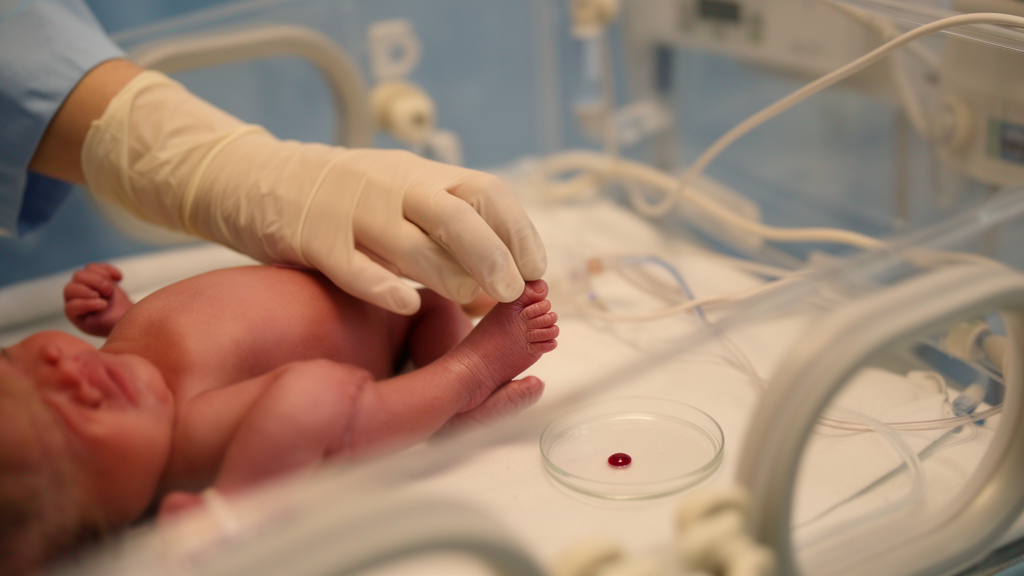
Late-onset neonatal sepsis is one of the most feared diagnoses in any neonatal intensive care unit. It strikes after the first 72 hours of life, often in the smallest and most fragile infants, and it can kill within hours of the first subtle sign. Yet its early symptoms, such as feeding intolerance, temperature instability, or brief pauses in breathing, are so non-specific that clinicians frequently cannot tell whether they are witnessing the beginning of a bloodstream infection or a harmless fluctuation in a baby’s condition. A new exploratory study published in Pediatric Research by Janno S. Schouten of Erasmus MC in Rotterdam and colleagues offers a detailed molecular view of what actually happens in the blood of preterm infants when sepsis begins, and the picture it paints is both dynamic and surprising.
The research team used a technology called targeted proteomics, specifically the Olink proximity extension assay platform, to measure the expression of hundreds of proteins simultaneously in tiny volumes of blood. This matters enormously in neonatal care, where every milliliter of a premature infant’s blood is precious and repeated sampling is risky. The study drew on blood samples collected between December 2019 and July 2023 at two level IV neonatal intensive care units, one in Rotterdam in the Netherlands and one in Poznań in Poland. The clinical cohort comprised fifteen preterm infants who developed late-onset sepsis, all born before 30 weeks of gestation, alongside eight clinically stable control infants of similar gestational age who showed no signs of systemic inflammation.
Blood was drawn from the septic infants at three critical moments: at the onset of the septic episode, 24 hours later, and 48 hours after diagnosis. The first sample had to be taken within six hours of the start of antibiotic treatment, ensuring the researchers captured the inflammatory landscape as close to the biological beginning of the episode as possible. After rigorous quality control removed proteins that failed technical standards or fell below the limit of detection in more than half of the septic samples, 355 proteins remained for analysis. To validate the reliability of the measurements, the team cross-checked their proteomic readings against conventional laboratory values, finding a strong correlation between the platform’s IL-6 protein readings and independently measured plasma IL-6 concentrations, as well as a robust correlation between IL-6 and TNF protein signals.
The headline finding was striking: 66 proteins showed statistically significant and biologically meaningful differences between septic and non-septic infants at the moment of diagnosis. The researchers applied a dual threshold, requiring both an adjusted p-value below 0.05 and an absolute log2 fold change greater than 0.5, to ensure that only changes large enough to matter clinically were counted. Forty-one of these proteins were upregulated in sepsis, and they were overwhelmingly molecules of immune communication: interleukins such as IL-1β, IL-6, IL-10, IL-15, IL-17A, and IL-18, chemokines including CCL-3, CCL-4, CCL-7, CCL-20, and CCL-23, and a battery of receptor-associated proteins that help immune cells recognize and respond to pathogens. IL-6 itself showed the single largest increase, which the authors note was partly expected because elevated IL-6 was one of the enrollment criteria for the original trial from which the samples came.
Perhaps more intriguing than the proteins that rose were the ones that fell. Twenty-five proteins were expressed at significantly lower levels in septic infants compared with controls, and these were not primarily inflammatory molecules. Instead, they were proteins involved in development, growth, and metabolism, including WNT9A, NTF3, PSPN, VEGFD, and NPPC, along with adhesion molecules such as ICAM4 and LAMA4 and metabolic proteins like ALDH3A1 and OPN3. This downregulation of growth and developmental pathways during infection offers a molecular echo of what neonatologists have long observed at the bedside: infants who survive neonatal infections face higher risks of impaired neurodevelopment and poor growth. The finding suggests that sepsis does not merely unleash inflammation in these tiny patients; it actively suppresses the biological programs that build their bodies and brains.
The longitudinal design of the study added another layer of insight. By tracking protein levels across the first 48 hours of the septic episode, the researchers discovered that the proteomic storm is remarkably short-lived once treatment begins. Fifty-nine proteins changed significantly between the onset sample and the 24-hour sample, while 40 showed significant changes between onset and 48 hours. By contrast, only three proteins, FLT3LG, SCGB3A2, and SH2D1A, continued to change significantly between the 24-hour and 48-hour marks. In other words, most of the molecular upheaval had already settled within two days of diagnosis and the start of antibiotics. Thirteen proteins, including IL-1β, CXCL8, and several chemokines, required more than 24 hours before their expression shifted significantly, hinting at a slower second wave of the immune response.
To determine which of these protein changes were direct consequences of bacteria meeting blood, rather than downstream effects of the full-body inflammatory response, the team performed a clever parallel experiment. They took fresh whole blood from ten preterm infants who had never developed sepsis and exposed it in the laboratory to live E. coli, a Gram-negative bacterium, and Staphylococcus epidermidis, a Gram-positive species that is a common cause of late-onset sepsis in intensive care units. The blood was diluted five-fold, incubated with the bacteria for six hours at body temperature, and then analyzed with a targeted inflammation panel. This in vitro model isolates the immediate interaction between pathogens and circulating immune cells, free from the influence of the vascular endothelium, the liver, and the other organ systems that shape the systemic response in a living patient.
The results of this comparison were illuminating. Of the 22 proteins that overlapped between the clinical and in vitro analyses, 18 could be induced by bacterial exposure, and these were exclusively cytokines and chemokines, including IL-6, IL-10, TNF, IFN-γ, CXCL8, and several CCL chemokines, along with oncostatin M. Four proteins, IL-2, IL-17A, IL-24, and NTF3, fell below the detection limit in most stimulated samples, suggesting they cannot be directly induced by bacterial contact and likely reflect secondary systemic processes in actual sepsis. A handful of proteins showed reversed patterns between the two settings, being upregulated in patients but downregulated in the dish, or vice versa, underscoring how much the intact body contributes to the septic protein signature beyond the blood itself. Notably, E. coli and S. epidermidis produced largely similar responses, with no distinct protein signature separating Gram-negative from Gram-positive stimulation, a finding consistent with earlier work on cytokine production in preterm cord blood.
The authors are candid about the limitations of their exploratory design. The cohort of fifteen cases and eight controls was small and not calculated a priori, which limits statistical power and likely explains why subgroup analyses comparing culture-positive with culture-negative episodes, or Gram-positive with Gram-negative infections, yielded no consistent differences. The patients were selected precisely because they had markedly elevated IL-6 or CRP, introducing selection bias, and all received pentoxifylline as part of a dose-optimization trial, which may have influenced protein expression over time. The control infants were also more mature and heavier than the septic group, and no non-infectious inflammatory control group was included, leaving open the question of how specific these protein signatures are to infection rather than inflammation in general.
Even so, the study demonstrates the feasibility and promise of combining longitudinal clinical sampling with controlled in vitro stimulation to separate direct pathogen-induced immune activation from secondary systemic responses. The proteins that rose and fell in parallel across both settings, particularly the core inflammatory mediators, emerge as the strongest candidates for future diagnostic development, while the downregulated growth and metabolic proteins may illuminate why neonatal infection leaves lasting developmental scars. Before any of these molecules reach the clinic, they must be validated in larger, independent, and unselected cohorts, ideally with targeted panels focused on the most promising candidates to reduce false discoveries. If that validation succeeds, clinicians could one day have a rapid, blood-sparing molecular test that catches sepsis hours earlier than CRP or procalcitonin can, sparing fragile preterm infants both the delay in treatment and the unnecessary antibiotics that carry their own dangers.
Subject of Research: Targeted proteomic biomarkers of late-onset neonatal sepsis in preterm infants
Article Title: Targeted proteomics in late-onset neonatal sepsis: an exploratory analysis
Article References: Schouten, J. S., Kurul, Ş., Gorissen, R., Reiss, I. K. M., Willemsen, S. P., Mazela, J., Unger, W. W. J., Simons, S. H. P., Jans, J., & Taal, H. R. (2026). Targeted proteomics in late-onset neonatal sepsis: an exploratory analysis. Pediatric Research. https://doi.org/10.1038/s41390-026-05554-8
Image Credits: AI Generated
DOI: 10.1038/s41390-026-05554-8
Keywords: neonatal sepsis, preterm infants, proteomics, biomarkers, Olink, cytokines, chemokines, inflammation, NICU, E. coli, S. epidermidis, Pediatric Research
Cite Scienmag News
Harold Sullivan. (October 9, 2026). Blood Protein Fingerprints Could Reveal Hidden Sepsis in Preterm Babies. Scienmag. https://scienmag.com/blood-protein-fingerprints-could-reveal-hidden-sepsis-in-preterm-babies/
Harold Sullivan. "Blood Protein Fingerprints Could Reveal Hidden Sepsis in Preterm Babies." Scienmag, 9 October 2026, https://scienmag.com/blood-protein-fingerprints-could-reveal-hidden-sepsis-in-preterm-babies/. Accessed 9 October 2026.
Harold Sullivan. "Blood Protein Fingerprints Could Reveal Hidden Sepsis in Preterm Babies." Scienmag. October 9, 2026. https://scienmag.com/blood-protein-fingerprints-could-reveal-hidden-sepsis-in-preterm-babies/


