

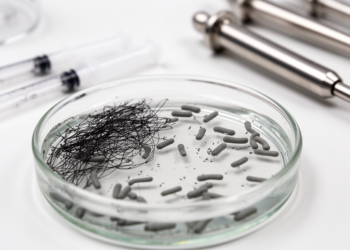
Ferrocene-Derived Carbon Nanotubes Inhibit E. coli in Laboratory Assays
Ferrocene-derived multi-walled carbon nanotubes inhibited E. coli ATCC 25922 in laboratory assays, with reported minimum inhibitory and bactericidal concentrations of ...
Ferrocene-derived multi-walled carbon nanotubes inhibited E. coli ATCC 25922 in laboratory assays, with reported minimum inhibitory and bactericidal concentrations of ...

A five-mutation SecA variant improved E. coli growth at sodium azide concentrations up to 200 micrograms per milliliter, but the ...
Researchers have built a core-shell Ag@Au nanoparticle biosensor that pairs plasmonic sensing with smartphone-based machine learning to rapidly and selectively ...
An open-source R-based quantitative microbial risk assessment model estimates the risk of haemolytic uraemic syndrome from Shiga-toxin producing E. coli ...
A large eight-year study of 1,804 kidney transplant recipients finds that nearly 40 percent develop urinary tract infections in the ...
A shotgun metagenomic study of 10,003 American women shows that microbial signatures of recent bacterial vaginosis and urinary tract infection, ...
Nigerian researchers have shown that TiO₂-BiOI nanocomposites supported on activated coal fly ash can completely remove bacteria from contaminated household ...
A six-month study of Nigeria's Owena multipurpose dam found high levels of E. coli, Shigella and the parasites Cryptosporidium and ...
Targeted proteomics of blood from preterm infants reveals a dynamic protein signature of late-onset sepsis, with inflammatory proteins surging, growth-related ...
A two-stage biochar filtration system built from local rice husks substantially cleaned municipal wastewater for irrigation in Obuasi, Ghana, though ...

Embark on a thrilling journey of discovery with Scienmag.com—your ultimate source for cutting-edge breakthroughs. Immerse yourself in a world where curiosity knows no limits and tomorrow’s possibilities become today’s reality!