


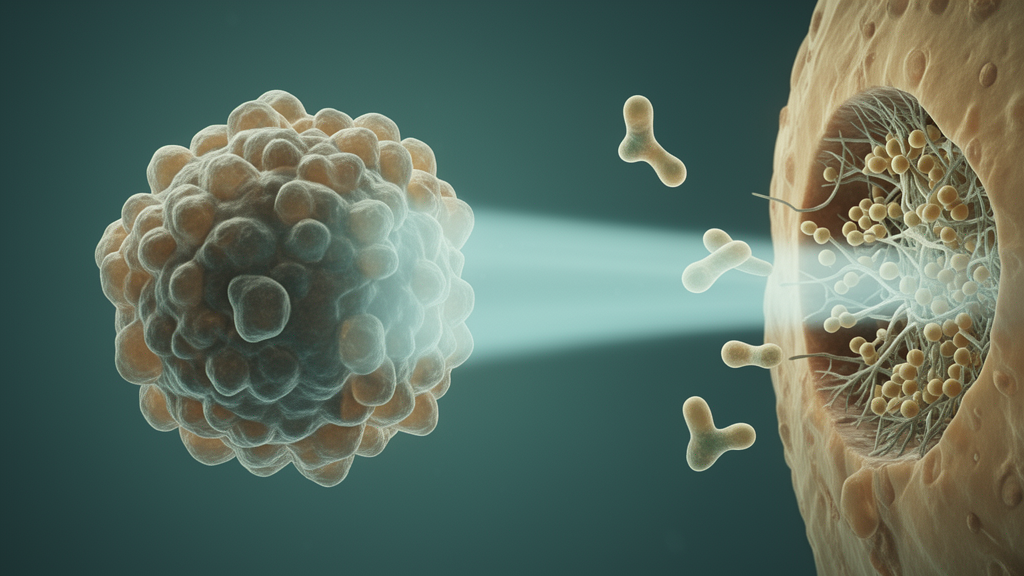
Radiotherapy remains one of the most powerful weapons in clinical oncology, deployed in some form for more than half of all cancer patients. Yet for many of them, the disease returns. A comprehensive review published in Molecular Cancer argues that the field has been asking the wrong question about this failure. Instead of treating radioresistance as a fixed trait of certain tumor cells, a team led by Yi Zhang, Hongshuai Li, and Xingchen Peng of West China Hospital, Sichuan University, reframes it as an ecosystem-level phenomenon: radiation does not simply kill the sensitive cells and leave the tough ones behind, it actively reshapes both the surviving cells and their surroundings into what the authors call tolerant niches, spatial refuges in which relapse-competent residual disease can persist and later reawaken.
The starting point of the review is the physical assault that radiotherapy delivers. Ionizing radiation deposits energy that breaks DNA directly and, indirectly, floods cells with reactive oxygen species that damage proteins, lipids, and genomes alike. The dose, the fractionation schedule, and the type of radiation used all determine the character of this pressure. Cells that survive the initial insult do so by activating their DNA damage response machinery, a coordinated network of sensors, transducers, and effectors that pauses the cell cycle, repairs double-strand breaks through pathways such as non-homologous end joining and homologous recombination, and, when damage is overwhelming, triggers senescence or apoptosis. But the review emphasizes that DNA repair is only the first layer of a much deeper program of tolerance.
That deeper program is cellular plasticity. Rather than dying or fully recovering, a subset of surviving cells appears to enter altered, quasi-stable states that echo phenomena described in drug-treated tumors. The authors catalog several of these: persister-like states in which cells reversibly suspend proliferation; cancer stem cell-like states marked by molecules such as CD44 and aldehyde dehydrogenase, with enhanced self-renewal and repair capacity; senescence-like states, detectable in part by senescence-associated beta-galactosidase, in which cells remain metabolically alive but stop dividing and can secrete inflammatory signals; and hybrid epithelial-mesenchymal transition states that combine adhesive and migratory traits. Crucially, these states are not permanent identities. They are plastic, meaning the same residual cell may drift between them, and that fluidity makes them extraordinarily difficult to eliminate with any single targeted agent.
Alongside chromatin remodeling and transcriptional stress memory, which allow cells to carry a kind of biochemical recollection of the radiation they endured, these plastic states form the tumor-cell-intrinsic half of the radioresistance story. The review is careful to note that this intrinsic component complements rather than replaces classical radiosensitivity, which depends on factors such as oxygenation, cell-cycle phase, and repair capacity. What is new is the recognition that intrinsic tolerance alone cannot explain why recurrences so often emerge in predictable locations and time windows. For that, the authors argue, one must look outward, to the microenvironment that surrounds and stabilizes the surviving cells.
The concept of the tolerant niche is the conceptual heart of the paper. The authors describe several recurring microenvironmental configurations that act as sanctuaries for residual disease. Hypoxic niches are perhaps the best known: low oxygen reduces the radiation-induced free radical chemistry that makes oxygen so potent a radiosensitizer, and hypoxia simultaneously drives stem-like and invasive transcriptional programs. Perivascular niches, the zones around surviving blood vessels, shelter quiescent tumor cells and are rich in protective signaling. Niches dominated by cancer-associated fibroblasts and remodeled extracellular matrix provide both mechanical and biochemical support, secreting growth factors and stiffening tissue architecture in ways that dampen radiation lethality. Metabolic niches, shaped by nutrient scarcity and altered metabolite exchange, and myeloid niches, populated by tumor-associated macrophages, myeloid-derived suppressor cells, and regulatory T cells that suppress antitumor immunity, complete the picture. In each case, the niche does not merely coexist with tolerant cells; it actively maintains their state.
One of the review’s most useful contributions is its insistence that these mechanisms vary substantially among tumor types. The relative weight of hypoxia, stromal shielding, immune suppression, or stem-like plasticity differs between, for example, glioblastoma, pancreatic ductal adenocarcinoma, and lung cancer, and the authors caution against assuming that a strategy validated in one context will transfer to another. This heterogeneity has practical consequences for how the field measures residual disease. The authors assess the tools available and find them strikingly unequal in maturity. Functional imaging, including hypoxia-targeted PET tracers and advanced MRI sequences, and liquid biopsy based on circulating tumor DNA, offer selected clinical readouts that can already be deployed in trials to track residual disease and recurrence risk over time.
Spatial omics technologies, by contrast, which map gene expression and other molecular features across intact tissue sections, currently serve mainly as discovery and validation tools rather than clinical diagnostics. They are indispensable for identifying which cells occupy which niches and how those relationships change after irradiation, but sampling limitations, cost, and analytical complexity keep them out of routine practice. The review is candid about this gap: the field can describe tolerant niches in exquisite detail in resected specimens, yet it largely lacks the longitudinal, minimally invasive measurements needed to watch them form and dissolve in living patients. Bridging that gap, the authors suggest, will require combining serial ctDNA monitoring with imaging and, where feasible, repeat tissue sampling.
On the therapeutic side, the review outlines both evidence-based and investigational strategies for what the authors term niche-informed radiotherapy. Established approaches include hypoxia modification, dose escalation and altered fractionation, and combinations with DNA damage response inhibitors that disable the repair programs tolerant cells rely on. More speculative candidates target the niche itself: agents that reprogram cancer-associated fibroblasts, normalize tumor vasculature, modulate myeloid suppressor cells, or relieve immune suppression so that checkpoint blockade can act on residual disease. Senolytic strategies aimed at clearing senescence-like cells, and agents designed to push plastic persister states out of their protective equilibrium, also feature among the investigational options. The unifying principle is that candidate combinations should be validated against the specific niche dependencies of a given tumor before clinical adaptation, rather than applied indiscriminately.
The authors are equally clear about the obstacles standing between this framework and the clinic. Conceptually, tolerant niches are dynamic and heterogeneous, so static snapshots may mislead. Sampling remains a fundamental problem, since the most informative regions of a treated tumor are often inaccessible. Implementation faces the usual barriers of combination-therapy trials, toxicity management, and the absence of validated biomarkers that identify which patients carry which niche dependencies. None of these limitations, in the authors’ view, undermines the framework; they simply define the work that remains. The review, which was supported by numerous Chinese national and institutional research programs and published open access on 9 October 2026, is intended as a roadmap rather than a final verdict.
If the tolerant niche concept holds up under experimental and clinical scrutiny, its implications for oncology could be considerable. Recurrence after radiotherapy would no longer be viewed as a mysterious resurgence but as the predictable product of a documented sequence: radiation pressure, followed by the emergence of plastic residual states, followed by their stabilization within hypoxic, stromal, metabolic, and immune sanctuaries. Each step in that sequence offers an interception point, a moment when a rationally chosen combination therapy might extinguish the embers before they reignite. Turning that vision into practice will demand the longitudinal monitoring tools and niche-specific combination trials the review calls for, but it reframes one of radiotherapy’s oldest frustrations as a solvable, spatially defined problem in tumor ecology.
Subject of Research: Radioresistance and tumor recurrence through cellular plasticity and radiation-induced tolerant niches in the tumor microenvironment
Article Title: Radioresistance and tumor recurrence: cellular plasticity, tolerant niches, and therapeutic opportunities
Article References: Zhang, Y., Li, H., Lv, S., Peng, L., Meng, W., Guo, J., Lu, Y., Chen, W., Yang, W., & Peng, X. (2026). Radioresistance and tumor recurrence: cellular plasticity, tolerant niches, and therapeutic opportunities. Molecular Cancer. https://doi.org/10.1186/s12943-026-02806-3
Image Credits: AI Generated
DOI: 10.1186/s12943-026-02806-3
Keywords: radioresistance, radiotherapy, tumor recurrence, tolerant niches, cellular plasticity, DNA damage response, tumor microenvironment, cancer stem cells, hypoxia, residual disease, spatial omics, ctDNA
Cite Scienmag News
Nathaniel Bowman. (October 9, 2026). How Tumors Survive Radiation: Plastic Cells and Tolerant Niches Drive Recurrence. Scienmag. https://scienmag.com/how-tumors-survive-radiation-plastic-cells-and-tolerant-niches-drive-recurrence/
Nathaniel Bowman. "How Tumors Survive Radiation: Plastic Cells and Tolerant Niches Drive Recurrence." Scienmag, 9 October 2026, https://scienmag.com/how-tumors-survive-radiation-plastic-cells-and-tolerant-niches-drive-recurrence/. Accessed 9 October 2026.
Nathaniel Bowman. "How Tumors Survive Radiation: Plastic Cells and Tolerant Niches Drive Recurrence." Scienmag. October 9, 2026. https://scienmag.com/how-tumors-survive-radiation-plastic-cells-and-tolerant-niches-drive-recurrence/


