

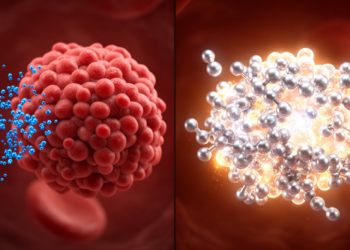
Platinum Chemotherapy, Not PARP Inhibitors, Emerges as the Main Driver of Blood Clone Expansion
New research shows carboplatin drives the expansion of TP53-mutant blood clones far more strongly than PARP inhibitors, while inherited homologous ...
New research shows carboplatin drives the expansion of TP53-mutant blood clones far more strongly than PARP inhibitors, while inherited homologous ...

New research in C. elegans shows that the FOXO transcription factor DAF-16 directly activates DNA repair genes to preserve genome ...
New research shows that the p53 tumour suppressor system in breast cancer cells retains its dynamic, oscillation-like response even at ...
New research in mice reveals that the DNA repair factor RAD54L protects primordial germ cells by stabilizing the E3 ligase ...
A new study reports that ATM-deficient ataxia-telangiectasia fibroblasts show reproducible depletion of the DNA damage response microRNAs miR-34a-5p and miR-26a-5p, ...
A new systematic review finds that mutations, methylation, and expression loss of the ATM DNA repair gene are recurrent and ...
A phase I trial of propranolol plus doxorubicin found no survival benefit from the beta-blocker, but revealed that young adult ...
A new review argues that stress granules and their RNA-binding proteins act as context-dependent modulators of cellular senescence and inflammation ...
New research reveals that the chromatin-modifying enzyme SMYD3 orchestrates DNA double-strand break repair in gastric cancer, and that blocking it ...
A new study combining real-world clinical data with CRISPR-edited cell models shows that pancreatic cancers with ATM or CHEK2 mutations ...

Embark on a thrilling journey of discovery with Scienmag.com—your ultimate source for cutting-edge breakthroughs. Immerse yourself in a world where curiosity knows no limits and tomorrow’s possibilities become today’s reality!