

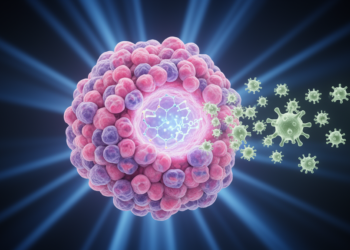
CDKN2A overexpression linked to radioresistance and immunosuppression in colorectal cancer
Colorectal cancer remains one of the world's most formidable health challenges, ranking as the second leading cause of cancer-related mortality ...
Colorectal cancer remains one of the world's most formidable health challenges, ranking as the second leading cause of cancer-related mortality ...

New research shows that blocking the mitochondrial fission protein DRP1 collapses antioxidant defenses in head and neck squamous cell carcinoma, ...
A new review in Molecular Cancer reframes radioresistance as an ecosystem-level phenomenon in which plastic residual tumor cells survive radiation ...
Researchers in Taiwan mapped a 25-microRNA regulatory network driving radioresistance in head and neck cancer and used transcriptome-guided drug repurposing ...
Researchers in Beijing have identified a PUM2-PAFAH1B1 regulatory axis that triggers ferroptosis and overcomes radioresistance to iodine-125 seed therapy in ...
New research reveals that radiotherapy induces PD-1 expression on tumor-associated monocytes through an adenosine-driven signaling pathway, creating an immunosuppressive cell ...
A new review in Cancer Immunology, Immunotherapy details how EBV-encoded miR-BART4 suppresses the innate immune molecule BPIFB1/LPLUNC1, whose loss promotes ...
A newly identified TIMELESS-SIRT1-Ku70 complex promotes assembly of the Ku DNA repair heterodimer, giving cancer cells resistance to radiation and ...
New research shows that lung tumors become radioresistant through ATR signaling activation and immune suppression, but innate immune agonists and ...
New research reveals that the motor protein KIFC1 drives cervical cancer radioresistance by shuttling the splicing factor SRSF3 into the ...

Embark on a thrilling journey of discovery with Scienmag.com—your ultimate source for cutting-edge breakthroughs. Immerse yourself in a world where curiosity knows no limits and tomorrow’s possibilities become today’s reality!