


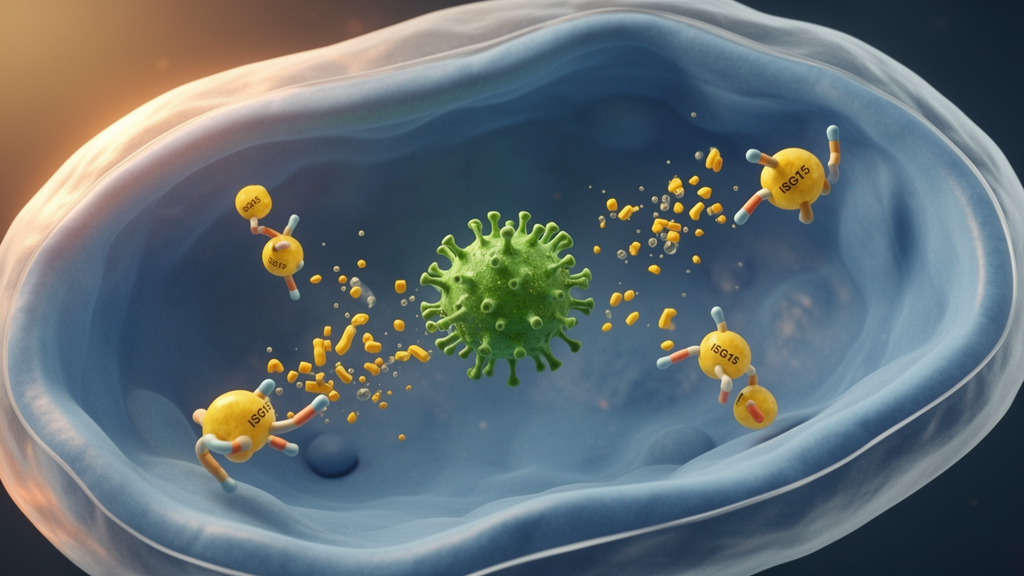
Aquaculture in China has long been haunted by hemorrhagic disease in grass carp, a devastating condition driven by the grass carp reovirus, known as GCRV. Outbreaks of this virus can sweep through farms of Ctenopharyngodon idella with lethal efficiency, and decades of research have only partially explained how the virus manages to slip past the fish immune system. A new study published in PLOS Pathogens now uncovers a molecular sabotage mechanism that appears to be unique to fish: a fish-specific E3 ubiquitin ligase, named NHRE3, that disables a key antiviral protein by marking it for destruction. The finding not only clarifies how GCRV gains its foothold but also offers a glimpse into the deep evolutionary history of the arms race between viruses and the innate immune systems of vertebrates.
The research, conducted by Juhong Xie, Jiayi Lei, Qinxue Zhu, Bin Gui, Yongming Li, Yaping Wang, and Rong Huang, began with an observation made in an earlier study. Using random mutagenesis in the rare minnow, Gobiocypris rarus, a small laboratory model fish widely used in Chinese aquatic disease research, the team had identified a gene whose variation was associated with susceptibility to hemorrhagic disease. That gene encoded a protein resembling an E3 ubiquitin ligase, the class of enzymes responsible for attaching ubiquitin tags to target proteins. In the new work, detailed domain and amino acid sequence analyses confirmed that the gene truly encodes a functional E3 ubiquitin ligase, and because close relatives of the gene are found only in fish, the team designated it NHRE3, a fish-specific member of this enzyme family.
Ubiquitination is one of the cell’s most versatile regulatory tools. By stringing chains of ubiquitin, a small regulatory protein, onto specific lysine residues of a target protein, E3 ligases determine that protein’s fate. K48-linked polyubiquitin chains, in particular, serve as a molecular kiss of death: they are recognized by the proteasome, the cell’s protein-shredding machinery, and the tagged protein is rapidly degraded. Viruses have learned to exploit this system extensively. In mammals, viral proteins frequently hijack the ubiquitin pathway to dismantle signaling molecules that would otherwise trigger interferon production, the body’s first chemical alarm against infection. The question the Chinese team posed was whether fish viruses use similar tricks, and if so, through what molecular intermediaries.
The first clue came from genetics. The researchers generated rare minnows in which the nhre3 gene was knocked out, producing nhre3-null animals. When these fish were challenged with GCRV, they displayed significantly enhanced resistance to the virus compared with normal fish. In other words, removing NHRE3 made the fish harder to infect, which strongly implied that the ligase normally works in the virus’s favor. This was a striking result, because it suggested that a host-encoded enzyme was acting as an accomplice to viral infection, suppressing the very defenses it might have been expected to support. Such pro-viral host factors are prized targets for intervention, since blocking them can bolster immunity without directly attacking the virus itself.
To find out what NHRE3 actually does at the molecular level, the team turned to immunoprecipitation followed by mass spectrometry, a technique that pulls a bait protein out of the cell along with everything it physically associates with. The screen identified interferon-stimulated gene 15, or ISG15, as an NHRE3-interacting protein. ISG15 is one of the most strongly induced genes during antiviral responses across vertebrates, and in mammals it functions both as a free intracellular protein and as a modifier conjugated onto other proteins in a process called ISGylation. Its precise antiviral role in fish, however, had remained poorly understood, which made the discovery of its interaction with NHRE3 doubly significant: it implicated ISG15 in fish antiviral defense while simultaneously suggesting a mechanism by which that defense could be undermined.
Subsequent biochemical experiments established the full pathway. NHRE3 possesses genuine E3 ubiquitin ligase activity, and it uses that activity to catalyze K48-linked polyubiquitination of ISG15. Once tagged with these destruction chains, ISG15 is routed to the proteasome and degraded. The logic of the system is therefore elegantly sinister: the host produces ISG15 to fight the virus, and NHRE3, a fish-specific enzyme, eliminates ISG15 before it can do its job, thereby promoting GCRV infection. The knockout fish, lacking NHRE3, retain their ISG15 and consequently mount a stronger antiviral response, which explains their enhanced resistance to hemorrhagic disease.
Because the antiviral mechanism of ISG15 in fish had not been clearly defined, the researchers went on to investigate what ISG15 actually does downstream. Their experiments revealed that fish ISG15 can interact with IRF3, interferon regulatory factor 3, a central transcription factor in the innate antiviral response. In mammals and other vertebrates, IRF3 is activated when viral nucleic acids are detected by pattern-recognition receptors; once activated, it translocates to the nucleus and switches on the transcription of interferons and a broad panel of antiviral effector genes. The new study found that fish ISG15 promotes the expression of innate immune factors downstream of IRF3, thereby amplifying the antiviral program and exerting its protective effect against GCRV. This positions ISG15 not merely as a passive marker of interferon activity but as an active participant in the signaling cascade that drives it.
The comparison with mammalian immune evasion strategies is where the study acquires its broader evolutionary resonance. In mammals, viruses that target the ISG15 system generally do so in one of two ways: they inhibit ISGylation, the conjugation of ISG15 onto host and viral proteins, or they induce deISGylation, the enzymatic removal of ISG15 from its targets. Both strategies tinker with the modification process itself. The mechanism described in the fish study is different in kind. Here, the virus benefits from a host-encoded, fish-specific ubiquitin ligase that removes ISG15 from the cell entirely by sending it to the proteasome. The authors suggest that this may represent a more primitive or more diverse form of innate immune regulation, one in which the balance of the antiviral response is governed by the stability of ISG15 itself rather than by its conjugation state.
That interpretation carries implications for how scientists think about the origins of antiviral immunity. The immunological arms race between hosts and pathogens is ancient, predating the divergence of the major vertebrate lineages by hundreds of millions of years. Fish occupy a pivotal position in that history, and discovering that a fish-specific enzyme mediates viral immune escape through protein degradation suggests that the repertoire of evasion strategies available to viruses may be broader, and older, than the mammalian-focused literature implies. It also underscores the degree to which lineage-specific innovations, in this case a ubiquitin ligase found only in fish, can shape the outcome of infection in ways that have no direct parallel in laboratory mammals.
For aquaculture, the practical implications are immediate. Grass carp hemorrhagic disease remains a serious threat to one of the world’s largest freshwater aquaculture industries, and GCRV has proven difficult to control through conventional means. The NHRE3-ISG15 axis offers a concrete molecular target: strategies that inhibit NHRE3 activity, stabilize ISG15, or enhance IRF3-driven antiviral gene expression could plausibly be developed into breeding markers, feed additives, or therapeutic approaches that strengthen fish resistance to GCRV. The nhre3 knockout minnows generated in the study provide a proof of principle that removing this single gene measurably improves survival in the face of viral challenge. More broadly, the work demonstrates the value of studying host-pathogen interactions in non-mammalian systems, where the molecular logic of immunity may differ in instructive ways. By tracing the fate of a single protein, ISG15, from induction to ubiquitination to proteasomal destruction, the researchers have assembled a complete evasion circuit and, in doing so, illuminated one of the more ancient strategies in the long war between viruses and vertebrate hosts.
Subject of Research: A fish-specific E3 ubiquitin ligase that suppresses antiviral immunity by ubiquitinating ISG15
Article Title: A fish-specific E3 ubiquitin ligase NHRE3 suppresses antiviral immunity by degrading ISG15 via ubiquitination
Article References: Xie, J., Lei, J., Zhu, Q., Gui, B., Li, Y., Wang, Y., & Huang, R. (2026). A fish-specific E3 ubiquitin ligase NHRE3 suppresses antiviral immunity by degrading ISG15 via ubiquitination. PLOS Pathogens, 22(9), e1014544. https://doi.org/10.1371/journal.ppat.1014544
Image Credits: AI Generated
DOI: 10.1371/journal.ppat.1014544
Keywords: NHRE3, ISG15, E3 ubiquitin ligase, grass carp reovirus, antiviral immunity, ubiquitination, proteasome, innate immunity, aquaculture, rare minnow, IRF3, immune evasion
Cite Scienmag News
Kristina Jarvis. (October 9, 2026). Fish-Specific Ubiquitin Ligase NHRE3 Helps Virus Evade Antiviral Defenses by Degrading ISG15. Scienmag. https://scienmag.com/fish-specific-ubiquitin-ligase-nhre3-helps-virus-evade-antiviral-defenses-by-degrading-isg15/
Kristina Jarvis. "Fish-Specific Ubiquitin Ligase NHRE3 Helps Virus Evade Antiviral Defenses by Degrading ISG15." Scienmag, 9 October 2026, https://scienmag.com/fish-specific-ubiquitin-ligase-nhre3-helps-virus-evade-antiviral-defenses-by-degrading-isg15/. Accessed 9 October 2026.
Kristina Jarvis. "Fish-Specific Ubiquitin Ligase NHRE3 Helps Virus Evade Antiviral Defenses by Degrading ISG15." Scienmag. October 9, 2026. https://scienmag.com/fish-specific-ubiquitin-ligase-nhre3-helps-virus-evade-antiviral-defenses-by-degrading-isg15/


