

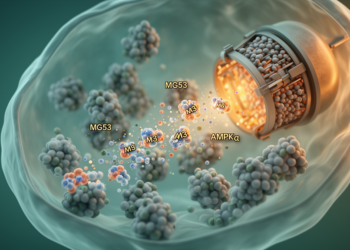
MG53 degrades AMPKα and suppresses bladder cancer in preclinical models
Preclinical tissue, cell, and xenograft experiments found that MG53 promoted AMPKα degradation, reduced glycolytic metabolism and tumor growth, and increased ...
Preclinical tissue, cell, and xenograft experiments found that MG53 promoted AMPKα degradation, reduced glycolytic metabolism and tumor growth, and increased ...

A comprehensive review in Cellular and Molecular Life Sciences maps how single ubiquitin marks on non-histone proteins regulate DNA repair, ...
A new review in Genes & Diseases maps how arginine methylation and ubiquitination continuously regulate each other to influence cancer ...
A genome-scale CRISPR screen in human hepatocytes has revealed an extensive network of regulators governing the aryl hydrocarbon receptor, including ...
Chemists have developed ruthenium-based photocaged PROTACs, called RuPHOTACs, that can be switched on with low-energy red light to selectively degrade ...
Researchers identified a fish-specific E3 ubiquitin ligase, NHRE3, that suppresses antiviral immunity in grass carp and rare minnows by tagging ...
New research in mice reveals that the DNA repair factor RAD54L protects primordial germ cells by stabilizing the E3 ligase ...
A new study reveals that the E3 ubiquitin ligase TRIM37 regulates primary cilium assembly by ubiquitinating the autophagy receptor p62 ...
Researchers have built a scalable transcriptomic screening platform that uses gene expression signatures and CRBN knockout cell models to systematically ...
Scientists identified a lotus E3 ubiquitin ligase, NnRNF217, that boosts cadmium tolerance in plants by supercharging antioxidant enzyme activity and ...

Embark on a thrilling journey of discovery with Scienmag.com—your ultimate source for cutting-edge breakthroughs. Immerse yourself in a world where curiosity knows no limits and tomorrow’s possibilities become today’s reality!