


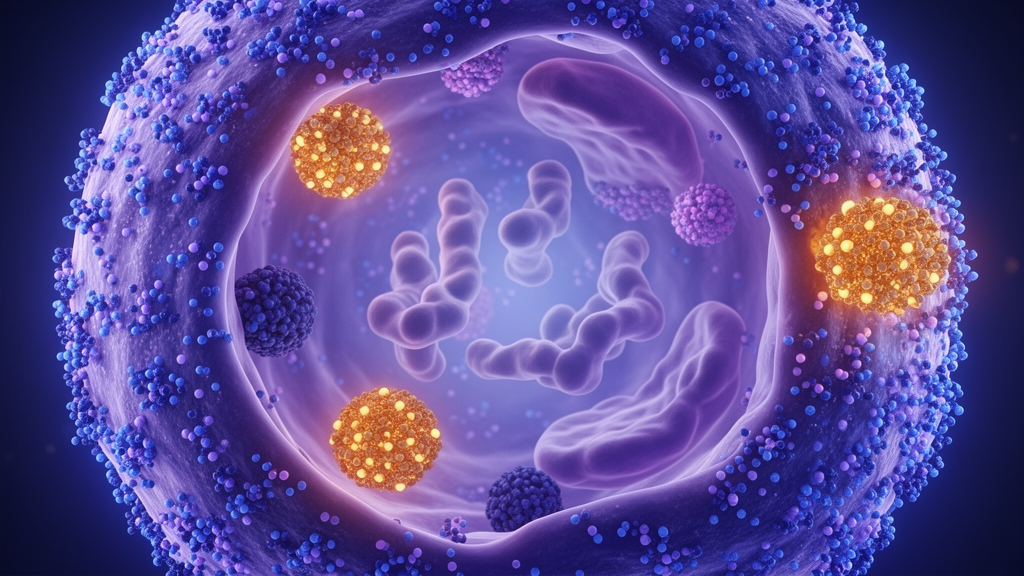
A generation after the genomics revolution transformed how scientists read cancer’s DNA, a new frontier is opening in the protein molecules themselves. In a sweeping Perspective published in Nature Reviews Cancer, an international team of researchers argues that the so-called dark proteome — a vast terrain of previously undiscovered and uncharacterized proteins derived from alternative genomic loci or altered RNA translation — now stands as a potential new direction for cancer science and therapeutics. The authors, led by John R. Prensner of the University of Michigan Medical School and including prominent figures such as Jonathan S. Weissman of the Massachusetts Institute of Technology, Ton N. Schumacher of the Netherlands Cancer Institute and Reuven Agami of the Netherlands Cancer Institute and Erasmus MC, map out what is known about these shadowy molecules and chart the questions that must be answered before they can be exploited in the clinic.
The term dark proteome covers an astonishing diversity of molecular species. It includes proteins translated from non-canonical open reading frames — stretches of RNA that were long dismissed as non-coding filler — as well as products of repeat elements such as endogenous retroviruses and LINE-1 transposons, peptides derived from circular RNAs, mistranslated proteins produced when the ribosome inserts the wrong amino acid, proteasomally spliced peptides, and stress-induced translation products that appear only when cells are pushed to the brink. Over the past decade, an unprecedented depth of resolution has been attained in cataloguing this hidden world, with individual classes of dark proteins now numbering in the thousands of members each. A massive proteogenomic screen published in 2024, for example, identified thousands of novel peptides from the human dark proteome, and a 2026 study in Nature expanded the human proteome with microproteins and peptideins — molecules with evidence for their existence but ambiguous or absent evidence for physiological function in normal cells.
The technological engine behind this discovery wave is ribosome profiling, or Ribo-seq, a technique first developed in Weissman’s laboratory that captures snapshots of every ribosome engaged on every messenger RNA in a cell. Ribo-seq revealed that translation is far more pervasive than textbook models suggested: ribosomes initiate not only at annotated start codons but at hundreds of thousands of upstream and alternative sites, in long non-coding RNAs, in 5′ untranslated regions and even in pseudogenes. Complementing Ribo-seq, immunopeptidomics — the mass spectrometric analysis of peptides presented on the cell surface by major histocompatibility complex molecules — has shown that a striking fraction of the peptides displayed by cancer cells comes from these unannotated sources. Studies in melanoma, lung cancer and pancreatic cancer have demonstrated that noncoding and non-canonical regions are among the main sources of targetable tumour-specific antigens, fundamentally challenging the assumption that neoantigens arise mainly from point mutations in canonical genes.
What makes the dark proteome more than a curiosity is the accumulating evidence that its members do real work in cancer biology. Individual dark proteins have now been characterized as oncogenes, tumour suppressors, signalling regulators and cancer-specific genetic dependencies. The microprotein TPM3P9, encoded by a cryptic long non-coding RNA, drives oncogenic RNA splicing and tumorigenesis. The TINCR ubiquitin-like microprotein acts as a tumour suppressor in squamous cell carcinoma, while a related microprotein called pTINCR promotes epithelial differentiation and suppresses tumour growth through activation of the CDC42 protein. In glioblastoma, a peptide encoded by the upstream open reading frame of the MYC messenger RNA binds to the tropomyosin receptor kinase B and promotes tumour growth in mice, and the upstream-ORF-encoded MP31 disrupts mitochondrial quality control and inhibits tumorigenesis. In childhood medulloblastoma, translation of non-canonical open reading frames appears to function as a cancer cell survival mechanism in its own right.
Perhaps the most dramatic examples come from dual-coding genes — loci where a single stretch of DNA yields both a canonical protein and a second, unconventional product. The NCYM gene, a cis-antisense gene of MYCN, encodes a de novo evolved protein that inhibits GSK3β and thereby stabilizes MYCN in human neuroblastomas, a finding that has been linked to clinical outcome. The classic CDKN2A tumour suppressor locus encodes not only p16INK4A but also p14ARF, an alternative reading frame product that forms meso-scale assemblies upon phase separation with the nucleolar protein NPM1. Even the circular RNA world has yielded a functional oncogene: Firefox, a protein encoded by circular PVT1 RNA, was shown in 2026 to be essential for MYC-driven oncogenesis. These cases demonstrate that the dark proteome is not merely translational noise but a layer of biology with direct consequences for tumour evolution and treatment response.
How does cancer gain access to this hidden protein repertoire? The Perspective outlines several mechanisms of dysregulation. Oncogenic transcription factors, particularly chimeric fusion proteins characteristic of certain leukaemias and sarcomas, can drive tumour-specific transcription, processing and translation of silent genomic regions, effectively switching on genes that were never meant to be expressed. Extrachromosomal DNA — circular DNA molecules that carry amplified oncogenes such as MYC in pancreatic cancer — can generate fusion transcripts and aberrant translation products at high levels. Nutrient stress provides another route: when tumours experience tryptophan or arginine deprivation, the ribosome misincorporates substitute amino acids, generating so-called substitutants that are foreign to the immune system. Chemotherapy and leucine deprivation likewise induce codon-biased aberrant protein production. Meanwhile, oncogene-driven sloppiness in mRNA translation, ribosomal frameshifting and stress-response pathways such as the integrated stress response and the unfolded protein response all conspire to flood the cancer cell with non-canonical peptides, many of which end up displayed on the cell surface.
It is on the immunotherapy front that the dark proteome may deliver its most immediate clinical payoff. Because many dark proteins are encoded by genomic regions that are not expressed in healthy tissues, the immune system has never been trained to tolerate them, making their peptides potentially ideal tumour antigens. Endogenous retrovirus-derived antigens have already been shown to promote lung cancer immunotherapy, and antibodies against these ancient viral proteins correlate with response to checkpoint blockade. Shared epitopes from endogenous retroviruses can induce high-avidity cytotoxic T cells, and tumour circular RNAs have been shown to elicit anti-tumour immunity by encoding cryptic peptides. In pancreatic cancer, tumour-restricted cryptic antigens have been validated as targets for T cell recognition. The therapeutic modalities now in play span the full modern immunotherapy arsenal: personalized and shared vaccines, TCR-engineered T cells, CAR-T cell approaches and bispecific T cell engagers. A first-in-class bispecific T cell engager targeting a DARKFOX peptide presented by solid tumours has already entered preclinical development, and a clinical trial of a dark-proteome-directed immunotherapy is registered on ClinicalTrials.gov.
Turning dark proteins themselves into drug targets is harder, but not impossible. Many are small, intrinsically disordered molecules that lack the stable pockets conventional small-molecule drugs require. Yet structure prediction tools such as AlphaFold, together with new protein design methods for binding intrinsically disordered regions, are beginning to make the undruggable tractable. The MYC inhibitor omomyc — a miniprotein that exploits intrinsic cell-penetrating activity — has advanced to a phase 1 clinical trial in solid tumours, and a synthetic cell-penetrant miniprotein called DuoMYC efficiently inhibits oncogenic MYC. EMBOW-derived peptides targeting the WDR5-MLL1 complex have suppressed leukaemia progression in preclinical models. Functional genomics is doing the other half of the work: CRISPR-based screens have revealed that human cancer cells depend on cryptic non-canonical open reading frames, and large-scale short open reading frame screens have identified microproteins involved in cancer cell fitness, feeding into resources such as the cancer dependency map and the dark kinase knowledgebase.
The authors are careful to emphasize how much remains unknown. Key gaps persist in understanding how the dark proteome is regulated, how much it actually contributes to cancer phenotypes versus representing tolerated noise, how antigenic its products truly are in patients, and whether dark proteins can be developed into clinical-grade therapies with acceptable safety profiles. Community efforts to standardize the annotation of translated open reading frames, benchmark mass spectrometric detection of unannotated microproteins and expand reference catalogues such as GENCODE are underway, supported by initiatives including the Cancer Grand Challenges dark proteome teams. Spatial transcriptomics and single-cell Ribo-seq are adding tissue-level context, revealing where and when unconventional translation occurs in intact tumours. What is clear is that the dark proteome offers the possibility to advance cancer science, diagnosis and treatment in ways the genomics revolution alone could not. The darkness, the authors suggest, is not a void but an unexplored continent — and the maps are finally being drawn.
Subject of Research: The functional dark proteome in cancer, comprising non-canonical proteins and peptides with roles in tumour biology and immunotherapy
Article Title: Mapping the functional dark proteome in cancer
Article References: Prensner, J. R., Freed-Pastor, W. A., Abelin, J. G., Wu, C. J., Merbl, Y., Pilpel, Y., Schumacher, T. N., Weissman, J. S., van Heesch, S., & Agami, R. (2026). Mapping the functional dark proteome in cancer. Nature Reviews Cancer. https://doi.org/10.1038/s41568-026-00985-1
Image Credits: AI Generated
DOI: 10.1038/s41568-026-00985-1
Keywords: dark proteome, cancer, non-canonical open reading frames, microproteins, Ribo-seq, immunopeptidomics, neoantigens, cancer immunotherapy, CRISPR screens, tumour suppressors, oncogenes, translational dysregulation
Cite Scienmag News
Nathaniel Bowman. (October 8, 2026). Cancer’s Hidden Proteome: Thousands of Dark Proteins Emerge as Drug Targets. Scienmag. https://scienmag.com/cancers-hidden-proteome-thousands-of-dark-proteins-emerge-as-drug-targets/
Nathaniel Bowman. "Cancer’s Hidden Proteome: Thousands of Dark Proteins Emerge as Drug Targets." Scienmag, 8 October 2026, https://scienmag.com/cancers-hidden-proteome-thousands-of-dark-proteins-emerge-as-drug-targets/. Accessed 8 October 2026.
Nathaniel Bowman. "Cancer’s Hidden Proteome: Thousands of Dark Proteins Emerge as Drug Targets." Scienmag. October 8, 2026. https://scienmag.com/cancers-hidden-proteome-thousands-of-dark-proteins-emerge-as-drug-targets/


