


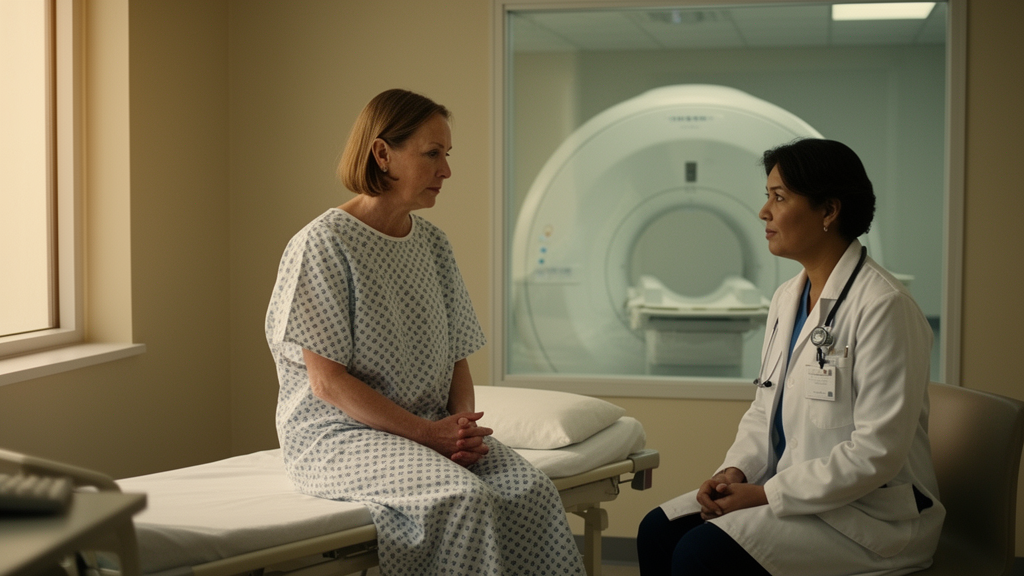
For hundreds of thousands of people each year, pelvic radiotherapy is a lifeline. It is used to treat prostate, gynecological, anal and rectal cancers, and for many patients it is the treatment that saves their lives. But a growing body of evidence shows that a substantial proportion of survivors go on to develop chronic bowel problems, including diarrhea, constipation, urgency and loss of bowel control, some of which can be severely debilitating. Now, a new qualitative study published in Supportive Care in Cancer reveals that many of these survivors were never properly warned about such late effects, struggled to recognize their symptoms as radiation-related, and were left to hunt for information on their own, often years after their treatment had ended.
The research, led by Adam Biran of Newcastle University together with colleagues from NHS trusts and academic institutions across the United Kingdom, set out to explore how survivors of pelvic cancers access and receive information about chronic bowel symptoms after radiotherapy, and to build a framework that could guide improvements in how such information is provided. The team conducted semi-structured interviews with 28 cancer survivors, 14 treated for prostate cancer, 10 for gynecological cancers and 4 for anal or rectal cancers, all of whom had experienced chronic bowel symptoms following pelvic radiotherapy. They also interviewed 19 health professionals involved in the care of these patients. Participants were recruited through UK cancer charities and five NHS hospital trusts, and interviews took place remotely between November 2021 and September 2022, lasting up to 90 minutes for survivors and 60 minutes for clinicians.
The interviews were recorded, transcribed and analyzed thematically using NVivo software, with the researchers adopting a subtle realist approach that treats participants’ accounts as meaningful reflections of their experiences while acknowledging the influence of context and perspective. From this analysis, the researchers organized the data into three temporal categories reflecting the cancer journey, pre-treatment, recognizing symptoms, and managing symptoms, plus two cross-cutting themes covering information sources and the challenges of information provision. This structure then informed a provisional framework for information provision, which was reviewed and refined by five public and patient representatives with personal experience of bowel symptoms after cancer.
One of the most striking findings concerns the period before treatment. Health professionals reported that they routinely warn patients about possible short- and long-term effects of radiotherapy as part of the consent process, and some survivors recalled receiving printed material to this effect. Yet not everyone remembered being told about possible late effects, and even those who received the information often could not absorb it. As one 48-year-old woman put it, her priority at the time was simply survival: she wanted not to die, and details about potential long-term problems went to the back of her mind. Another survivor noted that the hospital gave information at the start but never highlighted that there could be an ongoing problem caused by the radiotherapy. Many patients also perceived no meaningful choice about the treatment itself, with one explaining that she could not make an informed decision because there was no decision to make, she had to have the radiotherapy.
The consequences of this information gap became apparent when symptoms emerged, sometimes months or years after treatment. Because late effects are unexpected, delayed in onset and often multiple and disparate in nature, survivors frequently failed to attribute them to their radiotherapy, misattributing them to other causes instead. Some described being alarmed by symptoms such as incontinence or anal bleeding, with clinicians noting that bleeding in particular could be frightening for the unprepared. Others described a sudden moment of realization upon stumbling across relevant information. One 65-year-old woman recounted scrolling a news feed when the Pelvic Radiation Disease Association popped up; having never heard of pelvic radiation damage, she read on and described it as a light bulb moment, realizing that the description matched her own experience exactly. Such chance discoveries, the researchers argue, highlight how fragile the current pathway to understanding is.
Once symptoms were recognized, survivors sought information to help manage them, most commonly around diet, since many suspected that what they ate and drank influenced their symptoms. But this information proved hard to find. In the absence of guidance, some survivors experimented on their own, potentially imposing unnecessary dietary restrictions, while others wondered whether further changes might help. One woman described being passed to a hospital dietitian who, upon hearing her history, said there was nothing she could do for her, leaving the patient to devise her own dietary approach. Health professionals themselves acknowledged the importance of dietary advice, both to prevent over-restriction and to help patients find appropriate alternatives, but the study suggests that access to such support is inconsistent at best.
The study also mapped where survivors turned for information. Beyond health professionals, participants commonly cited cancer charities and the NHS website, with academic literature, support groups and word-of-mouth mentioned less often. The internet was the dominant gateway, and participants were well aware of the risk of misinformation, naming the NHS, Macmillan and Jo’s Trust as trusted sources with up-to-date, reliable material. Support groups offered valuable peer learning and a point of comparison, but not everyone wanted to join them, and one participant noted that groups could themselves spread misinformation. The researchers caution that hearing other survivors’ personal experiences carries further risks: learning that others have more severe symptoms may deepen a sense of gratitude that inhibits care-seeking, and salient anecdotes may carry undue weight in treatment decisions compared with rigorous evidence, a concern that is particularly pertinent amid the rapid growth of medical misinformation online.
Underlying all of these accounts was a structural dilemma about timing. Information given before treatment may never be absorbed, because patients’ attention is consumed by the diagnosis itself. Information given at the end of treatment may not be retained until symptoms appear, which for some survivors is years or even decades later. One clinician highlighted the problem of so-called legacy patients, treated long ago and now difficult to reach, and suggested that checking and repeating information over time may be needed rather than one-off provision. Survivors themselves proposed that the end of radiotherapy might be a better moment to explain the possibility of long-term effects and what to look out for. Gaps in content were also identified, including information on discussing late effects with employers, tailored material for young adults who have left home but not yet started a family, and better education for health professionals, some of whom appeared slow to absorb improved guidance.
From these findings, the team built a provisional framework that maps the purpose of information, the channels through which it can be delivered, survivors’ needs at different time points, and the challenges and considerations for implementation. It deliberately combines patient-level solutions, such as layering information for better retention, web apps and clinically endorsed videos of lived experience, with systems-level measures, such as clinical checklists, integration with electronic record systems and clearer roles for primary and secondary care. The framework is intended to complement existing survivorship initiatives, including survivorship care plans, electronic symptom self-reporting and nurse-led clinics, and the authors believe its elements could apply more broadly to survivors of other treatments such as endocrine therapy and immunotherapy, with appropriate tailoring.
The authors are candid about the study’s limitations. Nearly all participants identified as White British, recruitment through charities may have skewed the sample toward more engaged individuals more likely to have sought information, and memories of events years past may have been colored by subsequent experiences. Even so, the central message is difficult to ignore: access to timely, relevant and accurate information was a problem across the entire cancer journey for this group, and individual information needs are so disparate that they cannot be fully known at the outset and change over time. As healthcare systems shift away from hospital-based follow-up toward supported self-management, the ability of survivors to recognize delayed symptoms and seek help becomes critical. The researchers’ next step is to refine the framework with survivors, particularly those from marginalized groups not represented in this study, and with practitioners, before co-developing the information resources that could finally close a gap that has left too many survivors, in the words of the study’s earlier work, cast adrift.
Subject of Research: Information access and provision for cancer survivors with chronic bowel symptoms after pelvic radiotherapy
Article Title: A qualitative exploration of information access and provision for cancer survivors experiencing chronic bowel symptoms after pelvic radiotherapy: informing a framework to guide improvements to information provision
Article References: Biran, A., Dobson, C., Maybury, J., Rees, C. J., Brooks-Pearson, R., Cunliffe, A., Durrant, L., Hancock, J., Neilson, L. J., Wilson, A., & Sharp, L. (2026). A qualitative exploration of information access and provision for cancer survivors experiencing chronic bowel symptoms after pelvic radiotherapy: informing a framework to guide improvements to information provision. Supportive Care in Cancer, 34(10), Article 999. https://doi.org/10.1007/s00520-026-11040-y
Image Credits: AI Generated
DOI: 10.1007/s00520-026-11040-y
Keywords: cancer survivors, pelvic radiotherapy, chronic bowel symptoms, pelvic radiation disease, information provision, qualitative research, supportive care, self-management, late effects, health communication, survivorship, NHS
Cite Scienmag News
Nathaniel Bowman. (October 8, 2026). Cancer Survivors Left in the Dark About Debilitating Bowel Problems After Radiotherapy. Scienmag. https://scienmag.com/cancer-survivors-left-in-the-dark-about-debilitating-bowel-problems-after-radiotherapy/
Nathaniel Bowman. "Cancer Survivors Left in the Dark About Debilitating Bowel Problems After Radiotherapy." Scienmag, 8 October 2026, https://scienmag.com/cancer-survivors-left-in-the-dark-about-debilitating-bowel-problems-after-radiotherapy/. Accessed 8 October 2026.
Nathaniel Bowman. "Cancer Survivors Left in the Dark About Debilitating Bowel Problems After Radiotherapy." Scienmag. October 8, 2026. https://scienmag.com/cancer-survivors-left-in-the-dark-about-debilitating-bowel-problems-after-radiotherapy/


