


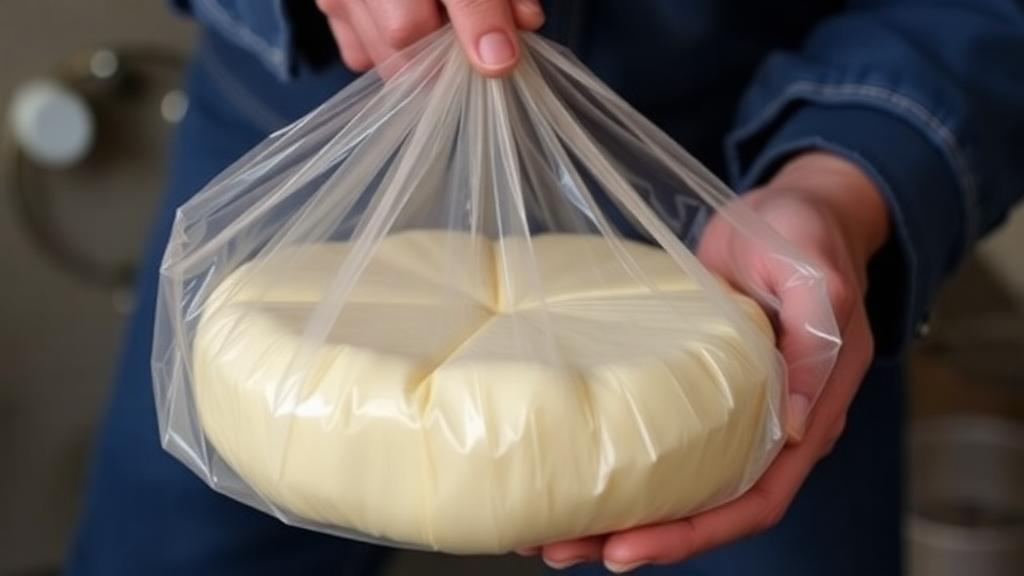
Deep in the mountains and nomadic pastures of Iran, one of the world’s most unusual cheeses has been quietly ripening for centuries inside the hollowed-out skins of goats and sheep. Known as Khiki cheese, or sometimes Poosti cheese, this traditional product takes its name from the Persian word “khik,” meaning a goatskin or sheepskin bag. A comprehensive new review published in the Journal of Agriculture and Food Research has now pulled together nearly everything science knows about this remarkable food, from its artisanal production methods to its complex microbial communities and surprising potential as a source of probiotic bacteria.
The story of Khiki cheese begins with Iran’s vast flocks of sheep and goats, animals far better suited to the country’s arid and mountainous landscapes than cattle. According to figures cited in the review from the Iranian Ministry of Agriculture, the country held roughly 49.4 million sheep and 16.8 million goats in 2023, and nomadic communities breed the majority of them. These herders produce more than 460,000 tons of milk annually, and cheese made from that milk provides an essential source of income and trade. Khiki cheese varieties alone exceed 2,500 tons per year, produced across at least ten provinces including Gilan, North Khorasan, Semnan, West Azarbayjan, Kurdistan, Lorestan, Khuzestan, Fars, and Kerman.
What makes Khiki cheese genuinely distinctive is its ripening vessel. The practice of maturing cheese inside animal skin bags is shared by only a handful of traditions worldwide, including Tulum cheese in Turkey, Darfiyeh in Lebanon, Motal in Azerbaijan, Mišina in Croatia, Mjeh in Bosnia and Herzegovina and Montenegro, and Bouhezza in eastern Algeria. Preparing the bag is an art in itself: the skin is carefully peeled without tearing, scraped clean of flesh, washed, soaked in salt for 24 hours, and sun-dried for 20 to 25 days. All openings except the neck are sewn shut, and the interior is coated with salt and diluted yogurt before the cheese is introduced. Producers generally prefer goatskin because it is stronger than sheepskin.
The production process relies entirely on raw, unpasteurized milk from sheep, goats, or a mixture of the two, with no industrial starter cultures. Fresh milk is filtered, rennet is added, and after about an hour the coagulated curd is drained in cotton cloth, salted to accelerate dehydration, and submerged in 10 to 12 percent brine for 20 to 45 days. The hardened curd is then cut into small cubes and packed into the salted skin bag, which is sealed and stored at roughly 6 to 12 degrees Celsius for three to nine months. Regional variations abound: Kordi cheese from North Khorasan is periodically topped up with whey, dough, or milk to prevent moisture loss, while Aftar cheese from Semnan is ripened in a cave and brined in a saturated 22 percent salt solution. In Lorestan, the bag itself is coated with kashk, a dehydrated yogurt product, before filling.
Because every batch starts with raw milk and a hand-prepared skin, the chemistry of the final cheese varies enormously. Reported pH values span from 4.46 to 6.74, titratable acidity from 0.86 to 13.52 percent lactic acid, moisture from 12.14 to 40.92 percent, fat from 3.8 to 28 percent, and protein from 4.57 to 27.79 percent. The review’s authors caution that this variability is so broad that Khiki cheese cannot be uniformly classified as a full-fat semi-hard cheese under the Codex Alimentarius standard, since the fat-in-dry-matter and moisture-on-a-fat-free-basis values required for that designation have not been consistently measured across varieties.
Ripening inside the permeable skin bag drives a cascade of biochemical transformations. Proteolytic enzymes from rennet, the raw milk, and the bag’s own microflora progressively break down casein into peptides and free amino acids, a process tracked by the water-soluble nitrogen index, which can reach over 61 percent of total nitrogen. Lipolysis releases free fatty acids, particularly short-chain ones that give the cheese its sharp, buttery aroma, and these fatty acids serve as precursors for methyl ketones and esters that deepen the flavor. Meanwhile, salt diffusing inward from the brine tightens the protein matrix through enhanced hydrophobic interactions, and scanning electron microscopy studies show the casein network becoming denser and more compact during the first month, with pore size and roughness increasing as ripening advances.
The microbial ecology of Khiki cheese is where the story becomes truly compelling. Lactic acid bacteria dominate, with counts between 10^3 and 10^6 colony-forming units per gram, and the dominant genera are Lactobacillus, followed by Enterococcus and Pediococcus. Species such as Lactobacillus plantarum, L. casei, L. paracasei, L. brevis, and L. acidophilus have all been isolated, alongside Enterococcus faecium and E. durans. These organisms do more than sour the cheese: they produce organic acids, hydrogen peroxide, and bacteriocins that suppress pathogens. Studies show that coliforms and Staphylococcus aureus detected early in ripening are typically eliminated by the second month, and Salmonella has never been detected in ripened Khiki cheese across multiple investigations.
Food safety remains the central challenge. Because the cheese is made from raw milk under variable hygienic conditions, pathogenic contamination is a real risk, and some E. coli strains isolated from Khiki cheese have carried multiple virulence genes. Pasteurization would eliminate these hazards, but it also destroys the wild lactic acid bacteria responsible for the cheese’s prized flavor and texture; sensory studies consistently show that raw-milk Khiki cheese outperforms its pasteurized counterpart. The solution proposed by researchers is to develop starter and adjunct cultures from the cheese’s own native strains, allowing safe industrial production from pasteurized milk without sacrificing authenticity.
Remarkably, the bacteria of Khiki cheese are proving useful far beyond the dairy case. Strains isolated from the cheese have been deployed as starter cultures for fermented sausages, as anti-yeast agents in the traditional yogurt drink doogh, and as postbiotic coatings that extend the refrigerated shelf life of beef. Even more striking are the probiotic findings: Lactobacillus plantarum strains from Khiki cheese survived simulated gastric conditions, reduced blood glucose and oxidative stress in diabetic rats, and inhibited Listeria monocytogenes and Salmonella. A Lacticaseibacillus casei strain from the cheese showed antimicrobial activity against multiple foodborne pathogens and even cytotoxic effects against cancer cell lines in vitro, while Lactobacillus brevis M3R3 displayed antioxidant and cholesterol-removal properties with a clean safety profile. The authors argue that documenting and standardizing these ancient techniques, classifying varieties by milk type, ripening duration, and compositional indices, could carry a nomadic heritage food into industrial production while preserving the microbial treasures hidden inside its humble skin bags.
Subject of Research: Traditional production, microbiota, and physicochemical properties of Iranian Khiki cheese ripened in animal skin bags
Article Title: Production process, microbiota, and physicochemical composition of traditional cheese products: A case study of Khiki cheese
Article References: Fallah, A. A., Sarmast, E., Jafari, T., Ghasemi, M., & Mousavi Khaneghah, A. (2026). Production process, microbiota, and physicochemical composition of traditional cheese products: A case study of Khiki cheese. Journal of Agriculture and Food Research, 31, Article 103245. https://doi.org/10.1016/j.jafr.2026.103245
Image Credits: AI Generated
DOI: 10.1016/j.jafr.2026.103245
Keywords: Khiki cheese, traditional cheese, Iran, goatskin bag, lactic acid bacteria, raw milk, probiotics, cheese ripening, food safety, Lactobacillus plantarum, dairy microbiology, fermented foods
Cite Scienmag News
Gavin Prescott. (October 2, 2026). Inside Iran’s goatskin cheese: how an ancient bag turns raw milk into a living ecosystem. Scienmag. https://scienmag.com/inside-irans-goatskin-cheese-how-an-ancient-bag-turns-raw-milk-into-a-living-ecosystem/
Gavin Prescott. "Inside Iran’s goatskin cheese: how an ancient bag turns raw milk into a living ecosystem." Scienmag, 2 October 2026, https://scienmag.com/inside-irans-goatskin-cheese-how-an-ancient-bag-turns-raw-milk-into-a-living-ecosystem/. Accessed 2 October 2026.
Gavin Prescott. "Inside Iran’s goatskin cheese: how an ancient bag turns raw milk into a living ecosystem." Scienmag. October 2, 2026. https://scienmag.com/inside-irans-goatskin-cheese-how-an-ancient-bag-turns-raw-milk-into-a-living-ecosystem/


