


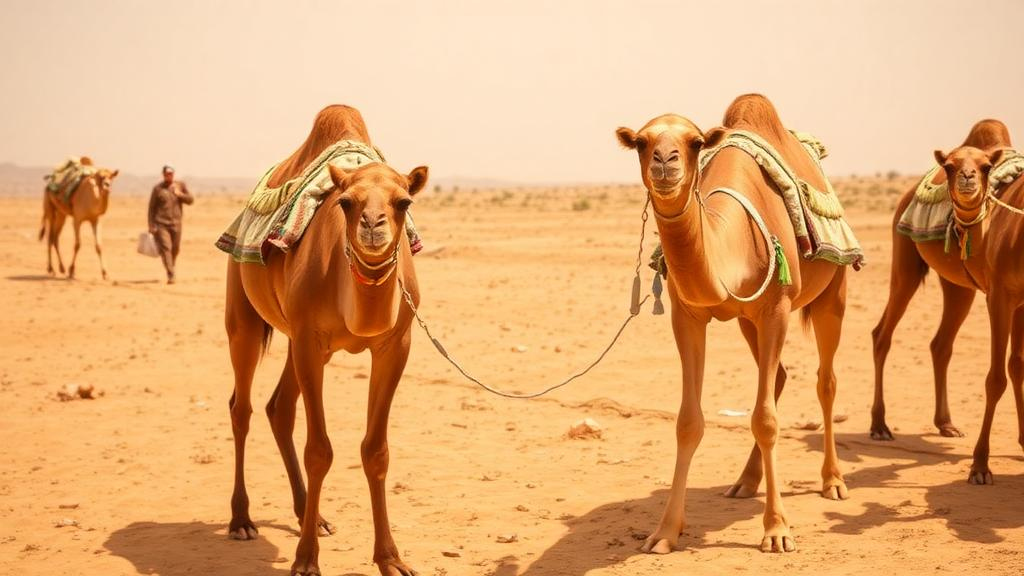
In the parched rangelands of the Horn of Africa, where recurrent drought has pushed cattle herding to the brink of collapse, a quiet dairy revolution is underway. A comprehensive new review published in Food Science of Animal Resources synthesizes more than two decades of research on camel milk across Ethiopia, Kenya, Somalia, and Djibouti, and its findings paint a striking picture: the one-humped dromedary, long dismissed as a marginal livestock species, is emerging as a climate-resilient dairy animal whose milk could reshape food security, nutrition, and regional trade across one of the world’s most drought-vulnerable regions.
The numbers behind this shift are remarkable. Africa hosts more than 80 percent of the world’s camel population, and roughly 60 percent of those animals are concentrated in eastern African countries including Sudan, Somalia, Ethiopia, and Kenya. Global camel milk production climbed from around 3 million tonnes in 2017 to 4.11 million tonnes in 2022, with actual output potentially reaching 5.4 million tonnes once underreporting is accounted for. That represents an average annual growth rate of approximately 2.45 percent, a substantial expansion compared with production levels in the 1960s. Projections suggest the global camel population may reach 60 million within the next 25 years, a trajectory driven largely by the species’ unmatched ability to produce milk where cattle and goats cannot.
In Ethiopia, home to an estimated 1.7 to 2.0 million camels concentrated in the Somali, Afar, and Oromia regions, pastoral communities such as the Afar, Somali, Karayu, and Borana rely on camels for milk, meat, transport, and income. Kenya produces approximately 1.165 million litres of camel milk and Somalia about 0.956 million litres, with camel milk accounting for around 40 percent of total milk output in Somalia and 12 percent in Ethiopia. Yet the review’s authors caution that official statistics likely underestimate true camel numbers across the region, because mobile pastoral herds, weak census systems, and cross-border movements confound data collection. Ethiopia serves as a documented example of this undercounting, and similar structural limitations are reported elsewhere in the region.
What makes camel milk scientifically distinctive is its unusual composition. Compared with bovine and caprine milk, camel milk generally contains lower fat, ranging from approximately 2.5 to 4.5 percent, and lower lactose, with protein levels between 2.5 and 3.9 percent. Its most celebrated feature is an exceptionally high vitamin C concentration that far exceeds the negligible levels found in cow and goat milk, a genuine nutritional advantage in regions where fresh fruits and vegetables are scarce. Camel milk is also rich in calcium, phosphorus, potassium, magnesium, and sodium, and contains bioactive components including lactoferrin and immunoglobulins that contribute to a longer shelf life than bovine milk and underpin traditional preservation practices.
At the molecular level, camel milk’s protein architecture sets it apart in ways that are both beneficial and technically troublesome. It lacks β-lactoglobulin, a major cow-milk whey protein associated with allergic reactions in infants, and contains lower levels of κ-casein alongside larger casein micelles and a higher proportion of β-casein. These traits improve digestibility and reduce allergenic potential, with some researchers noting compositional similarities to human milk. But they also create formidable technological challenges: weak rennet coagulation, poor curd formation, extended fermentation times needed to reach target acidity, and instability under ultra-high-temperature treatment. Butter and cheese made from camel milk yield lower outputs and display different textures than their bovine counterparts, which helps explain why the milk has historically been consumed raw or spontaneously fermented rather than processed.
Traditional utilization remains deeply embedded across the region. Pastoral households drink camel milk fresh, ferment it naturally into sour milk products, and use it as the base for camel milk tea, soups, and stews. Fermented camel milk has long been valued not only for its nutrition but for perceived therapeutic properties, and cultural associations with strength, endurance, and suitability for nomadic life generate stable local demand. In recent years, however, technological advances have begun to unlock new product categories: pasteurized milk, milk powder, yoghurt, cheese, ice cream, chocolate, and probiotic beverages have all been produced from camel milk under optimized conditions. Enterprises such as Tiviski in Mauritania, Camelicious in Dubai, and Addis Kidan Milk Processing Enterprises in Ethiopia now supply pasteurized and packaged camel milk to urban consumers and export markets.
The safety picture is considerably less rosy. The review documents marked variability in microbial quality across Ethiopia and neighboring countries, with total bacterial counts in the Somali Regional State of Ethiopia exceeding acceptable limits and indicating contamination along the value chain. Investigations in pastoral areas of Afar and other lowland regions detected Staphylococcus aureus, Escherichia coli, and other indicator organisms in raw camel milk, with contamination levels linked to poor udder hygiene and traditional storage conditions. Pathogens including Staphylococcus, Streptococcus, Listeria, Salmonella, and Pseudomonas species have been isolated from raw samples, frequently originating from the udder in cases of mastitis. The review emphasizes a common misconception: although camel milk’s natural antimicrobial components are real, their effect at ambient temperatures is limited, and inadequate hygiene during milking, collection, and transport readily overwhelms them. Seasonal variation matters too, with bacterial counts typically higher during the wet season.
The value chain connecting pastoralist herders to commercial markets remains largely informal and fragmented. Milk is often transported without cooling or formal quality control, reducing shelf life and increasing microbial risk. In parts of Ethiopia, women sell camel milk along roadsides without hygienic infrastructure or temperature control, and comparable informal systems dominate in Somalia and northern Kenya, where insecurity, poor roads, and insufficient collection centers restrict commercialization. Emerging peri-urban dairies are beginning to bridge the gap by aggregating milk, improving hygiene, and supplying growing urban demand, while informal cross-border trade among Ethiopia, Somalia, and Kenya reflects strong regional interconnectivity. Comparative benchmarks from Kenya, Kazakhstan, Saudi Arabia, and the United Arab Emirates show how investment in mechanization, regulation, and cold-chain infrastructure can transform the sector, though the review presents these as possible pathways rather than direct models.
Structural constraints run deep. The camel sector has historically received limited research investment and policy prioritization, with livestock development programs favoring cattle and small ruminants. Many countries lack national standards for processed camel milk products, and regulatory harmonization among Ethiopia, Somalia, Kenya, Sudan, and Djibouti remains limited, constraining cross-border trade despite robust informal flows. Feed shortages driven by rangeland degradation, deforestation, and recurrent droughts reduce milk output, while inadequate veterinary coverage and recurrent disease outbreaks depress productivity. Dromedaries’ slow reproduction, including a roughly 13-month gestation period and restricted mating season, further limits herd expansion under traditional management. Institutional initiatives such as Ethiopia’s Meat and Milk Institute and the PRIME project have provided training in milk handling and marketing, but sustained interventions remain scarce elsewhere in the region.
Despite these obstacles, the opportunities are substantial. Declining cattle productivity under recurrent drought has pushed pastoralists across northern Kenya, Somalia, and Sudan toward camels, which maintain milk production through prolonged dry periods and thereby stabilize both household food security and raw material supply for processors. Growing health awareness has expanded camel milk’s appeal in urban and niche export markets, and pilot-scale facilities in Kenya and Ethiopia have already introduced pasteurized milk and yoghurt to city consumers. The review’s authors argue that coordinated improvements in processing technology, cold-chain infrastructure, quality assurance, and regional policy harmonization, supported by public-private partnerships and targeted research investment, could transform camel milk from a predominantly informal commodity into a competitive regional and export product. If that transition succeeds, the white gold of the desert may prove to be one of the most consequential climate-adaptation stories in global agriculture, turning one of humanity’s oldest dairy traditions into an engine of food security, employment, and economic resilience for millions of pastoralists across the Horn of Africa.
Subject of Research: Camel milk production systems, nutritional quality, safety, and value chain dynamics in the Horn of Africa
Article Title: Camel milk in the horn of Africa: production systems, physicochemical, and nutritional quality, traditional utilization, safety, and market value chain dynamics
Article References: Mahdi Hassan, S., Bekele Tola, Y., Fikreyesus Forsido, S., Arimi, J., Abera Teka, T., & Makiso Urugo, M. (2026). Camel milk in the horn of Africa: production systems, physicochemical, and nutritional quality, traditional utilization, safety, and market value chain dynamics. Food Science of Animal Resources, 46(1), Article 67. https://doi.org/10.1007/s44463-026-00077-6
Image Credits: AI Generated
DOI: 10.1007/s44463-026-00077-6
Keywords: camel milk, Horn of Africa, pastoralism, dairy production, food security, climate resilience, milk safety, value chain, vitamin C, fermentation, Ethiopia, Kenya
Cite Scienmag News
Sloane Callahan. (October 2, 2026). Camel Milk Emerges as the White Gold of Africa’s Drought-Hit Drylands. Scienmag. https://scienmag.com/camel-milk-emerges-as-the-white-gold-of-africas-drought-hit-drylands/
Sloane Callahan. "Camel Milk Emerges as the White Gold of Africa’s Drought-Hit Drylands." Scienmag, 2 October 2026, https://scienmag.com/camel-milk-emerges-as-the-white-gold-of-africas-drought-hit-drylands/. Accessed 5 October 2026.
Sloane Callahan. "Camel Milk Emerges as the White Gold of Africa’s Drought-Hit Drylands." Scienmag. October 2, 2026. https://scienmag.com/camel-milk-emerges-as-the-white-gold-of-africas-drought-hit-drylands/


