


A new study of tourism in Nigeria’s Abia State has produced some of the most granular evidence yet on how insecurity corrodes a destination economy from the inside out. Published in Discover Global Society, the research by Ogochukwu Favour Nzeakor of the University of South Africa combines surveys of 300 visitors, 300 residents and 80 tourism-related enterprises with spatial analysis of security incidents along the corridors that feed heritage attractions such as the Long Juju of Arochukwu and the National War Museum. The result is a corridor-level map of fear, showing precisely where risk concentrates, how it travels through the minds of prospective travelers, and where it lands on the balance sheets of hotels, guesthouses and tour operators.
The study’s spatial findings are stark. More than 45 percent of all reported security incidents cluster along the Umunneochi–Isuikwuato–Ohafia belt, the primary access route to some of the state’s most significant heritage sites. Kidnapping emerges as the most frequently reported threat among visitors, cited by 26 percent of respondents, followed by banditry at 22 percent, armed robbery at 21 percent, cult violence at 17 percent and herdsmen conflict at 14 percent. Among residents, exposure is widespread: 68 percent reported knowing someone affected by insecurity within the previous twelve months, and only 32 percent experienced zero or one incident in the past year. Umuahia recorded the lowest corridor exposure, while Umunneochi, Isuikwuato and Ohafia topped the risk ranking.
To explain how these objective threats translate into lost bookings, the study leans on Risk Perception Theory, the framework pioneered by psychologist Paul Slovic, which holds that risk judgments combine perceived probability, perceived severity, perceived control and affective dread. These subjective assessments, shaped by media framing and institutional trust, often diverge from statistical reality, and they drive destination choice, trip length and substitution toward safer alternatives. The study pairs this lens with a Destination Resilience perspective, which asks whether governance, infrastructure and credible safety signaling can help a destination absorb shocks and recover demand.
The statistical signature of fear is unambiguous. Perceived risk correlates negatively with destination appeal at r = −0.61 and with visitation intent at r = −0.54, while appeal and visitation intent move together positively at r = +0.66. Mean perceived risk among visitors scored 3.42 on the study’s scale, above the midpoint, whereas destination appeal at 2.89 and visitation intent at 2.74 fell below it, a pattern the author interprets as suppressed demand. In plain terms, tourists who feel unsafe do not merely shorten trips; they stop recommending the destination altogether, and the reputational damage propagates through word of mouth and social signaling.
The enterprise-level data reveal how corridor insecurity becomes a tax on the tourism value chain. Firms in high-risk corridors reported occupancy declines of 18 to 25 percent relative to safer locations, alongside operational cost increases of 22 to 30 percent driven largely by security spending. Across the sample, mean occupancy stood at 52.8 percent, with monthly revenue averaging ₦843,000 against monthly security costs of ₦124,500, and firms experienced an average of 8.1 incidents affecting operations per year. Most strikingly, security expenditure alone accounted for roughly 31 percent of the variance in profitability, meaning that money spent on guards, alarms and insurance is directly cannibalizing margins that would otherwise fund growth.
Investment sentiment shows the same corrosion. Nearly half of surveyed firms, 46 percent, reported delaying expansion plans, and 29 percent said investor negotiations had stalled outright. Businesses that had experienced repeated incidents displayed the lowest willingness to reinvest, suggesting a self-reinforcing cycle in which insecurity depresses demand, depressed demand weakens firms, weakened firms cannot invest in resilience, and the corridor becomes progressively less attractive to both visitors and capital.
Yet the study is not purely a story of decline; its most policy-relevant contribution is the identification of resilience enablers that measurably buffer the damage. Structural equation modeling showed that infrastructure quality significantly weakens the negative effect of perceived risk on destination appeal, with a moderation coefficient of β = −0.22. Awareness of state security initiatives positively moderates the link between appeal and visitation intent at β = +0.19. Awareness levels varied considerably: 58 percent of visitors knew about new road rehabilitation projects, 44 percent about the ₦3.4 billion Abia Security Fund, and only 36 percent about increased patrol presence on major routes, implying substantial untapped potential in safety communication.
These moderating effects align the Abia findings with a global literature documenting that tourism demand is acutely sensitive to safety signals, and that destinations investing in visible security, reliable roads, lighting and crisis communication can stabilize demand even in volatile environments. The study also documents spillover dynamics familiar from other Nigerian and African contexts: violence concentrated along specific access routes inflicts reputational damage on attractions that may be physically distant from the incidents themselves, so a kidnapping on the Umunneochi corridor suppresses visits to Arochukwu’s heritage sites even when those sites remain safe.
The author translates the evidence into a sequenced policy agenda. Corridor-focused policing with rapid-response units and data-driven surveillance should concentrate on the hotspot belt; road rehabilitation, lighting, signage and emergency-response visibility should be prioritized along high-risk routes; and credible, continuous safety signaling through dashboards and transparent incident reporting should re-establish perceived control among travelers. Community-based safety governance, engaging traditional institutions and vigilante groups under formal oversight, is positioned as a complement to formal policing, while risk-sharing instruments such as insurance subsidies and security grants could relieve cost pressures on firms.
The study acknowledges the limits inherent in its cross-sectional design, which restricts causal claims to associations and plausible mediated pathways, and in its reliance on self-reported perceptions subject to recall and social desirability bias. Generalization beyond Abia’s five primary corridors remains uncertain. Still, the methodological combination of latent-variable modeling with spatial exposure indices offers a template other security-affected destinations could adopt. The broader message is one of conditional optimism: sustainable tourism growth in Abia State appears feasible, but only when security financing, infrastructure investment and credible risk communication operate as an integrated system rather than as isolated interventions.
Subject of Research: Effects of insecurity and risk perception on tourism growth and firm performance along tourism corridors in Abia State, Nigeria
Article Title: Effects of insecurity on tourism growth in Abia State Nigeria
Article References: Nzeakor, O. F. (2026). Effects of insecurity on tourism growth in Abia State Nigeria. Discover Global Society, 4(1), Article 207. https://doi.org/10.1007/s44282-026-00551-y
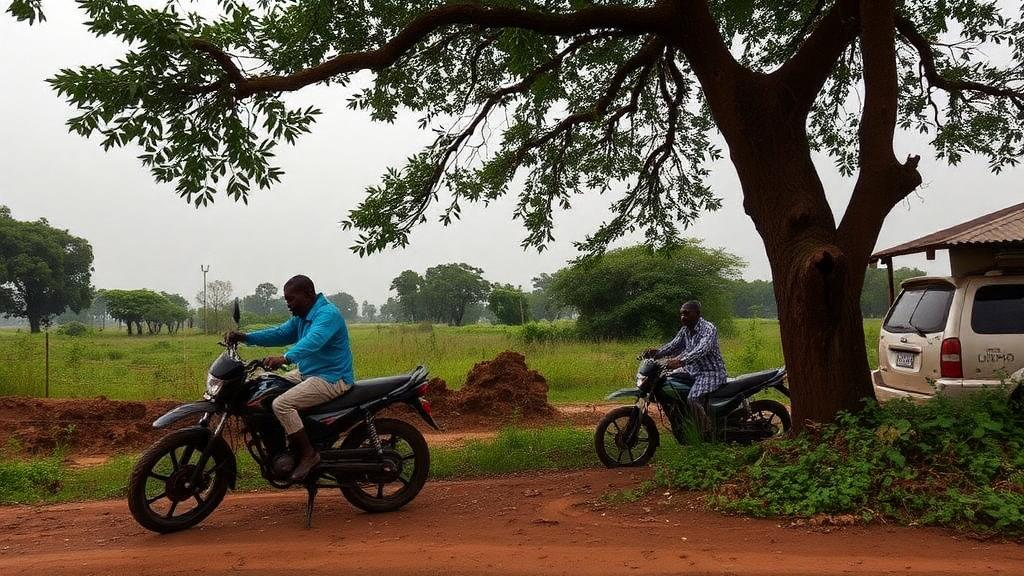
Image Credits: AI Generated
DOI: 10.1007/s44282-026-00551-y
Keywords: insecurity, tourism, Abia State, Nigeria, risk perception, kidnapping, banditry, destination resilience, corridor governance, hotel occupancy, security costs, infrastructure
Cite Scienmag News
Courtney Benton. (October 5, 2026). Fear on the Road: How Kidnapping Hotspots Are Strangling Tourism in Nigeria’s Abia State. Scienmag. https://scienmag.com/fear-on-the-road-how-kidnapping-hotspots-are-strangling-tourism-in-nigerias-abia-state/
Courtney Benton. "Fear on the Road: How Kidnapping Hotspots Are Strangling Tourism in Nigeria’s Abia State." Scienmag, 5 October 2026, https://scienmag.com/fear-on-the-road-how-kidnapping-hotspots-are-strangling-tourism-in-nigerias-abia-state/. Accessed 5 October 2026.
Courtney Benton. "Fear on the Road: How Kidnapping Hotspots Are Strangling Tourism in Nigeria’s Abia State." Scienmag. October 5, 2026. https://scienmag.com/fear-on-the-road-how-kidnapping-hotspots-are-strangling-tourism-in-nigerias-abia-state/


