


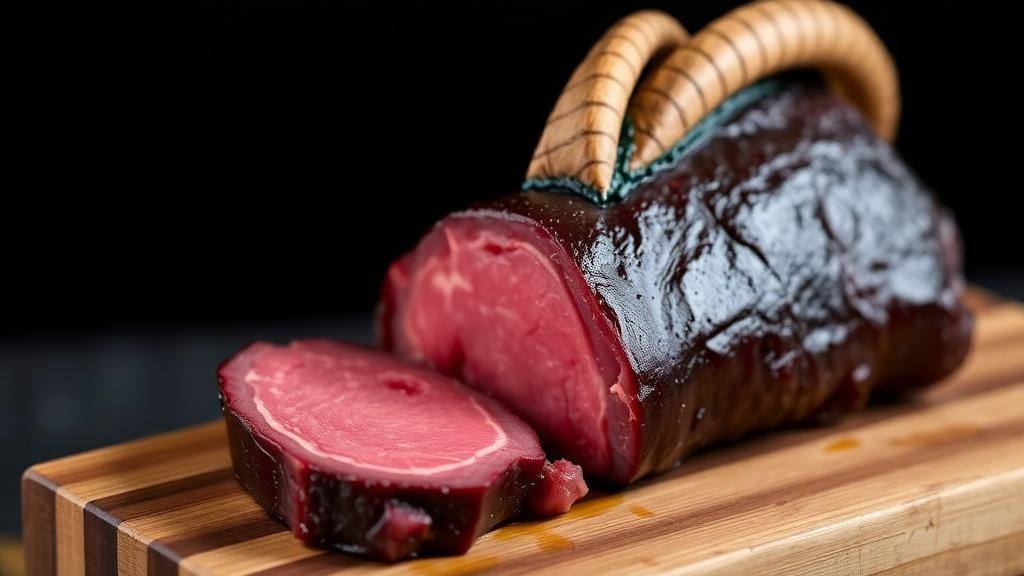
Korean native black goats, a small indigenous breed known scientifically as Capra hircus coreanae, have long occupied a special place on the Korean table as a restorative food, yet their meat remains a niche product compared with beef, pork, and poultry. A new review published in Food Science of Animal Resources argues that this underused livestock species deserves fresh attention, not for tradition’s sake but because its meat displays an unusually favorable nutritional signature: lean flesh with minimal fat deposition, a fatty-acid balance tilted toward unsaturated fats, abundant essential amino acids, and a suite of bioactive compounds linked to antioxidant defense and energy metabolism. The authors, led by researchers at Gyeongsang National University, go a step further by proposing a cut-by-cut framework that matches specific parts of the animal to the nutritional priorities of children, adults, and older adults.
The review is careful about what it can and cannot claim. Because the evidence base for this breed is limited and heterogeneous, the authors screened 42 records published between January 2000 and January 2026 and retained 18 empirical studies as their core evidence, synthesizing the findings as a structured narrative rather than a meta-analysis. They explicitly frame their age-stratified suggestions as hypothesis-generating compositional alignments, not clinical dietary guidance. That caution matters, because most of the data come from laboratory profiling of meat composition rather than from controlled human trials, and the authors repeatedly warn that compositional plausibility is not the same as proven health benefit.
The physiological story begins with how these goats live. Korean native black goats are raised primarily as a meat breed, often under grazing-based systems in mountainous terrain. Their small body size and active foraging behavior are associated with limited fat deposition and a higher proportion of lean tissue. That leanness has a biochemical consequence: with less storage fat in the muscle, the overall lipid pool shifts toward membrane-associated polar lipids, which are typically richer in unsaturated fatty acids than the triacylglycerols that dominate fat depots. The result, according to the synthesis, is meat whose saturated fatty acid proportion hovers around 35 to 38 percent across major cuts, compared with figures approaching 45 percent in selected Hanwoo beef loin samples and exceeding 50 percent in a crossbred goat comparator.
Those numbers come with caveats. Fatty-acid composition is shaped by intramuscular fat levels, lipid-class distribution, breed, age, feeding system, muscle function, and postmortem handling, so cross-study comparisons are vulnerable to confounding. The review notes, for instance, that some pork cuts show saturated fat proportions as low as or lower than those of the goat leg cuts, and that marbling grade in beef reflects fatness and grain finishing as much as species identity. The consistent signal, the authors argue, is directional rather than quantitative: across shoulder, loin, foreleg, hind leg, and rib, Korean native black goat meat tends toward lower saturated and higher unsaturated fat than cattle, pigs, and crossbred goats, and even outperforms other goat crossbreeds. In the rib cut, the native goats measured 41.95 percent saturated fatty acids against 51.44 percent in the crossbred comparator.
Beyond the lipid profile, the meat is protein-dense in ways that matter for human nutrition. Its crude protein content is comparable to beef while its crude fat is exceptionally low, and its cholesterol level, roughly 35.73 to 37.48 milligrams per 100 grams, sits below typical beef or pork values. The meat is particularly rich in histidine, important for growth and tissue development, and arginine, which participates in ammonia detoxification and blood-flow regulation. It also carries high concentrations of L-carnitine, 20.8 to 26.0 milligrams per 100 grams, a compound that shuttles fatty acids into mitochondria for oxidation. Linoleic acid and oleic acid are the dominant unsaturated fatty acids, and linoleic acid serves as a precursor for eicosanoids that modulate inflammatory responses.
The most intriguing components may be the bioactive dipeptides and related metabolites. Creatine, carnosine, and anserine appear at notable levels, and each has a defined biochemical role: creatine supports rapid energy regeneration in muscle, carnosine buffers intracellular pH and mitigates oxidative stress, and anserine facilitates the removal of reactive oxygen species and recovery from muscle fatigue. These findings rest mainly on biochemical and experimental evidence, but they give the meat a functional profile that few mainstream livestock products can match. Rib cuts showed the highest antioxidant capacity among the major cuts in one analysis, while another study found the chuck, with its distinctive magnesium and phosphorus content, displayed the greatest antioxidative potential, suggesting that mineral composition may modulate antioxidant enzyme activity.
Cut-specific differences are where the review becomes genuinely practical. The hind leg is a branched-chain amino acid powerhouse, containing 2,672 milligrams of valine, 2,487 milligrams of leucine, and 1,565 milligrams of isoleucine per 100 grams, for a total of 6.72 grams, a substantial contribution toward World Health Organization reference intakes. It is also rich in the antioxidant amino acids histidine and methionine. The back loin, by contrast, has low collagen content and a favorable protein-to-unsaturated-fat ratio, making it tender and highly digestible, and it carries meaningful amounts of creatine, carnosine, and anserine. Rib meat is fattier but shows the strongest antioxidant activity in the assays used, while shoulder meat contains about 2.8 percent crude fat and notably high magnesium and phosphorus.
From these profiles the authors build their life-stage framework. For children and adolescents, whose rapid growth elevates protein and branched-chain amino acid requirements, the hind leg emerges as a plausible protein source supporting muscle accretion. For adults focused on cardiovascular and metabolic health, the loin or sirloin, with its lower saturated fat proportion and its creatine, carnosine, and anserine content, fits dietary patterns emphasizing a favorable fatty-acid balance; physically active adults might combine loin and hind leg cuts to support both protein synthesis and muscle energetics. For older adults, who face reduced protein digestibility and progressive muscle loss, the tender, easily chewed sirloin with its leucine-rich essential amino acid profile is the recommended starting point, while the dense hind leg may demand too much chewing and the fattier rib cuts warrant moderation.
The review situates these suggestions within established geriatric nutrition guidance, including the PROT-AGE position paper and ESPEN recommendations, stressing that protein needs in older people should be individualized according to health status, appetite, and comorbidities, with goat meat as one food-based option among many. It also confronts the sensory hurdle that has limited the breed’s market reach: the characteristic goaty odor, driven by volatile branched-chain fatty acids whose concentrations vary with genetics, age, feeding, and postmortem handling. Some consumers read that odor as traditional restorative value; others find it off-putting. Because the odor is a modifiable attribute rather than an immutable breed trait, the authors point to integrated control points spanning feeding, management, and processing, noting that high-pressure treatment has been reported to attenuate off-odor intensity, though commercial feasibility remains unproven.
The path forward, the authors conclude, requires coordinated work on several fronts: metabolic and genetic studies to explain how the goats’ physiology produces their nutritional advantages; standardized cross-species comparisons normalized for intramuscular fat; controlled human trials measuring bioavailability and dose-response relationships for the bioactive compounds; pilot studies of protein digestibility and amino acid kinetics; and consumer research on acceptability and flavor reduction. Breeding programs are already underway, crossing three indigenous Korean lines with the New Zealand Boer breed to develop improved commercial strains. Until human intervention data arrive, the review’s message is measured but striking: a traditional medicinal meat may be one of the most nutritionally interesting protein sources in the modern livestock portfolio, provided consumers and scientists alike resist the temptation to treat compositional promise as clinical proof.
Subject of Research: Nutritional composition of Korean native black goat meat and age-specific consumption strategies
Article Title: Physiological and nutritional characteristics of Korean native black goats and their implications for age-specific consumption strategie
Article References: Lee, H. W., Kim, W. J., Jang, H. G., Kim, D. B., Lee, H. J., Kim, J. H., & Lee, S. Y. (2026). Physiological and nutritional characteristics of Korean native black goats and their implications for age-specific consumption strategie. Food Science of Animal Resources, 46(1), Article 51. https://doi.org/10.1007/s44463-026-00065-w
Image Credits: AI Generated
DOI: 10.1007/s44463-026-00065-w
Keywords: Korean native black goat, meat quality, fatty acids, essential amino acids, bioactive compounds, carnosine, anserine, creatine, nutrition, functional food, precision nutrition, aging
Cite Scienmag News
Daisy Hatcher. (October 5, 2026). Korean Black Goat Meat Shows Lean, Unsaturated-Fat-Rich Profile With Age-Based Cut Choices. Scienmag. https://scienmag.com/korean-black-goat-meat-shows-lean-unsaturated-fat-rich-profile-with-age-based-cut-choices/
Daisy Hatcher. "Korean Black Goat Meat Shows Lean, Unsaturated-Fat-Rich Profile With Age-Based Cut Choices." Scienmag, 5 October 2026, https://scienmag.com/korean-black-goat-meat-shows-lean-unsaturated-fat-rich-profile-with-age-based-cut-choices/. Accessed 17 October 2026.
Daisy Hatcher. "Korean Black Goat Meat Shows Lean, Unsaturated-Fat-Rich Profile With Age-Based Cut Choices." Scienmag. October 5, 2026. https://scienmag.com/korean-black-goat-meat-shows-lean-unsaturated-fat-rich-profile-with-age-based-cut-choices/


