


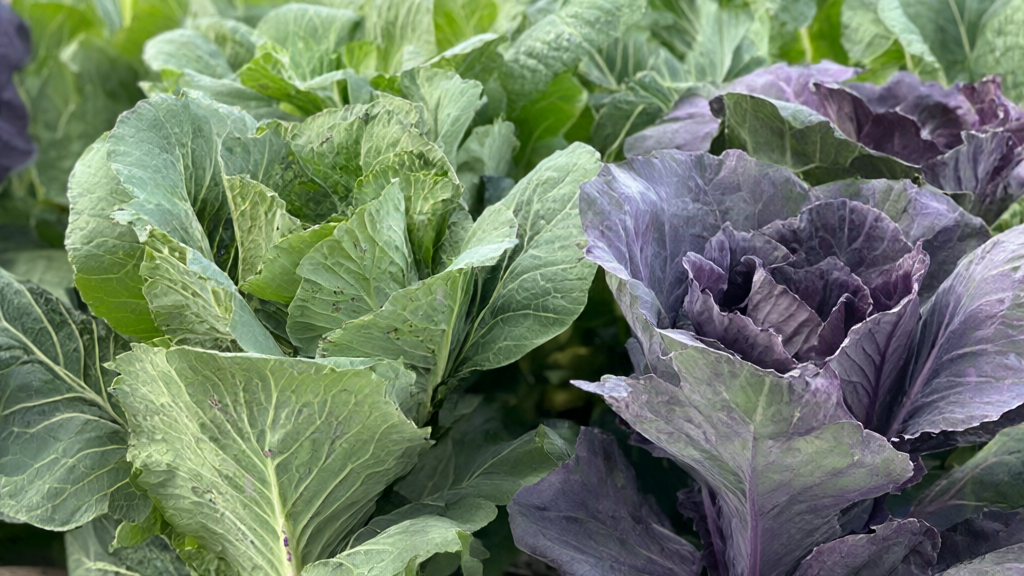
Chinese cabbage, scientifically known as Brassica rapa subsp. pekinensis, is a widely cultivated vegetable that exhibits a diverse range of leaf colors, including green, red, and purple. While the green varieties are the most common in many markets, the red and purple types are often valued for their visual appeal and enhanced nutritional profiles. The coloration of these leaves is primarily driven by the accumulation of specific plant pigments called anthocyanins. Although the general biochemical pathway for producing these pigments is well understood by scientists, the precise genetic mechanisms that determine whether a plant develops red or purple foliage have remained a subject of ongoing investigation.
A recent study published in BMC Plant Biology provides new insights into this genetic basis. Researchers Sun-Hyung Lim, Da-Hye Kim, and Gyu-Min Park from Hankyong National University in Korea investigated the role of a specific enzyme known as flavonoid 3′-hydroxylase, abbreviated as BrF3’H. This enzyme plays a critical role in the biosynthesis of flavonoids, which are a large class of plant secondary metabolites. The study focused on how variations in the gene encoding this enzyme influence the composition of flavonoids and, consequently, the final pigmentation of the leaves.
The research team conducted a comparative analysis of metabolite profiles between two distinct lines of Chinese cabbage: one with purple leaves (P line) and one with red leaves (R line). The analysis revealed that the two lines accumulated different types of anthocyanins. Specifically, the purple line predominantly contained cyanidin-derived anthocyanins, whereas the red line was characterized by the accumulation of pelargonidin-derived anthocyanins. These differences in pigment types are directly responsible for the distinct hues observed in the leaves of the respective lines.
In addition to anthocyanins, the study examined the presence of flavonols, another group of flavonoid compounds. Both the purple and red lines contained kaempferol derivatives as their major flavonols. However, a notable difference was observed in the relative proportions of other flavonols. The purple line showed a higher relative proportion of quercetin-derived compounds compared to the red line. This shift in flavonol composition suggests that the enzymatic activity of BrF3’H influences not only the type of anthocyanin produced but also the balance of other flavonoid compounds within the plant tissue.
To understand the molecular basis of these metabolic differences, the researchers measured the transcript levels of the BrF3’H gene in both lines. They found that the expression of BrF3’H was significantly higher in the purple line than in the red line. Higher transcript levels generally indicate that the gene is more active, leading to the production of more of the corresponding enzyme. This finding aligns with the observation that the purple line, which has higher BrF3’H activity, accumulates different flavonoid compounds compared to the red line.
Sequence analysis of the BrF3’H gene provided a potential explanation for the difference in gene expression and activity. The researchers identified a transposon insertion in the second exon of the BrF3’H gene in the red line. A transposon is a segment of DNA that can move around the genome, and its insertion into a gene can disrupt the gene’s function. In this case, the insertion was predicted to result in the production of a truncated protein. This truncated protein would lack conserved C-terminal regions that are essential for the enzyme’s proper structure and function. Consequently, the BrF3’H enzyme in the red line is likely non-functional or significantly less active than the enzyme in the purple line.
Further evidence supporting the functional importance of BrF3’H came from protein-protein interaction analysis. The researchers examined how the BrF3’H protein interacts with other enzymes involved in the upstream flavonoid biosynthetic pathway. In the purple line, the BrF3’H protein was shown to interact with these upstream enzymes. However, in the red line, these interactions were abolished. This suggests that the structural integrity of the BrF3’H protein is necessary for it to function effectively within the biosynthetic network. The loss of these interactions in the red line likely contributes to the altered flavonoid profile observed in that line.
The study also demonstrated that the allelic variation in BrF3’H is tightly linked to leaf color across additional lines of Chinese cabbage. This consistency allowed the researchers to develop a molecular marker for phenotypic discrimination. A molecular marker is a DNA sequence that can be used to identify specific traits in plants. In this context, the marker can be used to distinguish between plants that will develop purple leaves and those that will develop red leaves based on their genetic makeup. This tool could be valuable for breeders and researchers who are interested in selecting for specific leaf color traits in Chinese cabbage.
The findings of this study highlight the importance of BrF3’H allelic variation in determining flavonoid composition and leaf pigmentation in Chinese cabbage. By identifying the specific genetic change responsible for the difference between red and purple leaves, the researchers have provided a clearer understanding of the molecular mechanisms underlying these traits. This knowledge can be applied in plant breeding programs to develop new varieties with desired color characteristics. Furthermore, understanding the role of BrF3’H in flavonoid biosynthesis may have broader implications for improving the nutritional quality of other Brassica crops, as flavonoids are known to have various health benefits.
In conclusion, the research conducted by Lim, Kim, and Park offers significant insights into the genetic control of leaf color in Chinese cabbage. The identification of a transposon insertion in the BrF3’H gene as a candidate contributor to differences in flavonoid composition and pigmentation between the red and purple lines is a key finding. The development of a molecular marker based on this variation provides a practical tool for plant breeders. As the demand for diverse and nutritious vegetable varieties continues to grow, studies like this one are essential for advancing our understanding of plant genetics and improving crop quality.
Subject of Research: Plant Genetics
Article Title: Allelic variation in BrF3’H is associated with flavonoid composition and leaf pigmentation in Chinese cabbage
Article References: Lim, S.-H., Kim, D.-H., & Park, G.-M. (2026). Allelic variation in BrF3’H is associated with flavonoid composition and leaf pigmentation in Chinese cabbage. BMC Plant Biology. https://doi.org/10.1186/s12870-026-10066-y
Image Credits: AI Generated
DOI: 10.1186/s12870-026-10066-y
Keywords: Chinese cabbage, BrF3'H, Flavonoids, Leaf pigmentation, Plant breeding, Allelic, variation, BrF3, associated, flavonoid, composition, leaf
Cite Scienmag News
Juliet Wilcox. (October 2, 2026). Gene variation linked to leaf color in Chinese cabbage. Scienmag. https://scienmag.com/gene-variation-linked-to-leaf-color-in-chinese-cabbage/
Juliet Wilcox. "Gene variation linked to leaf color in Chinese cabbage." Scienmag, 2 October 2026, https://scienmag.com/gene-variation-linked-to-leaf-color-in-chinese-cabbage/. Accessed 17 October 2026.
Juliet Wilcox. "Gene variation linked to leaf color in Chinese cabbage." Scienmag. October 2, 2026. https://scienmag.com/gene-variation-linked-to-leaf-color-in-chinese-cabbage/


