


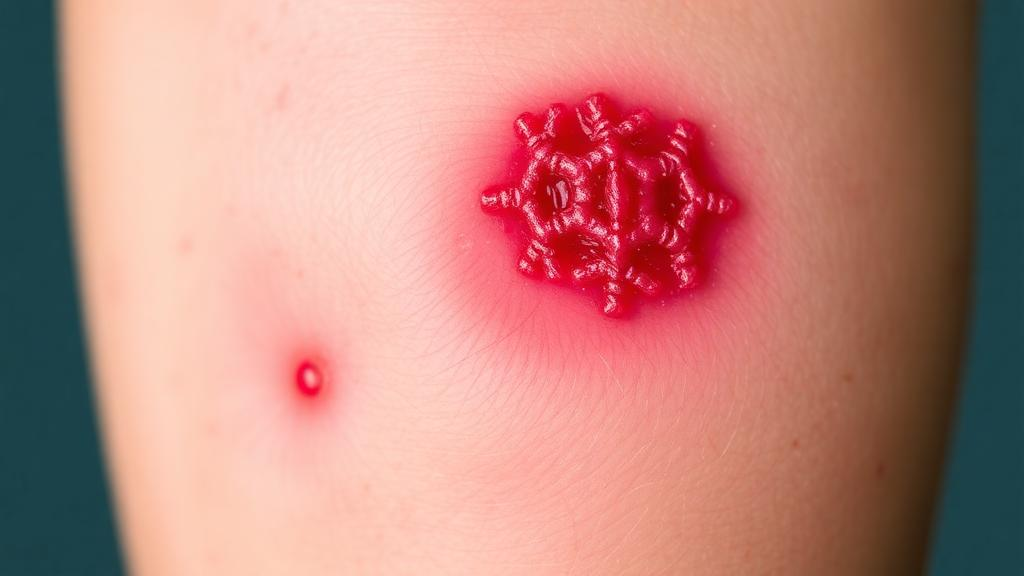
Diabetic ulcers are among the most feared complications of diabetes mellitus, driving infection, recurrence, amputation, and excess mortality in millions of patients worldwide. Yet the molecular machinery that separates a wound that heals from one that stalls has remained frustratingly opaque. Now, a team of researchers in China has combined large-scale transcriptomic mining, machine learning, single-cell sequencing, and mouse experiments to assemble what they describe as a candidate biomarker panel for diabetic ulcers, along with a map of the immune features that accompany it. The study, published in Molecular Biology Reports, centers on a ten-gene signature that reliably distinguishes ulcer tissue from healthy tissue across multiple independent datasets.
The research began with a deliberately focused starting point: lipid metabolism. Metabolic dysfunction sits at the heart of diabetes, and bioactive lipid mediators are known to shape skin inflammation and immunity, so the team reasoned that genes tied to lipid handling might yield clues about why diabetic wounds fail to close. Using public gene expression data deposited in the Gene Expression Omnibus under accession numbers GSE80178, GSE68183, GSE134431, GSE199939 and GSE223964, the investigators first identified differentially expressed genes between diabetic ulcer samples and non-ulcer controls, then intersected those changes with curated lipid metabolism-related gene sets drawn from the Molecular Signatures Database.
From that intersection, the researchers deployed a random forest machine learning model, an ensemble method that builds many decision trees on random subsets of the data and votes on the most informative features. The algorithm whittled the candidate list down to a compact panel of ten genes: ANGPTL4, BNIP3, EEF2K, EIF4EBP1, KLHDC1, KLK10, KLK8, NFIX, QSOX1 and S100A8. When the model’s performance was evaluated with receiver operating characteristic analysis, the ten-gene panel showed strong discrimination between ulcer and non-ulcer tissue, and its expression patterns proved reproducible across external validation cohorts that the model had never seen during training.
Each member of the panel carries biological weight in the context of wound repair. ANGPTL4, an angiopoietin-like protein, has been implicated in fibrotic progression in diabetic kidney disease and acts as a regulator of lipid metabolism during systemic inflammation. BNIP3 is a mitochondrial receptor that triggers mitophagy, the selective disposal of damaged mitochondria, a process increasingly recognized as a checkpoint of immune function. EEF2K and EIF4EBP1 sit on pathways governing protein synthesis and the mechanistic target of rapamycin complex 1, a nutrient-sensing hub. KLK8 and KLK10 belong to the kallikrein family of secreted proteases, NFIX is a transcription factor, QSOX1 participates in extracellular matrix maturation through hydrogen peroxide production, and S100A8 is a well-characterized alarmin released during inflammatory responses.
To understand what the signature means immunologically, the team applied single-sample gene set enrichment analysis, gene set enrichment analysis, and gene set variation analysis to the transcriptomic data. These techniques estimate the activity of predefined biological pathways within each individual sample rather than averaging across groups. The analyses linked the ten-gene panel to infiltration by T helper 17 cells, a pro-inflammatory CD4 T cell subset defined by production of interleukin 17A, and to interleukin receptor activity. The connection is biologically plausible: previous work has shown that suppressing Th17 cell differentiation can promote diabetic chronic wound healing, and pro-inflammatory cytokines such as interleukin 1 beta, interleukin 6 and tumor necrosis factor alpha are established contributors to impaired repair in diabetic skin.
Single-cell RNA sequencing added a spatial and cellular dimension to the findings. By profiling gene expression in individual cells recovered from wound tissue, the researchers localized the panel genes to distinct wound-associated cell populations, showing that the signature is not a diffuse tissue-level signal but a composite of specific cell types responding to the diabetic wound environment. This cell-specific attribution matters for interpretation, because a gene that appears elevated in bulk tissue may reflect a shift in cellular composition rather than a change in per-cell expression, and disentangling the two is essential for choosing the right therapeutic target.
The computational work was then stress-tested in living animals. The team induced diabetes in C57BL/6 mice with streptozotocin, a chemical that destroys insulin-producing beta cells, and created standardized wounds whose closure was tracked by serial imaging. Diabetic mice exhibited delayed wound closure and greater residual wound widths than non-diabetic control animals, reproducing the clinical phenotype the gene panel is meant to explain. Hematoxylin and eosin staining of wound sections allowed the researchers to assess tissue architecture, while quantitative real-time polymerase chain reaction measured transcript levels of representative genes, enzyme-linked immunosorbent assays quantified secreted protein markers, and western blotting confirmed changes at the protein level. Critically, the transcript and protein assays showed concordant changes, meaning the RNA-level signature translated into measurable molecular differences in the wounded tissue.
Beyond diagnosis, the study explored therapeutic angles through drug-gene interaction analysis using the Drug Gene Interaction Database, which catalogs known relationships between genes and pharmacological compounds. This step flags whether any of the ten biomarkers are already druggable or targeted by existing agents, offering a shortcut from biomarker discovery to repurposing opportunities. The authors also performed single-gene pathway analyses for each hub gene, mapping individual genes onto Kyoto Encyclopedia of Genes and Genomes pathways, and compared pathway activity between high- and low-expression groups for every member of the panel, revealing how each gene’s expression level reshapes the surrounding signaling landscape.
The significance of the work lies in its integration. Biomarker studies often rely on a single dataset and a single method, leaving results vulnerable to batch effects and cohort-specific quirks. By combining differential expression, machine learning feature selection, multiple enrichment frameworks, single-cell resolution, external validation, and an animal model with orthogonal protein-level confirmation, the researchers built a chain of evidence in which each link compensates for the weaknesses of the others. The result is a candidate signature that behaves consistently across human cohorts and mouse wounds, and that points toward a coherent biological story in which lipid metabolic stress, defective mitophagy, and Th17-driven inflammation converge to keep diabetic ulcers open.
The authors are careful to note the limits of the work. The panel remains a candidate biomarker set, and further validation in larger human cohorts is required before any clinical application, whether as a diagnostic test to stratify patients at risk of non-healing or as a guide to anti-inflammatory therapy. Diabetic foot ulcers impose a heavy and unequal burden globally, and a molecular yardstick that captures the immune and metabolic state of a wound could eventually help clinicians decide which lesions need aggressive intervention and which are likely to progress toward closure. For now, the ten-gene panel offers researchers a concrete molecular handle on one of diabetes most stubborn complications, and a template for how machine learning and classical wet-lab validation can be stitched together to interrogate complex disease tissue.
Subject of Research: Identification of candidate biomarkers and immune features in diabetic ulcers through integrative transcriptomic and machine learning analysis
Article Title: Integrative transcriptomic and machine learning analysis identifies candidate biomarkers and immune features in diabetic ulcers
Article References: Jiang, Y., Cai, Y., Liu, Q., Jiang, J., Shen, F., Zhang, Y., Fei, X., Kuai, L., Zhang, Z., Luo, Y., Song, J., Ma, X., Li, B., Ma, X., & Ru, Y. (2026). Integrative transcriptomic and machine learning analysis identifies candidate biomarkers and immune features in diabetic ulcers. Molecular Biology Reports, 53(1), Article 1669. https://doi.org/10.1007/s11033-026-12862-z
Image Credits: AI Generated
DOI: 10.1007/s11033-026-12862-z
Keywords: diabetic ulcers, biomarkers, machine learning, transcriptomics, lipid metabolism, Th17 cells, single-cell RNA sequencing, wound healing, random forest, immune microenvironment, ANGPTL4, S100A8
Cite Scienmag News
Juliet Wilcox. (October 2, 2026). Machine Learning Pinpoints Ten-Gene Signature Behind Diabetic Wounds That Refuse to Heal. Scienmag. https://scienmag.com/machine-learning-pinpoints-ten-gene-signature-behind-diabetic-wounds-that-refuse-to-heal/
Juliet Wilcox. "Machine Learning Pinpoints Ten-Gene Signature Behind Diabetic Wounds That Refuse to Heal." Scienmag, 2 October 2026, https://scienmag.com/machine-learning-pinpoints-ten-gene-signature-behind-diabetic-wounds-that-refuse-to-heal/. Accessed 2 October 2026.
Juliet Wilcox. "Machine Learning Pinpoints Ten-Gene Signature Behind Diabetic Wounds That Refuse to Heal." Scienmag. October 2, 2026. https://scienmag.com/machine-learning-pinpoints-ten-gene-signature-behind-diabetic-wounds-that-refuse-to-heal/


