


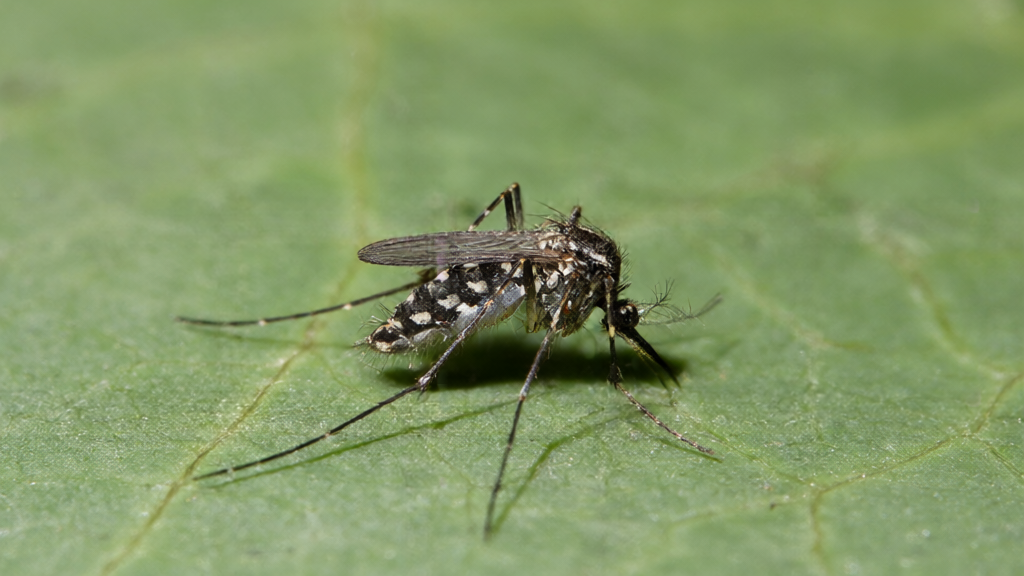
Aedes koreicus, commonly known as the Korean bush mosquito, is a species native to the Korean Peninsula, northern China, and the Russian Far East. The insect has attracted significant scientific attention following its first detection in Europe in 2008 and its subsequent spread across the continent. Because the Korean Peninsula includes the type locality of the species, it has long been regarded as a primary candidate for the source of the invasive European populations. However, prior to recent studies, there was limited understanding of the specific genetic and morphological attributes of the Korean populations themselves, which are critical for determining the exact origins of the European invasion.
A recent study published in the journal Parasites & Vectors addresses this gap by examining the genetic diversity and morphological characteristics of Aedes koreicus in South Korea. The research team, led by Junyoung Lee and colleagues from Korea University and the Korea Disease Control and Prevention Agency, aimed to compare these native populations with those established in Europe. By analyzing both genetic markers and physical traits, the researchers sought to determine whether the European populations could have originated solely from Korea or if other regions within the species’ native range might have contributed to the invasion.
To assess genetic diversity, the researchers obtained DNA from 172 specimens of Aedes koreicus collected from 19 different populations across South Korea, including the island of Jeju. They utilized the mitochondrial cytochrome c oxidase subunit I (COI) marker to evaluate population structure. To provide a comparative baseline, the study included 147 European sequences and one northern Chinese sequence that were already available in the GenBank database. This approach allowed for a direct comparison between the native Korean genetic pool and the established European populations.
The genetic analysis identified a total of 23 distinct COI haplotypes among the 172 South Korean specimens. The most frequent and widely distributed haplotype, designated as H2, was found in 116 of the 172 specimens, representing 67.4% of the sample. This haplotype was present at 17 of the 19 sampling sites, indicating a high degree of prevalence within the native range. In contrast, the 147 European sequences analyzed comprised 35 different haplotypes. Notably, only one of these, H2, was shared between the South Korean samples and the German sequences, suggesting a limited overlap in the most common genetic variants between the two regions.
Statistical comparisons further highlighted the genetic distinctions between the populations. Pairwise FST comparisons revealed significant differentiation among the Korean Peninsula, Jeju Island, and most European regions, with the exception of Germany. Analysis of Molecular Variance (AMOVA) supported these findings, confirming genetic structuring among these three groups. These results indicate that while there is some genetic connectivity, particularly with German populations, the South Korean populations are genetically distinct from many other European groups. This differentiation challenges the hypothesis that a single source region in Korea accounts for the entire European invasion.
In addition to genetic markers, the study examined morphological characters to provide further evidence regarding population origins. The researchers analyzed 520 specimens from 40 localities in South Korea, evaluating physical traits that had been previously reported in European studies. The morphological characteristics of the South Korean populations, including those from Jeju Island, were found to be similar to those reported from Germany. These traits fell within the range of variation previously documented from Korean specimens, suggesting a degree of morphological continuity between the two regions.
However, the morphological analysis also revealed significant differences when comparing South Korean specimens to those from other European countries. The characters observed in Korea differed from variants reported in populations from Belgium, Italy, and other parts of Europe. This discrepancy suggests that the European populations are not morphologically uniform and that different regions may have been colonized by mosquitoes with distinct physical traits. The combination of genetic and morphological data points toward a complex invasion history rather than a simple, single-source introduction.
The authors conclude that the genetic and morphological differences observed between South Korean and several European populations of Aedes koreicus suggest that the European populations are unlikely to have originated solely from Korea. Instead, the findings indicate the possibility of additional source regions within the native range, outside of Korea, contributing to the establishment of the European populations. This implies that the invasion may have involved multiple introduction events from different parts of the species’ native distribution, including potentially northern China or the Russian Far East.
The researchers emphasize that their conclusions are based on the current dataset and that additional genetic data and broader sampling in both the native and invaded ranges are required for validation. While the study provides strong evidence against Korea being the sole source, it does not definitively identify all potential source regions. Future research involving more comprehensive sampling across the entire native range will be essential to fully resolve the complex history of this invasive species. The findings highlight the importance of considering multiple potential sources when managing invasive mosquito populations in new regions.
Subject of Research: Entomology
Article Title: Genetic diversity and morphology of South Korean Aedes koreicus (Diptera: Culicidae) provide insights into the origin of European populations
Article References: Lee, J., Lee, J., Lim, C., Kang, J. H., Seok, S., Lee, H. I., & Bae, Y. J. (2026). Genetic diversity and morphology of South Korean Aedes koreicus (Diptera: Culicidae) provide insights into the origin of European populations. Parasites & Vectors. https://doi.org/10.1186/s13071-026-07633-5
Image Credits: AI Generated
DOI: 10.1186/s13071-026-07633-5
Keywords: Aedes koreicus, Population Genetics, Invasive Species, Morphology, Mosquito Biology, Genetic, diversity, South, Korean, Aedes, koreicus, Diptera
Cite Scienmag News
Juliet Wilcox. (October 2, 2026). Genetic and Morphological Analysis Suggests European Aedes koreicus Populations May Not Originate Solely from Korea. Scienmag. https://scienmag.com/genetic-and-morphological-analysis-suggests-european-aedes-koreicus-populations-may-not-originate-solely-from-korea/
Juliet Wilcox. "Genetic and Morphological Analysis Suggests European Aedes koreicus Populations May Not Originate Solely from Korea." Scienmag, 2 October 2026, https://scienmag.com/genetic-and-morphological-analysis-suggests-european-aedes-koreicus-populations-may-not-originate-solely-from-korea/. Accessed 4 October 2026.
Juliet Wilcox. "Genetic and Morphological Analysis Suggests European Aedes koreicus Populations May Not Originate Solely from Korea." Scienmag. October 2, 2026. https://scienmag.com/genetic-and-morphological-analysis-suggests-european-aedes-koreicus-populations-may-not-originate-solely-from-korea/


