


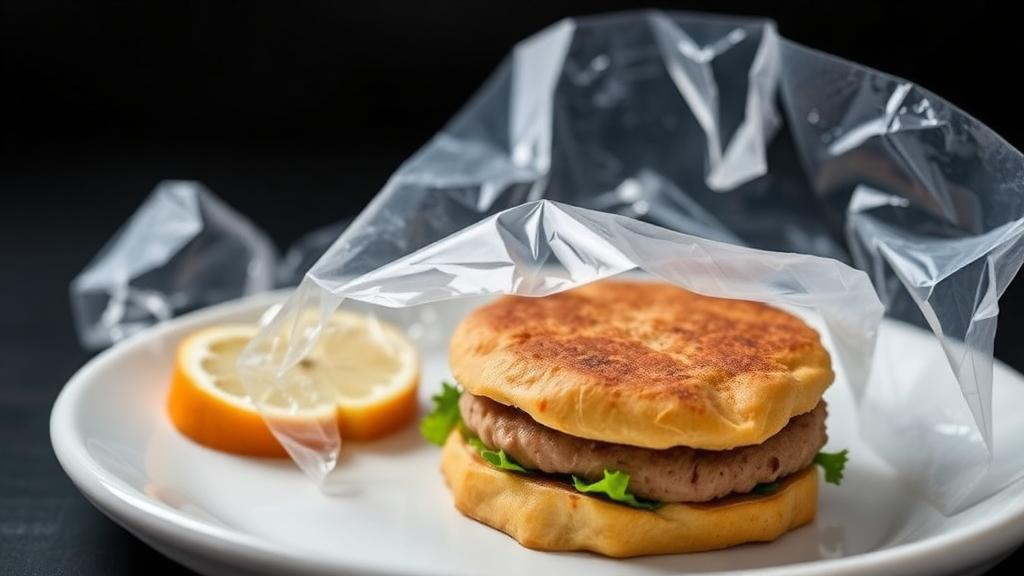
Every year, the global citrus industry generates mountains of discarded peels, seeds, and pulp—roughly half to sixty percent of every processed fruit ends up as waste. A new study published in Food Science of Animal Resources suggests that this overlooked stream of agricultural refuse could become one of the most effective natural weapons yet against meat spoilage. Researchers from Niğde Ömer Halisdemir University in Türkiye and Wrocław University of Environmental and Life Sciences in Poland have shown that gelatin-based edible films enriched with grapefruit, orange, and lemon peel extracts can dramatically slow both microbial growth and lipid oxidation in chicken burgers stored at −18 °C for an extraordinary 147 days. The work, led by Farhat Khalily and Muhammad Umair Asghar, transforms what is essentially food industry garbage into a functional packaging material that keeps frozen poultry products fresher, safer, and chemically more stable than conventional wrapping.
The premise behind the research is deceptively simple. Chicken meat is among the most widely consumed protein sources on the planet, prized for its low fat content and rich supply of amino acids, vitamins, and minerals. Yet it is also notoriously perishable. Even at low temperatures, oxygen, endogenous enzymes, and microorganisms such as Pseudomonas species, Enterobacteriaceae, Brochothrix thermosphacta, and lactic acid bacteria drive spoilage, raising pH, generating slime, and breaking down structural proteins. Traditional preservation relies on synthetic additives and plastic packaging, both of which face mounting consumer and regulatory pressure. Edible films made from biopolymers like gelatin offer an alternative: a thin, protein-derived layer applied directly to the food surface that limits oxygen and water vapor exchange and reduces the loss of flavor volatiles. The catch is that pure gelatin has no inherent antioxidant or antimicrobial activity, which is precisely where the citrus extracts come in.
Citrus peels are a biochemical treasure trove. They contain essential oils, vitamins, dietary fiber, pectin, and—most importantly for this study—phenolic compounds and flavonoids such as hesperidin and naringin. These molecules scavenge free radicals, donate hydrogen atoms to interrupt oxidative chain reactions, chelate metal ions, and disrupt the cell membranes of spoilage bacteria. To harness this chemistry, the team obtained grapefruit, orange, and lemon fruits from a local market in Niğde, dried the peels at 45 °C for 48 hours, ground them into powder, and extracted the bioactive compounds using 70% ethanol assisted by ultrasonic treatment at 30 °C for 45 minutes. The solvent was then removed in a rotary vacuum evaporator, leaving behind concentrated peel extracts ready to be folded into gelatin film-forming solutions alongside glycerol and d-sorbitol as plasticizers.
The researchers first profiled the antioxidant firepower of each extract, and the results revealed a clear hierarchy. Grapefruit peel extract led decisively, with an antioxidant activity of 687.48 µmol Trolox equivalents per gram and a total phenolic content of 598.45 mg gallic acid equivalents per gram. Orange peel followed with 428.62 mg GAE/g, and lemon trailed at 364.8 mg GAE/g, with the lowest antioxidant capacity of 227.40 µmol Trolox/g. The authors attribute grapefruit’s dominance to its distinctive phytochemical makeup: it is particularly rich in the flavanone naringin along with furanocoumarins, limonoids, and phenolic acids, whereas orange peel is characterized by hesperidin and lemon peel by eriocitrin and other flavanone glycosides. These compounds act through complementary mechanisms, and their combined abundance appears to explain why grapefruit outperformed its citrus cousins as a preservative agent.
With the extracts in hand, the team prepared chicken burgers from minced breast meat formulated with wheat flour, corn starch, soybean oil, rice flour, and a standard spice blend. Each 100-gram patty was wrapped between two gelatin films, creating eleven experimental groups: an untreated control, a plain gelatin film without extract, and nine treatment groups combining grapefruit, orange, or lemon extracts at 1%, 2%, and 4% incorporation levels. The burgers were then stored at −18 °C for 147 days—a period deliberately chosen to mirror the extended frozen shelf life of commercial products—with physicochemical and microbiological analyses performed on days 0, 21, 42, 63, 84, 105, and 147. All measurements were run in triplicate and analyzed statistically using one-way ANOVA with Tukey’s multiple comparison test.
The physicochemical data told a striking story of protection. Fresh burgers started at a pH of 6.10, and while pH rose in every group over storage—a hallmark of accumulating alkaline metabolites like ammonia and biogenic amines from spoilage metabolism—the treated samples climbed far more slowly. By day 147, burgers wrapped in 4% grapefruit, orange, and lemon films registered pH values of 6.77, 6.88, and 6.80 respectively, while the control and plain gelatin groups had reached 7.13. Total volatile basic nitrogen, a standard marker of protein degradation, followed the same pattern: the 4% grapefruit group finished at just 11.20 mg N/100 g, comfortably within the 10–15 mg range that Egyptian quality standards classify as fresh, whereas the control hit 20.30 mg N/100 g, perilously close to the 20 mg rejection threshold.
Lipid oxidation, the chemical process responsible for rancid odors, off-flavors, and discoloration in fatty foods, was similarly suppressed. Peroxide values, which track the primary products of oxidation, climbed from an initial 1.00 meq O₂/kg to 7.00 meq O₂/kg in the control by the end of storage, but only to 4.50 meq O₂/kg in the 4% grapefruit group. Thiobarbituric acid reactive substances, which measure secondary oxidation products such as malondialdehyde, rose to 1.01 mg MDA/kg in untreated burgers versus 0.74 mg MDA/kg for the 4% grapefruit treatment, with orange and lemon films close behind at 0.75 and 0.80 mg MDA/kg. The protective effect was clearly concentration-dependent: the higher the extract loading in the film, the greater the oxidative stability, consistent with the idea that phenolic compounds intercept free radicals before they can propagate peroxidation chain reactions in the meat’s lipids.
Microbiological analyses reinforced the chemical findings across every category of spoilage organism. Burgers coated with 4% grapefruit films recorded the lowest mean counts of psychrophilic bacteria (1.34 log CFU/g versus 3.36 in the control), aerobic mesophilic bacteria (1.05 versus 2.17 log CFU/g), coliforms, lactic acid bacteria, and yeasts and molds (0.72 versus 1.56 log CFU/g). The authors caution that at −18 °C active microbial proliferation is minimal anyway, so the lower counts in treated samples reflect the intrinsic antimicrobial activity of the citrus phytochemicals maintaining microbiological quality rather than blocking active growth. The proposed mechanism involves phenolic compounds and essential oil constituents disrupting microbial membrane integrity, increasing membrane permeability, and interfering with essential enzymatic processes. Notably, no group—including the control—exceeded acceptable microbial limits during the entire 147-day study, and lactic acid bacteria largely vanished after day 42, likely a casualty of cold stress.
The implications extend well beyond a single burger study. Because roughly 157 million tons of citrus are produced annually and half of that fruit becomes processing waste, valorizing peels as active packaging ingredients attacks two problems at once: it reduces agricultural waste streams and replaces synthetic preservatives with natural ones. The 4% formulations demonstrated that a sustainable, biodegradable gelatin matrix can deliver antioxidant and antibacterial performance strong enough to matter for commercial frozen meat products. The authors are candid about the study’s limitations—the antioxidant properties of the finished composite films were not directly measured, extract and film pH went unrecorded, and refrigerated (rather than frozen) storage remains untested. They also call for comprehensive phytochemical characterization using HPLC or GC-MS, along with assessments of scalability, mechanical properties, and consumer sensory acceptance. Still, the central message is compelling: the bitter peel we throw away may be the cleanest preservative the meat industry has been looking for, quietly extending shelf life one edible film at a time.
Subject of Research: Citrus peel extract-enriched gelatin edible films for extending the shelf life and quality of frozen chicken burgers
Article Title: Citrus peel extract–enriched gelatin edible films as natural preservatives to enhance the shelf life and quality of chicken burgers
Article References: Khalily, F., Uçak, İ., Sajid, Q. U. A., & Asghar, M. U. (2026). Citrus peel extract–enriched gelatin edible films as natural preservatives to enhance the shelf life and quality of chicken burgers. Food Science of Animal Resources, 46(1), Article 105. https://doi.org/10.1007/s44463-026-00110-8
Image Credits: AI Generated
DOI: 10.1007/s44463-026-00110-8
Keywords: edible films, citrus peel extract, gelatin, chicken burgers, shelf life, natural preservatives, antioxidant activity, antimicrobial packaging, lipid oxidation, frozen storage, food waste valorization, active packaging
Cite Scienmag News
Alan Morgan. (September 30, 2026). Citrus Peel Waste Turned Into Edible Films Keeps Frozen Chicken Burgers Fresh for 147 Days. Scienmag. https://scienmag.com/citrus-peel-waste-turned-into-edible-films-keeps-frozen-chicken-burgers-fresh-for-147-days/
Alan Morgan. "Citrus Peel Waste Turned Into Edible Films Keeps Frozen Chicken Burgers Fresh for 147 Days." Scienmag, 30 September 2026, https://scienmag.com/citrus-peel-waste-turned-into-edible-films-keeps-frozen-chicken-burgers-fresh-for-147-days/. Accessed 30 September 2026.
Alan Morgan. "Citrus Peel Waste Turned Into Edible Films Keeps Frozen Chicken Burgers Fresh for 147 Days." Scienmag. September 30, 2026. https://scienmag.com/citrus-peel-waste-turned-into-edible-films-keeps-frozen-chicken-burgers-fresh-for-147-days/


