


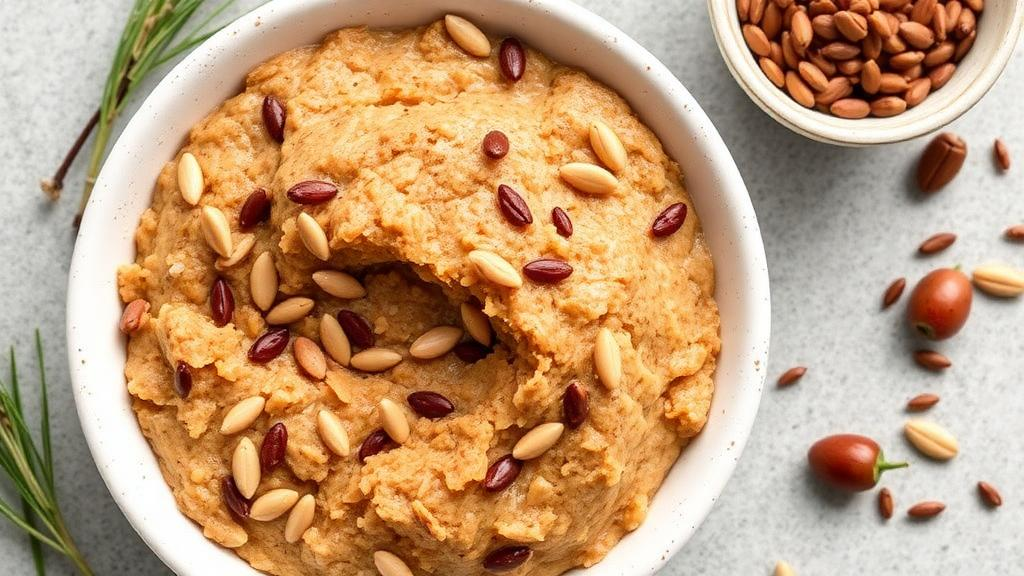
A beloved Tunisian dessert made from the seeds of the Aleppo pine has just delivered a surprise in the laboratory. Assidet zgougou, a creamy pudding traditionally served to mark the winter solstice and the Prophet Muhammad’s birthday, owes its distinctive flavor to fermented zgougou juice pressed from ground pine seeds. Now, researchers in Tunisia and Italy report that this fermented juice, particularly when guided by two locally isolated lactic acid bacteria, can measurably strengthen the integrity of a laboratory model of the human intestinal lining. The findings, published in Food Science & Nutrition, offer some of the first hard evidence that a food cherished for centuries may carry genuine, mechanistically explainable benefits for gut health.
The intestinal epithelial barrier is the body’s frontline customs office, a single layer of cells that decides what passes from the gut lumen into the bloodstream and what stays out. Its defining feature is the tight junction, a belt of protein complexes that seals the gaps between neighboring epithelial cells. These junctions perform what biologists call a gate-and-fence function: they permit the selective passage of water, ions, and nutrients through the spaces between cells while blocking bacteria and their toxins. When tight junctions fail, the result is the condition popularly known as leaky gut, in which unwanted molecules slip through and provoke inflammatory responses. Disrupted barrier function is implicated in inflammatory bowel disease, metabolic disorders, and a growing list of chronic conditions.
The key players at these junctions are the tight junction proteins, including occludin and members of the claudin family. Occludin, the first of these proteins to be identified, stabilizes the structural framework of the junction. Claudin-2, one of several tissue-specific isoforms, is associated with permeability properties of the intestinal epithelium, and its behavior is subtle: depending on context, it can either loosen or remodel the barrier. Another important player is lipocalin-2, an antibacterial, iron-sequestering protein of innate immunity that participates in the barrier’s defensive repertoire and is often induced by inflammatory stimuli. The inflammatory cytokine tumor necrosis factor alpha, meanwhile, can undermine the barrier by triggering the internalization of occludin, raising permeability.
Probiotic lactobacilli have repeatedly been shown to bolster this system. Certain strains of Lactiplantibacillus plantarum increase the production and correct localization of tight junction proteins by upregulating the genes that encode them, thereby reducing permeability and guarding against inflammation. Researchers have also explored postbiotics, the cell-free supernatants left behind after bacterial growth, which contain the bioactive metabolites of probiotic cultures without the living cells themselves. What has remained murky is how the food matrix itself contributes when probiotics are delivered as part of a fermented food, rather than as a purified supplement. The new study set out to probe exactly that boundary.
The team, led by Jihen Missaoui with colleagues at the University of Bari Aldo Moro in Italy and the University of Monastir in Tunisia, worked with two lactobacilli previously isolated from traditional zgougou: Lactiplantibacillus paraplantarum A1 and Lactiplantibacillus plantarum A2. They prepared these bacteria in three forms: living cell biomass from liquid culture, cell-free supernatant from the same cultures, and zgougou juice fermented with both strains together as a starter consortium. For comparison, they also prepared zgougou juice that had fermented spontaneously, relying on whatever microbes happened to be present. Each preparation was applied to monolayers of Caco-2 cells, a human colon cancer cell line that, when grown for 21 days on Transwell inserts, differentiates into a faithful in vitro model of the intestinal epithelium.
To gauge barrier integrity, the researchers measured transepithelial electrical resistance, or TEER, a standard technique in which a small current is passed across the cell layer; higher resistance means tighter junctions and a less permeable barrier. As a positive control, they challenged cells with lipopolysaccharide, a component of the outer membrane of E. coli that reliably disrupts tight junctions. The LPS treatment produced the expected time-dependent response, with resistance dropping significantly within 30 minutes before partially recovering. Against this baseline, the effects of the bacterial preparations emerged clearly, though not uniformly.
Exposure to the biomass of L. paraplantarum A1 raised TEER values significantly at early time points, an effect that depended on both the dose and the dilution used. The cell-free supernatant of the same strain increased resistance after six hours, and the biomass and supernatant of L. plantarum A2 produced significant boosts at 30 minutes. The most striking result, however, came from the fermented food itself. When the monolayers were treated with zgougou juice fermented by the two lactobacilli together, diluted tenfold, TEER values climbed to between roughly 690 and 963 ohms per square centimeter at every time point measured, dramatically higher than the untreated control. Spontaneously fermented juice produced a smaller but still significant effect at one time point. The combination of the two strains, embedded in the pine seed matrix, outperformed anything the bacteria achieved alone.
The molecular story behind these measurements proved equally intriguing. Using reverse transcription quantitative PCR, the team measured the expression of genes encoding occludin, claudin-2, lipocalin-2, and TNF alpha after 24 hours of exposure. Both bacterial biomasses and the driven-fermented juice significantly increased TNF alpha gene expression, yet an ELISA assay of the culture medium detected no corresponding increase in the protein itself. The authors attribute this discrepancy to post-transcriptional regulatory mechanisms that can block cytokine synthesis even when the gene is actively transcribed, a reminder that messenger RNA levels do not always translate into protein output.
More encouraging were the tight junction results. Biomass and cell-free supernatant of both lactobacilli significantly upregulated the genes for occludin and lipocalin-2, with the strongest effects seen at the tenfold dilution. The fermented zgougou juice, whether driven by the starter cultures or fermented spontaneously, significantly increased expression of both claudin-2 and occludin, with the spontaneous juice producing the strongest upregulation. The apparent tension between rising claudin-2 expression and rising TEER, which might seem contradictory given claudin-2’s association with permeability, is resolved by context: the functional impact of claudin-2 depends on the overall composition of the junction complex, and its overexpression here likely signals junction remodeling and epithelial homeostasis rather than a leaky barrier.
The authors hypothesize that the observed effects arise from a synergy between the bioactive compounds of Aleppo pine seeds, which are rich in linoleic and alpha-linolenic acids, flavonoids, and phenolics with antioxidant and anti-inflammatory activity, and the metabolic activity of the fermenting lactobacilli. Vegetable matrices may also protect probiotic bacteria during their passage through the stomach and small intestine, releasing them in the colon where they can interact directly with the host. The study is the first to show that fermented zgougou juice can upregulate genes encoding tight junction proteins in an intestinal cell model, and it underscores how traditional fermented foods, from kefir to kimchi, may modulate gut permeability through the combined action of microbes, their metabolites, and plant phytochemicals. The researchers caution that the effects are strain-dependent and shaped by the host and its resident microbiota, and they call for untargeted metabolomics to identify the specific compounds responsible, followed by animal studies to confirm whether the barrier-reinforcing effect survives the journey from the dish to the organism.
Subject of Research: Effects of Tunisian fermented zgougou and probiotic lactobacilli on intestinal epithelial barrier integrity in Caco-2 cell models
Article Title: Impact of Tunisian Fermented Zgougou and Related Lactobacilli on Caco‐2 Cell Barrier Integrity: Upregulation of Key Tight Junction Proteins
Article References: Missaoui, J., Liso, M., Lataoui, M., Limongelli, R., Minervini, F., Achour, L., & De Angelis, M. (2026). Impact of Tunisian Fermented Zgougou and Related Lactobacilli on Caco‐2 Cell Barrier Integrity: Upregulation of Key Tight Junction Proteins. Food Science & Nutrition, 14(10), Article e72387. https://doi.org/10.1002/fsn3.72387
Image Credits: AI Generated
DOI: 10.1002/fsn3.72387
Keywords: zgougou, Aleppo pine seeds, fermented foods, lactobacilli, probiotics, gut barrier, tight junction proteins, occludin, claudin-2, Caco-2 cells, TEER, postbiotics
Cite Scienmag News
Alan Morgan. (September 30, 2026). Tunisian Fermented Pine Seed Dessert Strengthens Gut Barrier in Lab Tests. Scienmag. https://scienmag.com/tunisian-fermented-pine-seed-dessert-strengthens-gut-barrier-in-lab-tests/
Alan Morgan. "Tunisian Fermented Pine Seed Dessert Strengthens Gut Barrier in Lab Tests." Scienmag, 30 September 2026, https://scienmag.com/tunisian-fermented-pine-seed-dessert-strengthens-gut-barrier-in-lab-tests/. Accessed 5 October 2026.
Alan Morgan. "Tunisian Fermented Pine Seed Dessert Strengthens Gut Barrier in Lab Tests." Scienmag. September 30, 2026. https://scienmag.com/tunisian-fermented-pine-seed-dessert-strengthens-gut-barrier-in-lab-tests/


