

Traditional Chinese medicine has long presented pharmacologists with an awkward paradox. Its most celebrated single-molecule exports, from the antimalarial artemisinin to the bronchodilator precursor ephedrine and the glucose-lowering alkaloid berberine, fit neatly into the Western drug-discovery model of one compound, one target, one disease. Yet the vast majority of Chinese herbal prescriptions do not work that way at all. They are sprawling chemical mixtures whose therapeutic power, practitioners have insisted for centuries, emerges from the coordinated action of dozens or hundreds of constituents acting on networks of biological targets simultaneously. For decades, that claim sat beyond the reach of laboratory science. A new review published in Advanced Biotechnology argues that the tools needed to test it finally exist, and that a discipline the authors call structural pharmacology of Chinese medicine is now turning an empirical art into a molecular science.
The review, led by Caiyan Wang and Zhongqiu Liu of Guangzhou University of Chinese Medicine together with colleagues, synthesizes how high-resolution structural biology, computational chemistry and artificial intelligence are being combined to dissect multi-component synergy at atomic resolution. The stakes are considerable. Artemisinin-based combination therapies alone benefit more than 200 million malaria patients annually, and the World Health Organization credits such treatments with helping drive malaria deaths down from 736,000 in 2000 to 409,000 in 2019. But those successes came from isolating single active molecules, a reductionist strategy that, by its very triumph, exposed the limits of the single-component, single-target paradigm when applied to whole herbal formulations.
The core methodological insight of the new field is that two complementary approaches, long pursued separately, can be chained together into a closed loop of prediction and validation. Network pharmacology, which mines databases such as BATMAN-TCM to map relationships between herbal ingredients, protein targets and diseases, excels at generating holistic, top-down hypotheses about which components might matter. What it cannot do is explain how those interactions physically occur. Structural pharmacology supplies the bottom-up counterpart: X-ray crystallography, cryo-electron microscopy and nuclear magnetic resonance spectroscopy resolve the three-dimensional geometry of drug-target complexes, while molecular docking and molecular dynamics simulations trace how binding events unfold in time. In the authors’ metaphor, network pharmacology draws the roadmap; structural biology validates the key junctions on it.
The power of this pipeline is illustrated by work on Huashi Baidu Formula, a traditional prescription analyzed for activity against SARS-CoV-2. Researchers first used ultra-performance liquid chromatography coupled with mass spectrometry to catalog 343 distinct chemical constituents in the formula, then identified 60 prototype compounds and 66 metabolites that were actually absorbed into the body. From that pool, six bioactive constituents, including magnolol, emodin and quercetin, showed synergistic antiviral effects through distinct target engagement. Structural analysis revealed a division of labor: quercetin and licochalcone A inhibit the virus’s main protease, while neoglycyrol and glycyrol A target the RNA-dependent RNA polymerase and additionally occupy the catalytic site of phosphodiesterase 4, an inflammatory enzyme. One formula, several molecules, several targets, one coordinated outcome.
The review goes further, arguing that even the ancient doctrine of Jun-Chen-Zuo-Shi, the sovereign-minister-assistant-envoy principle that governs how herbs are combined in a prescription, can now be mapped onto concrete molecular mechanisms. The test case is Compound Huangdai Tablet, used to treat acute promyelocytic leukemia. Tetrasodium arsenic tetrasulfide, the sovereign component, forms covalent bonds with cysteine residues of the disease-causing PML-RARα fusion protein, acting as a molecular clamp that flags the oncoprotein for degradation. Indirubin, the minister, stabilizes the arsenic compound and independently slots into the ATP-binding pocket of CDK6, boosting cell-cycle arrest efficiency 3.7-fold. Tanshinone IIA, the assistant, activates antioxidant Nrf2 signaling and cuts reactive oxygen species by 63 percent, tempering toxicity, while a polysaccharide from Pseudostellaria heterophylla, the envoy, enhances drug accumulation in bone marrow 2.8-fold. Each classical role acquires a measurable structural basis.
Underpinning these stories is a revolution in how protein structures are captured. X-ray crystallography, the workhorse of structural biology, delivered a 1.8-angstrom structure of shikonin, a naphthoquinone from a traditional antiviral herb, bound to the SARS-CoV-2 main protease, revealing how the molecule’s ring system stacks against the catalytic dyad while its side chain threads through three substrate pockets. Cryo-electron microscopy, which images flash-frozen molecules without crystallization, has resolved the double-arrowed tetrameric architecture of ATP-citrate lyase and shown how puerarin stabilizes a desensitized state of the GABAA receptor through π-π stacking and hydrogen bonding. An emerging technique called microcrystal electron diffraction goes further still, extracting atomic structures from nanogram quantities of material and crystals as small as 50 nanometers, small enough to solve the structure of a fungal natural product directly from crude extract without purification.
Artificial intelligence is accelerating every stage of this workflow. The TCMBank database developed at Peking University now catalogs 9,192 herbs, 61,000 ingredients and 15,000 targets, providing the raw material for deep-learning models that predict drug-target affinity and synergy. In one demonstration, a combined protocol of molecular docking, a hybrid neural network and 50-nanosecond dynamics simulations revealed that soy cerebrosides in the formula Wen-Gao-Tang block LDL uptake by binding the low-density lipoprotein receptor, an effect that synergizes with curcumin’s inhibition of HIF-1α; cell experiments confirmed a 42 percent reduction in the inflammatory cytokine IL-6. In another case, a fine-tuned language model trained on 68,654 prescriptions predicted seven triterpenoid modification sites in Ganoderma spore powder that improved intestinal permeability, and reformulation raised the compounds’ in vivo exposure 2.3-fold while cutting production time by 30 percent.
Yet the review is candid about the bottlenecks. Only about 30 percent of known active ingredients in existing databases have resolvable three-dimensional target information, leaving most herbal molecules without mechanistic annotation. More fundamentally, proteins are not static sculptures. Many disease-relevant conformational changes, such as the millisecond flips of the KRAS Switch-II region or the transitions of amyloid peptides from helical monomers to toxic oligomers, happen too fast and too weakly for conventional crystallography or even cryo-EM snapshots to register. Herbal components frequently bind through transient, micromolar-affinity interactions dominated by hydrophobic contacts and hydrogen bonds, precisely the events that surface plasmon resonance and isothermal titration calorimetry struggle to capture. Data standardization compounds the problem: batch-to-batch variation in herbs and inconsistent experimental parameters weaken the generalization of AI models trained on them.
The proposed remedies are as ambitious as the problems. Time-resolved serial femtosecond crystallography at X-ray free-electron lasers can film conformational changes from femtoseconds to minutes, using pulses so brief that diffraction is recorded before radiation damage destroys the sample. Organoid and single-cell technologies add physiological context, allowing researchers to track which cell subtypes, such as CYP3A4-high liver cells that are more susceptible to artemisinin derivatives, actually metabolize herbal compounds. Light-sheet fluorescence microscopy has visualized the shuttle of paeoniflorin between lysosomes and mitochondria at 50-nanometer resolution and 30 frames per second, offering direct visual evidence for the sovereign-minister-assistant-envoy theory in action. The authors propose integrating such real-time conformational data into a next-generation database that could raise three-dimensional target coverage from roughly 30 percent to more than 60 percent.
If the vision holds, the implications extend well beyond validating tradition. A structural, predictive framework for multi-component synergy would give drug developers a systematic way to design combination therapies that exploit cooperative binding, allosteric communication and complementary target engagement, principles that conventional single-molecule pipelines rarely exploit. It would also provide the evidentiary foundation regulators and international standards bodies need to evaluate complex herbal products. The authors frame the trajectory as a shift from empirical induction to dynamic design: from asking whether an ancient formula works, to knowing exactly which molecule binds which protein, in which conformational state, and why the combination outperforms its parts. For a pharmacopoeia built over two millennia, that would amount to the most rigorous translation it has ever received.
Subject of Research: Structural pharmacology approaches for decoding multi-component, multi-target synergy mechanisms in traditional Chinese medicine
Article Title: Structural pharmacology of Chinese medicine: technological breakthroughs in decoding multi-target synergy and precision mechanisms
Article References: Wang, C., Li, Y., Zhuo, L., Xu, S., Wang, M., & Liu, Z. (2026). Structural pharmacology of Chinese medicine: technological breakthroughs in decoding multi-target synergy and precision mechanisms. Advanced Biotechnology, 4(1), Article 11. https://doi.org/10.1007/s44307-026-00095-x
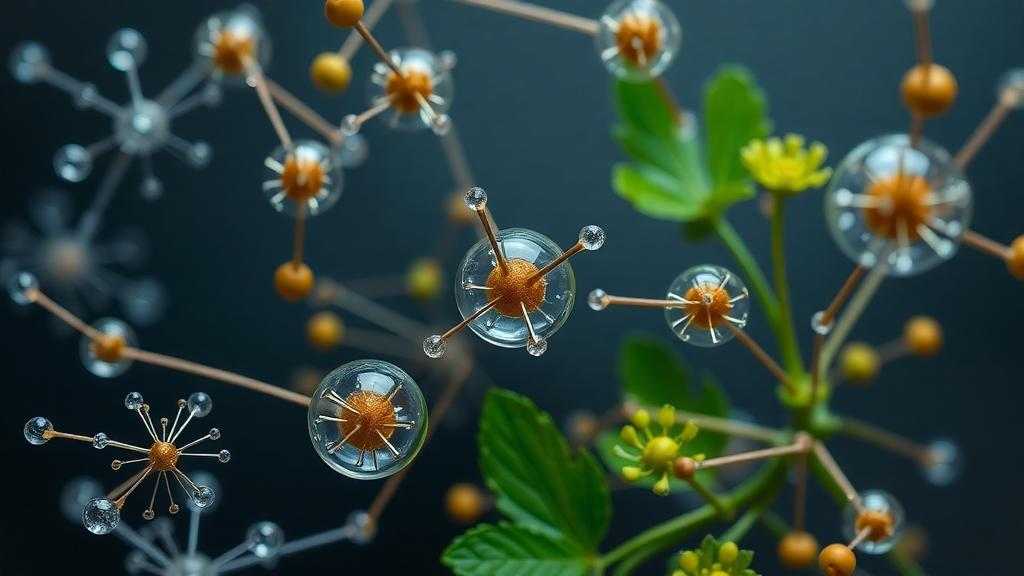
Image Credits: AI Generated
DOI: 10.1007/s44307-026-00095-x
Keywords: traditional Chinese medicine, structural biology, cryo-electron microscopy, molecular docking, network pharmacology, artificial intelligence, multi-target synergy, X-ray crystallography, drug discovery, berberine, artemisinin, precision medicine
Cite Scienmag News
Jason Bradley. (September 30, 2026). Atomic-Scale Toolkit Reveals How Ancient Herbal Formulas Hit Multiple Targets at Once. Scienmag. https://scienmag.com/atomic-scale-toolkit-reveals-how-ancient-herbal-formulas-hit-multiple-targets-at-once/
Jason Bradley. "Atomic-Scale Toolkit Reveals How Ancient Herbal Formulas Hit Multiple Targets at Once." Scienmag, 30 September 2026, https://scienmag.com/atomic-scale-toolkit-reveals-how-ancient-herbal-formulas-hit-multiple-targets-at-once/. Accessed 30 September 2026.
Jason Bradley. "Atomic-Scale Toolkit Reveals How Ancient Herbal Formulas Hit Multiple Targets at Once." Scienmag. September 30, 2026. https://scienmag.com/atomic-scale-toolkit-reveals-how-ancient-herbal-formulas-hit-multiple-targets-at-once/


