


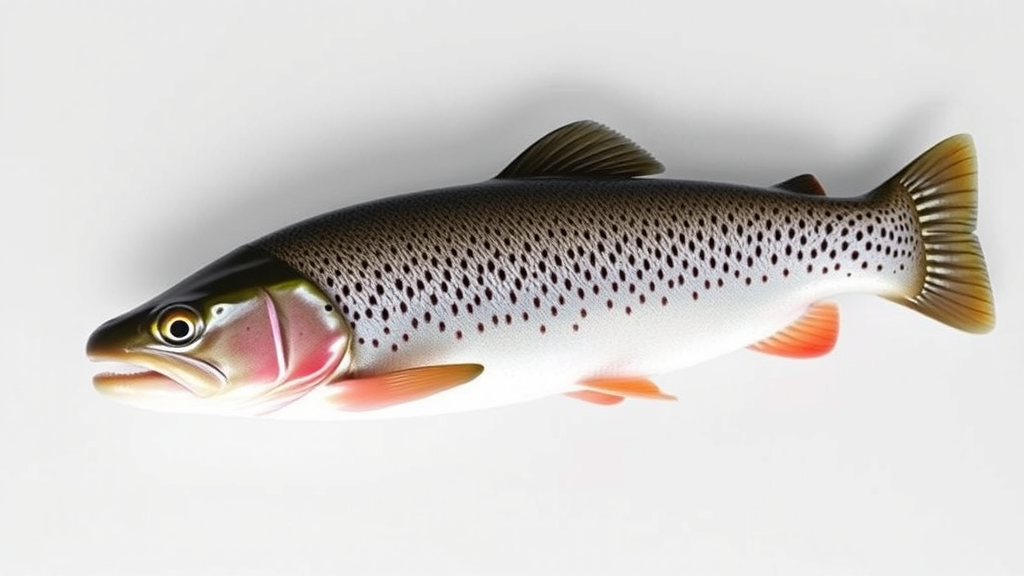
Deep in the cold waters of Dal Lake in Srinagar lives a fish that has long puzzled scientists trying to untangle its family tree. Schizothorax curvifrons, known locally as Sattar gaad, is one of the snow trout species that dominate the rivers and lakes of the Kashmir Valley. Now, a team of researchers from Sher-E-Kashmir University of Agricultural Sciences and Technology of Kashmir and collaborating institutions has sequenced and characterized the complete mitochondrial genome of this species for the first time, using an Illumina next-generation sequencing platform. The work, published in the journal Blue Biotechnology, fills a conspicuous gap in the genetic record of a group whose taxonomy has been contested for decades and whose populations are increasingly threatened by overfishing and habitat degradation.
The mitochondrial genome is a compact, closed circular, double-stranded DNA molecule that sits outside the cell nucleus. In vertebrates it typically spans 16 to 20 kilobases and carries 37 genes: 13 protein-coding genes, 22 transfer RNA genes, and two ribosomal RNA genes, plus a non-coding control region that regulates replication and transcription. Because it is inherited maternally, lacks introns, evolves relatively quickly, and exists in many copies per cell, mitochondrial DNA has become one of the most widely used molecular markers in evolutionary genetics, species delineation, and conservation biology. For fish taxonomists wrestling with groups of closely related and morphologically similar species, a complete mitogenome can be the difference between a resolved phylogeny and a tangle of ambiguous branches.
The sequencing effort began with tissue samples collected from Dal Lake and preserved in 95 percent ethanol. After DNA extraction and quantification with a Qubit 4.0 fluorometer, the team prepared sequencing libraries with an average insert size of 379 base pairs and ran them on an Illumina Novaseq6000 platform using paired-end 150-base-pair chemistry, generating roughly four to five gigabytes of data per sample. The reads were assembled de novo with the GetOrganelle toolkit against an animal mitochondrial database, and the finished sequence was deposited in the NCBI GenBank under accession number PP778510. Annotation of protein-coding, tRNA, and rRNA genes was carried out with MitoFish and MitoAnnotator, while gene arrangement was visualized with the CGView web server.
The resulting mitogenome of S. curvifrons measures 16,592 base pairs and contains the standard vertebrate complement of 37 genes plus one control region. Twelve of the thirteen protein-coding genes sit on the heavy strand, with only ND6 on the light strand, a pattern consistent with other published fish mitogenomes. Fourteen of the 22 tRNA genes are encoded on the heavy strand and eight on the light strand, and both rRNA genes are on the heavy strand. The 12S and 16S ribosomal RNA genes measure 956 and 1,679 base pairs respectively, and the tRNA genes range from 69 to 73 nucleotides in length. Twenty-one of the 22 tRNAs fold into the canonical cloverleaf secondary structure; the exception, trnS1, lacks the D arm, a well-known deviation in animal mitochondria.
Base composition analysis revealed a genome biased toward adenine and thymine, with an overall A plus T content of about 55 percent. Among the protein-coding genes, ATP8 showed the highest A plus T content at 64.2 percent, while ND1 had the lowest at 51.1 percent. Skewness analysis showed negative GC skews and positive AT skews across the genome, a pattern conserved across vertebrates and consistent with other Schizothorax species such as S. prenanti, S. oconnori, and S. waltoni. Notably, the ND6 gene displayed a positive GC skew, unlike the other 12 protein-coding genes. The authors suggest this could reflect an adaptive response to environmental stresses such as high reactive oxygen species levels in oxygen-rich habitats, a condition relevant to high-altitude fish like the schizothoracines.
Codon usage followed familiar trends: the codons for methionine, tryptophan, glutamine, and lysine were the most frequently used, while leucine, arginine, and serine were encoded by the largest number of distinct codons. Most protein-coding genes begin with the standard ATG start codon, but the team found variation at the COXI gene, which begins with GTG, echoing similar observations in other bony fishes. The control region, the most variable segment of the mitogenome and a key player in replication and transcription, spans roughly 936 to 938 base pairs and sits between the tRNA-Pro and tRNA-Phe genes, with an AT content of 66.2 percent. The genome also contains 13 intergenic spacers totaling 69 base pairs and six overlapping regions totaling 22 base pairs, with the longest overlaps occurring among the ATP6, ND4L, and ND5 genes.
To place S. curvifrons in its evolutionary context, the researchers constructed phylogenetic trees from complete mitochondrial genome sequences using maximum likelihood and neighbor-joining methods with the Kimura 2-parameter model in MEGA 11, supported by 1000 bootstrap replicates. The comparison set included other Schizothorax species, Indian major carps such as catla, rohu, and mrigal, salmonids including Atlantic salmon and rainbow trout, zebrafish, and outgroups as distant as human and rat. The analysis showed that S. curvifrons clusters closely with S. niger, sharing a confined evolutionary connection within the same clade, while S. esocinus and S. labiatus form a distinct lineage. S. plagistomus separated into its own clade, distinct from the group containing S. esocinus, S. labiatus, S. niger, and S. curvifrons.
The broader picture that emerges is one of clear evolutionary separation. All Schizothorax species form a clade distinct from other cyprinid genera such as Labeo, Tor, and Cirrhinus, which each form well-supported monophyletic groups of their own. The schizothoracines also split sharply from the Salmonidae, a divergence the authors link in part to contrasting life histories: salmonids are often anadromous, migrating between freshwater and the ocean, while Schizothorax species are strictly freshwater endemics of Himalayan drainages. Outgroup species such as zebrafish, rainbow trout, and Atlantic salmon showed high genetic distances, confirming their distant relationship to the core cyprinid lineage, and the gap extends all the way to higher vertebrates like humans and rats.
Why does this matter beyond the phylogenetic trees? The schizothoracine fishes comprise roughly 100 species across 15 genera, and five species are recognized from Kashmir alone: S. niger, S. esocinus, S. plagiostomus, S. curvifrons, and S. labiatus. Their taxonomic validity has long been debated, and resolving species boundaries is a prerequisite for effective management. Many of these fish are now listed as vulnerable on the IUCN Red List of Threatened Species as overfishing and habitat degradation erode their populations. S. curvifrons itself can reach 56 centimeters and 1.3 kilograms, spawning in tributary streams over rocky and sandy substrates across the Indus River system, including the Chenab, Jhelum, Ravi, and Sutlej rivers and the Dal and Manasbal lakes. A complete reference mitogenome gives conservation geneticists a tool for population structure studies, species identification, and phylogeographic reconstruction.
The study also highlights how much genome length can vary even among close relatives. The S. curvifrons mitogenome differs in size from those of S. esocinus at 16,585 base pairs, S. labiatus at 16,583, S. niger at 16,582, and S. plagiostomus at 16,576, differences the authors attribute to variation in intergenic regions, repetitive sequences, and other structural elements. Such length variation, together with the conserved gene order and base composition shared with other bony fishes, paints a picture of a genome that is architecturally conservative yet subtly divergent in ways that track species boundaries. For a fish that has been commercially and culturally important in Kashmir for generations, the first complete mitochondrial genome is more than a technical milestone. It is a baseline dataset intended to guide future research, resolve lingering ambiguities among the four Schizothorax species of the Kashmir region, and inform conservation strategies aimed at keeping these ancient snow trout swimming in Himalayan waters for generations to come.
Subject of Research: Complete mitochondrial genome sequencing and phylogenetic analysis of the snow trout Schizothorax curvifrons
Article Title: First report of complete mitochondrial genome of Schizothorax curvifrons using next generation sequencing platform (NGS) and phylogentic relationship with other Schizothoracinae
Article References: Agade, A. K., Somasundaram, I., Khan, I. A., Bhat, I. A., Ahmad, I., Qadiri, S. S. N., Bhat, B. A., Bazaz, A. I., Dar, B. N., Aga, A. F., & Rather, M. A. (2025). First report of complete mitochondrial genome of Schizothorax curvifrons using next generation sequencing platform (NGS) and phylogentic relationship with other Schizothoracinae. Blue Biotechnology, 2(1), Article 18. https://doi.org/10.1186/s44315-025-00039-5
Image Credits: AI Generated
DOI: 10.1186/s44315-025-00039-5
Keywords: Schizothorax curvifrons, mitochondrial genome, next-generation sequencing, phylogenetics, Schizothoracinae, snow trout, Kashmir, fish conservation, cyprinidae, mtDNA, molecular taxonomy, Dal Lake
Cite Scienmag News
Juliet Wilcox. (September 27, 2026). Kashmir Snow Trout Gets Its First Complete Mitochondrial Genome Map. Scienmag. https://scienmag.com/kashmir-snow-trout-gets-its-first-complete-mitochondrial-genome-map/
Juliet Wilcox. "Kashmir Snow Trout Gets Its First Complete Mitochondrial Genome Map." Scienmag, 27 September 2026, https://scienmag.com/kashmir-snow-trout-gets-its-first-complete-mitochondrial-genome-map/. Accessed 5 October 2026.
Juliet Wilcox. "Kashmir Snow Trout Gets Its First Complete Mitochondrial Genome Map." Scienmag. September 27, 2026. https://scienmag.com/kashmir-snow-trout-gets-its-first-complete-mitochondrial-genome-map/


