


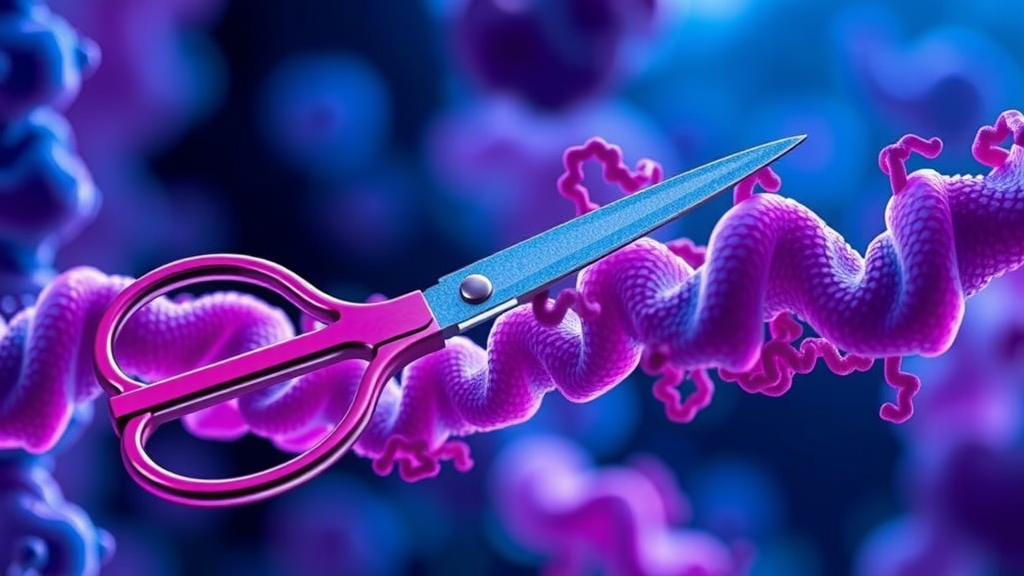
Inside every human cell, an elaborate quality-control system works around the clock, tagging worn-out or misplaced proteins with a small molecular label called ubiquitin. When the label is attached in long chains, the tagged protein is usually destined for destruction or relocation. But tags can also be removed, and the enzymes that strip them off, known as deubiquitinases, are increasingly recognized as master regulators of cellular life and death. A new review published in Molecular Biology Reports turns the spotlight on one of the most intriguing members of this enzyme family: STAMBPL1, also called AMSH-LP, a zinc-dependent metalloprotease whose peculiar molecular preferences may hold the key to understanding how cells maintain balance and how that balance collapses into cancer.
STAMBPL1 belongs to the JAMM family of deubiquitinases, a group of metalloproteases named after the JAB1/MPN domain metalloenzyme motif that sits at the heart of their catalytic machinery. What makes STAMBPL1 remarkable is its exquisite specificity: unlike enzymes that indiscriminately cut many types of ubiquitin chains, STAMBPL1 selectively dismantles chains linked through lysine 63, one of the seven lysine residues on ubiquitin that can serve as attachment points. This linkage selectivity is not an accident of chemistry but the product of an elegant bipartite structural recognition mode, in which the enzyme engages the ubiquitin chain at two distinct surfaces simultaneously. Structural studies, including the landmark crystallographic work that revealed how AMSH-family enzymes cleave Lys63-linked chains, showed that the catalytic domain cradles the distal ubiquitin while auxiliary elements contact the proximal one, ensuring that only the correct chain geometry is processed.
This molecular precision translates into an astonishing breadth of physiological influence. Because Lys63-linked ubiquitin chains rarely signal for protein destruction in the proteasome, they instead act as scaffolding codes that assemble signaling complexes and direct membrane traffic. STAMBPL1 therefore sits at critical junctions of cellular logistics. On early endosomes, it is anchored by clathrin and trims ubiquitin tags from internalized receptors, controlling whether they are recycled back to the cell surface or degraded. It modulates apoptotic pathways by regulating the stability of proteins such as the X-linked inhibitor of apoptosis protein, participates in metabolic homeostasis through the mechanistic target of rapamycin complex 1, shapes immune signaling through the transcription factor NF-κB, and governs epithelial-mesenchymal plasticity, the developmental program that cells hijack during metastasis. In male germ cells, a related family member is even expressed specifically during haploid stages of spermatogenesis, underscoring how deeply this enzyme lineage is woven into reproduction and development.
The review, authored by Hu Lei, Hanzhang Xu, Li Yang, and Yingli Wu of Shanghai Jiao Tong University School of Medicine, systematically integrates two decades of structural, cell biological, and translational research into a coherent portrait of STAMBPL1 as both a guardian of homeostasis and, when its expression goes awry, a driver of malignancy. The authors emphasize that the enzyme’s influence extends far beyond the cancer cell itself, touching viral pathogenesis, inflammatory responses, and the metabolic rewiring that tumors impose on their surroundings. It is this dual identity, essential in normal physiology yet exploitable by tumors, that has propelled STAMBPL1 to the front ranks of candidate drug targets within the ubiquitin system.
The cancer connection is strikingly consistent across tumor types. Aberrant upregulation of STAMBPL1 has now been documented in an expanding roster of human malignancies, including gastric cancer, colorectal cancer, hepatocellular carcinoma, cholangiocarcinoma, lung adenocarcinoma, non-small cell lung cancer, triple-negative breast cancer, prostate cancer, and kidney renal clear cell carcinoma. In study after study, elevated levels of the enzyme correlate with advanced clinicopathological features, such as larger tumors, deeper invasion, later-stage disease, and lymph node involvement, as well as with unfavorable patient survival. The pattern is so reproducible that STAMBPL1 is increasingly viewed not merely as a biomarker but as an active participant in tumor progression, a molecular accomplice whose presence tips the scales toward growth, spread, and treatment resistance.
Mechanistically, STAMBPL1 promotes the malignant phenotype through both catalytic and noncatalytic means, and the review dissects these pathways with unusual granularity. In gastric cancer, STAMBPL1 removes Lys63-linked ubiquitin chains from IQGAP1, a scaffolding protein, thereby stabilizing it and hyperactivating the JAK2/STAT3 signaling axis that drives proliferation and migration. In hepatocellular carcinoma, the enzyme deubiquitinates TRAF2 to ignite WNT, PI3K, and NF-κB signaling, while a separate feedback loop involving the oncogene MYC, STAMBPL1, and the protein TOE1 stabilizes the epidermal growth factor receptor, further amplifying growth signals. The enzyme’s own expression is transcriptionally controlled by SREBP1, the master regulator of lipid synthesis, linking STAMBPL1 activity directly to the metabolic reprogramming that fast-growing tumors require. In colorectal cancer, STAMBPL1 promotes growth and migration through the NF-κB pathway, and in lung adenocarcinoma it advances progression by suppressing the expression of DHRS2, a metabolic enzyme with tumor-suppressive properties.
The enzyme’s reach extends to some of the most clinically vexing problems in oncology: drug resistance and immune evasion. In breast cancer, STAMBPL1 stabilizes MKP-1, a phosphatase that blunts stress-activated kinase signaling, thereby helping cells survive cisplatin chemotherapy. In triple-negative breast cancer, the most aggressive and least treatable breast cancer subtype, STAMBPL1 interacts with the transcription factor FOXO1 to activate a GRHL3/HIF1A/VEGFA axis that promotes angiogenesis, the formation of new blood vessels that feed the tumor. In kidney renal clear cell carcinoma, a balance between STAMBPL1 and the E3 ligase TRIM21 controls the stability of AXL, a receptor tyrosine kinase that shapes both the mesenchymal, invasive phenotype of tumor cells and the immune response mounted against them. Meanwhile, the mTOR pathway, a central metabolic checkpoint, is jointly modulated by STAMBPL1 and the E3 ligase RNF167, which together regulate the stability of mTOR-associated components and the stress protein Sestrin2, a mechanism implicated in gastric cancer progression through the action of SMAD3.
Perhaps most provocatively, STAMBPL1 emerges as a gatekeeper of apoptosis, the programmed cell death that chemotherapy and targeted therapies ultimately try to trigger. A series of studies has shown that natural-product compounds can sensitize tumor cells to TRAIL, an apoptosis-inducing immune molecule, by promoting STAMBPL1-dependent degradation of survival proteins. Honokiol, from the magnolia tree, cepharanthine, an alkaloid used in Japanese medicine, and tubeimoside-1, a saponin from a traditional Chinese medicinal plant, all act through STAMBPL1 to lower the levels of survivin and c-FLIP, two proteins that shield cancer cells from death signals. Conversely, in gastric cancer, the long non-coding RNA NEAT1 promotes proliferation and invasion by modulating a microRNA axis that regulates STAMBPL1 expression, while in prostate cancer, inhibiting the enzyme triggers apoptosis by forcing the degradation of XIAP. Even infectious disease intersects this story: the human T-cell leukemia virus type 1 exploits STAMBPL1 for Tax protein nuclear export and NF-κB activation, and Helicobacter pylori-induced reactive oxygen species direct the turnover of STAMBPL1 within the COP9 signalosome complex, augmenting apoptotic cell death in infected gastric tissue.
Encouragingly, the review highlights that STAMBPL1 is no longer an untouchable target. Preclinical studies have validated multiple therapeutic strategies, ranging from natural-product modulators such as gamabufotalin, which exerts anti-hepatocellular carcinoma effects through amino acid metabolism by targeting STAMBPL1, and liquidambaric acid, which disrupts a positive feedback loop between STAMBPL1 and the antioxidant regulator NRF2 in cholangiocarcinoma, to rationally designed peptide inhibitors and engineered ubiquitin variants. The ubiquitin variant approach is particularly elegant: researchers have characterized engineered ubiquitin-based proteins that bind the catalytic domain of JAMM-family enzymes with high affinity and block their activity, providing both research tools and potential therapeutic leads. Biophysical techniques such as surface plasmon resonance, the cellular thermal shift assay, and drug affinity responsive target stability assays have been deployed to confirm compound engagement with the enzyme inside living cells, lending pharmacological rigor to these efforts.
What emerges from this synthesis is a picture of STAMBPL1 as a molecular switch with outsized consequences: flip it one way and cells traffic receptors, tune immune signals, and balance metabolism; flip it the other way and tumors proliferate, invade, resist chemotherapy, and hide from the immune system. The Shanghai Jiao Tong University team argues that the enzyme’s structural uniqueness, particularly its bipartite recognition of Lys63-linked chains, offers a blueprint for designing inhibitors that spare other deubiquitinases and minimize toxicity. As the ubiquitin system matures into one of the richest target spaces in modern drug discovery, STAMBPL1 stands out as a target whose biology is now mapped from crystal structure to clinical correlation, and whose inhibition, the evidence suggests, could strike at the very heart of how cancers grow, spread, and survive.
Subject of Research: The roles of the JAMM-family deubiquitinase STAMBPL1 in cellular homeostasis and human cancer
Article Title: Roles of JAMM-family deubiquitinase STAMBPL1 in cellular homeostasis and human cancer
Article References: Roles of JAMM-family deubiquitinase STAMBPL1 in cellular homeostasis and human cancer. (n.d.). https://doi.org/10.1007/s11033-026-12784-w
Image Credits: AI Generated
DOI: 10.1007/s11033-026-12784-w
Keywords: STAMBPL1, deubiquitinase, JAMM family, Lys63-linked polyubiquitin, cancer, NF-κB, mTORC1, JAK2/STAT3, apoptosis, chemotherapy resistance, ubiquitin variants, therapeutic target
Cite Scienmag News
Nathaniel Bowman. (September 23, 2026). Cellular Scissors: How the Deubiquitinase STAMBPL1 Shapes Health and Fuels Cancer. Scienmag. https://scienmag.com/cellular-scissors-how-the-deubiquitinase-stambpl1-shapes-health-and-fuels-cancer/
Nathaniel Bowman. "Cellular Scissors: How the Deubiquitinase STAMBPL1 Shapes Health and Fuels Cancer." Scienmag, 23 September 2026, https://scienmag.com/cellular-scissors-how-the-deubiquitinase-stambpl1-shapes-health-and-fuels-cancer/. Accessed 23 September 2026.
Nathaniel Bowman. "Cellular Scissors: How the Deubiquitinase STAMBPL1 Shapes Health and Fuels Cancer." Scienmag. September 23, 2026. https://scienmag.com/cellular-scissors-how-the-deubiquitinase-stambpl1-shapes-health-and-fuels-cancer/


