


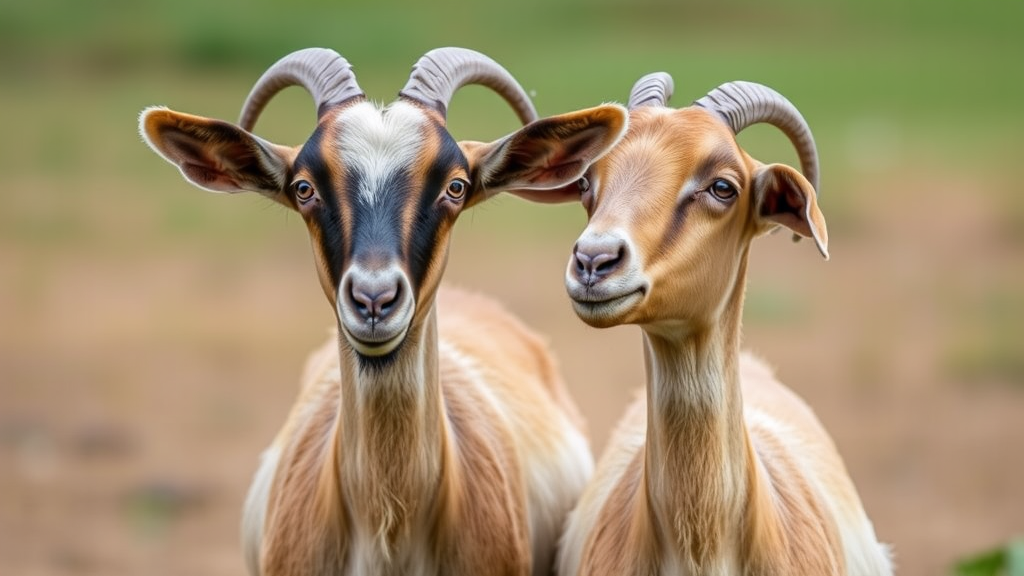
In the rugged, semi-arid highlands of north-eastern Ethiopia, a quiet experiment in genetics has been unfolding across village goat flocks for six years. Researchers with the Sekota Dry Land Agricultural Research Center have now published the first comprehensive estimates of the phenotypic and genetic parameters governing growth in Abergelle goats, a small, hardy breed that anchors the livelihoods of thousands of resource-poor farming households in the Wag-Himera zone. The findings, drawn from nearly 2,000 individually weighed animals, reveal a population with meaningful genetic room to improve, but one whose progress has been throttled by harsh environments and inconsistent selection practices.
The study, published in Veterinary Medicine and Science, examined growth performance within community-based breeding programmes, or CBBPs, established in 2018 in the villages of Addis Mender and Alquzu in the Sekota and Ziquala districts. This participatory approach to breed improvement, widely regarded as the most sustainable model for tropical smallholder systems, puts selection decisions directly in the hands of farmers while researchers supply the performance data and genetic tools. Enumerators recorded birth weights within 24 hours of kidding and tracked growth at standardized ages of 90, 180, 270 and 360 days, adjusting all weights to fixed ages so that a kid weighed at 110 days could be fairly compared with one weighed at 95.
The headline numbers tell a story of modest but meaningful production. Average birth weight across the flock was about 2.3 kilograms, rising to roughly 7.5 kilograms at three months, 8.8 kilograms at six months, 12.1 kilograms at nine months, and 15.3 kilograms at one year. Average daily gain peaked at 58.2 grams per day from birth to weaning, then fell steeply, halving between three and six months and dwindling to just 10.5 grams per day from nine months to yearling age. This declining trajectory, the authors note, is expected: pre-weaning growth is driven largely by the dam’s milk production and mothering ability, while post-weaning growth depends more on the animal’s own genetic potential and the increasingly unforgiving environment.
That environment is punishing. The Ziquala district receives between 250 and 650 millimetres of rain, compressed into a brief and erratic window from July to August, and temperatures swing from 25 to 39 degrees Celsius. Kids born in the wet season consistently outgrew their dry-season counterparts at every measured age, with three-month weights of 8.0 versus 7.6 kilograms and yearling weights of 15.8 versus 14.6 kilograms. Village effects were equally striking: Addis Mender kids significantly outgrew those in Alquzu at every post-birth stage, a gap the researchers attribute to better feed management, the use of improved cowpea forage, and traditional livestock mobility along the Tirari river that lets herders chase surplus grazing in times of shortage.
Sex, birth type and parity also left their fingerprints on the data. Male kids were heavier than females at birth and at most later ages, a difference the authors ascribe to hormonal influences. Single-born kids edged out twins at birth and three months, plausibly reflecting limited uterine space and prenatal nutrient competition, but this advantage evaporated by nine months and one year, an encouraging finding that suggests encouraging twin births carries no long-term growth penalty. That matters in a breed where twinning rates are only about 10 percent and kidding intervals stretch to 11.3 months, limiting each doe to roughly one kid per year.
The genetic core of the study lies in its heritability estimates, calculated using mixed univariate animal models in the Wombat software, with four competing models tested via likelihood ratio tests to properly partition direct additive, maternal genetic and maternal permanent environmental effects. Direct heritability estimates ranged from 0.34 for birth weight to 0.45 for three-month weight, with six-month, nine-month and yearling weights falling between 0.40 and 0.42. These moderate to high values carry a powerful practical implication: a substantial fraction of the variation in growth is genetically driven, meaning that selecting the best bucks as sires should yield real, measurable progress across generations.
The pattern of maternal effects proved equally instructive. When maternal genetic effects were included in the models, direct heritability estimates dropped, confirming that ignoring dam contributions inflates apparent genetic merit and biases breeding value predictions. Maternal heritability for early growth rate traits reached 0.24, and maternal permanent environmental effects, capturing the lasting imprint of uterine conditions, milk yield and early-life care, accounted for 5 to 16 percent of phenotypic variance. Genetic correlations between direct growth effects and maternal performance were strongly positive, between 0.86 and 0.96, suggesting that genes which make kids grow faster also tend to make their dams better mothers, allowing simultaneous improvement of both through selection, though the authors caution that such high covariance estimates can carry large sampling errors with limited pedigree depth.
Perhaps the most actionable finding concerns which traits breeders should target. Birth weight showed only weak genetic correlations with later growth stages, ranging from 0.09 to 0.23, indicating that selecting on birth weight alone would do little to improve yearling size. In contrast, three-month weight exhibited high positive genetic correlations with six-month weight (0.87), nine-month weight (0.67) and yearling weight (0.71). This opens the door to indirect early selection: kids carrying genes for superior growth reveal themselves clearly by weaning age, letting breeders cull and choose months before the animals reach market weight, accelerating the entire selection cycle.
Against regional benchmarks, Abergelle goats remain modest performers. Their birth weights lag the Central Highland breed, their six-month weights fall well short of Woyto-Guji, Bati and Borana goats, and their early daily gains trail those recorded for the same breed under semi-intensive management. But the comparison is not simply a matter of inferior genetics; Abergelle goats survive and reproduce in some of the most marginal agro-ecologies in the Amhara region, browsing Acacia-dominated shrubland where crop farming fails. The moderate heritabilities found here suggest the breed is not genetic dead weight but a locally adapted resource waiting for better selection pressure.
The authors’ diagnosis of the programme’s uneven progress is refreshingly candid. Weight traits did not increase linearly across the six study years, and they point to gaps in accurate buck selection, premature sale of breeding sires, inconsistent enumerator training, and year-to-year feed fluctuations as the likely culprits. Their prescriptions are concrete: tighten sire selection using estimated breeding values, which has been standard practice since 2020; increase selection intensity beyond the current top-10-percent retention of bucks; rotate breeding bucks annually across flocks to keep inbreeding at zero; and shift selection decisions earlier, to six months of age. For a country where sheep and goats supply 242,774 tonnes of the national meat supply and goat meat demand from urban kurete houses and hotels is climbing, squeezing faster growth out of a breed that already thrives where nothing else will may be one of the most quietly consequential wins in African livestock science.
Subject of Research: Genetic and phenotypic parameters of growth traits in Abergelle goats under community-based breeding programmes in north-eastern Ethiopia
Article Title: The Estimation of Phenotypic and Genetic Parameters for Growth Rate Traits of Abergelle Goat Under the Community‐Based Breeding Programme in the North‐Eastern Parts of Ethiopia
Article References: Abebe, Y. W., Meberatie, W. S., & Wondie, Z. T. (2026). The Estimation of Phenotypic and Genetic Parameters for Growth Rate Traits of Abergelle Goat Under the Community‐Based Breeding Programme in the North‐Eastern Parts of Ethiopia. Veterinary Medicine and Science, 12(5), Article e71202. https://doi.org/10.1002/vms3.71202
Image Credits: AI Generated
DOI: 10.1002/vms3.71202
Keywords: Abergelle goats, heritability, community-based breeding programme, Ethiopia, growth traits, genetic parameters, average daily gain, maternal effects, animal breeding, small ruminants, selective breeding, Wag-Himera
Cite Scienmag News
Juliet Wilcox. (September 23, 2026). Genetic Study Reveals How Ethiopia’s Abergelle Goats Could Grow Faster Through Smarter Breeding. Scienmag. https://scienmag.com/genetic-study-reveals-how-ethiopias-abergelle-goats-could-grow-faster-through-smarter-breeding/
Juliet Wilcox. "Genetic Study Reveals How Ethiopia’s Abergelle Goats Could Grow Faster Through Smarter Breeding." Scienmag, 23 September 2026, https://scienmag.com/genetic-study-reveals-how-ethiopias-abergelle-goats-could-grow-faster-through-smarter-breeding/. Accessed 5 October 2026.
Juliet Wilcox. "Genetic Study Reveals How Ethiopia’s Abergelle Goats Could Grow Faster Through Smarter Breeding." Scienmag. September 23, 2026. https://scienmag.com/genetic-study-reveals-how-ethiopias-abergelle-goats-could-grow-faster-through-smarter-breeding/


