


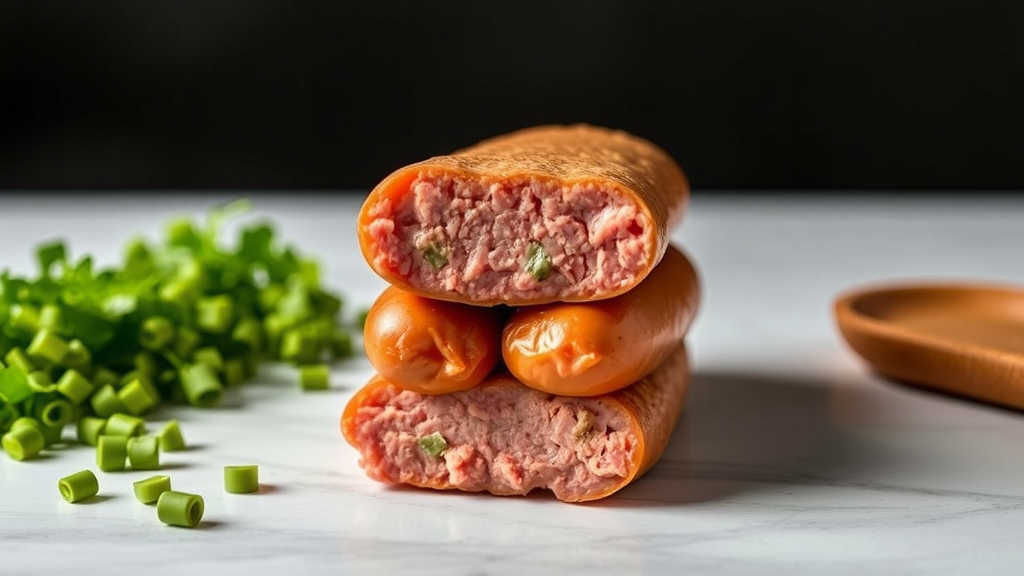
Dry-fermented sausages have long been prized for their intense, savory character, but the same chemistry that creates their flavor also undermines it over time. Lipid oxidation steadily degrades fat molecules, generating rancid off-notes and shortening shelf life, while the delicate communities of bacteria that drive fermentation struggle to survive the harsh conditions of drying and storage. Now, a team of Brazilian researchers has shown that an unassuming ancient grain may solve both problems at once. By immobilizing probiotic bacteria inside millet grains before adding them to sausage batter, scientists at the Pontifícia Universidade Católica do Paraná and the Universidade Federal do Paraná kept probiotic populations above eight log CFU per gram for more than four months of unrefrigerated storage, while simultaneously slowing the oxidative reactions that ruin flavor. The findings, published in Food Science of Animal Resources, suggest that a simple cereal carrier could become a multifunctional tool for the next generation of functional fermented meats.
The research team, led by Marilia Silva Malvezzi Karwowski and Renata Ernlund Freitas Macedo, built their study around Lactiplantibacillus plantarum, a lactic acid bacterium isolated from the native microbiota of traditional salami and previously characterized for its probiotic attributes. The strain was paired with Staphylococcus xylosus, a standard component of commercial starter cultures valued for its antioxidant enzymes and its role in generating the esters and branched aldehydes that define ripened sausage aroma. Four sausage formulations were compared: one containing free probiotic cells, one with free cells plus four percent sterile millet, and two in which Lp. plantarum was immobilized within millet at inclusion levels of two and four percent. Immobilization was achieved by sterilizing the grain at 121 degrees Celsius, incubating it with a dense bacterial suspension in MRS broth for 72 hours, and washing away any unattached cells before the grain was mixed into the meat batter.
The sausages themselves followed a conventional recipe of pork, beef, pork fat, salt, curing salts, glucose, and spices including white pepper, garlic, and nutmeg, stuffed into collagen casings and surface-inoculated with Penicillium nalgiovense mold. Ripening proceeded for 21 days in a controlled drying chamber, after which the vacuum-packed sausages were stored at room temperature for a further 100 days. Sampling occurred at five points during ripening and five points during storage, allowing the researchers to track pH, water activity, protein oxidation, lipid oxidation, and bacterial viability across the entire production cycle and well beyond the point at which most products reach consumers.
The microbial results were striking. Although all treatments began with roughly eight log CFU per gram of Lp. plantarum, the immobilized formulations climbed to peaks of 10.18 and 10.30 log CFU per gram by day 21 of ripening, and then declined only gradually. By day 121 of storage, sausages containing millet-immobilized cells still carried more than eight log CFU per gram, a level comfortably within the range typically used in probiotic products, whereas free-cell treatments fell significantly lower. The researchers attribute this resilience to physical entrapment: the grain structure shields bacterial cells from dehydration, oxygen exposure, and oxidative stress during processing. The close association between the cells and millet’s carbohydrates and phenolic compounds may also sustain metabolic activity and help the bacteria adapt to the plant matrix itself, a phenomenon consistent with prior reports that Lp. plantarum can metabolize food phenolics into antioxidant metabolites.
Chemical analyses revealed a second benefit. Lipid oxidation, measured by TBARS values expressed as milligrams of malonaldehyde per kilogram, rose roughly 4.42-fold in the free-cell control over the full study period, climbing from 0.53 to 2.34 mg MDA/kg. Because a TBARS value above 2.0 mg MDA/kg is widely regarded as the threshold for detectable rancidity in meat, the control crossed that line by day 61 of storage. In contrast, the millet-containing treatments delayed crossing the threshold until day 100 or 121, with the immobilized formulations showing the smallest proportional increases overall. The explanation lies in millet’s rich arsenal of phenolic acids, notably ferulic acid, along with flavonoids and tannins, which act as scavengers of superoxide radicals, hydrogen peroxide, hydroxyl radicals, and singlet oxygen, the reactive species that propagate lipid oxidation in fatty foods.
Protein oxidation told a different story. Carbonyl content, a marker of oxidative damage to muscle proteins, increased significantly in all treatments during ripening, driven by reactive oxygen species and metal-catalyzed formation of carbon-centered protein radicals, but then remained stable throughout storage in every formulation. The researchers note that lactic acid bacteria function as natural antioxidants in this context, scavenging free radicals, chelating pro-oxidant metal ions, and producing protective enzymes such as superoxide dismutase and catalase. Crucially, millet addition did not alter protein oxidation, pH trajectories, or water activity in any meaningful way, meaning the grain delivered its protective effects without disturbing the fundamental physicochemical processes that make dry-fermented sausage what it is. The characteristic pH drop during early fermentation, followed by a gradual rise as proteolysis releases alkaline nitrogenous compounds, proceeded normally in all four batches.
The most technically demanding part of the study concerned aroma. Using solid-phase microextraction coupled with gas chromatography and triple quadrupole mass spectrometry, the team identified 41 volatile compounds spanning alcohols, aldehydes, organic acids, hydrocarbons, esters, and ketones, plus spice-derived terpenes and sulfur compounds that were present uniformly and excluded from comparative analysis. At the start of ripening, alcohols dominated the profile in all treatments, with 1-hexanol as the leading compound. As processing and storage advanced, aldehydes and alcohols became the dominant families, and the overall complexity of the volatile profile increased markedly. Principal component analysis confirmed that sample differentiation over time was driven primarily by storage duration rather than by the immobilization process itself, an encouraging sign that the millet matrix does not distort the product’s aromatic development.
Within that overall pattern, however, meaningful differences emerged. Hexanal, the most abundant oxidation marker and a product of omega-6 fatty acid degradation, rose in all treatments but did so more slowly in the immobilized formulations. By the end of ripening, the free-cell control had reached a hexanal peak area of 28.98 percent, while the four percent immobilized treatment registered only 17.74 percent. Other linear aldehydes associated with lipid autoxidation, including nonanal, heptanal, and octanal, were significantly lower at day 61 of storage in all millet-containing treatments compared with the control. Meanwhile, branched aldehydes such as 2-methylbutanal and 3-methylbutanal, which arise from amino acid catabolism and contribute the characteristic ripened flavor of dry sausage, appeared on schedule in every treatment, indicating that the millet matrix does not interfere with the microbial metabolism responsible for traditional aroma. The immobilized treatments even showed greater growth in aromatic diversity over time, with the four percent formulation more than doubling its compound count from nine at day zero to 21 at day 121.
The authors are careful to note the limits of their work. No sensory panel was convened, so the direct impact of the measured chemical changes on consumer perception of aroma and flavor remains to be established, although instrumental markers of lipid oxidation have historically correlated well with perceived rancidity. Future studies, they write, should evaluate the approach under industrial conditions, assess long-term stability, and incorporate descriptive and hedonic sensory analysis. Even so, the implications are considerable. Probiotic fermented meats occupy a difficult niche: consumers want functional foods, but the acidic, dehydrated, oxygen-exposed environment of a drying sausage is hostile to delicate probiotic cells, and free-cell supplementation has repeatedly failed to maintain viable populations through extended shelf life. Encapsulation in protein-polysaccharide matrices has shown promise, but cereal grains offer a cheaper, food-grade, gluten-free alternative that doubles as an antioxidant ingredient.
Millet’s small particle size and light color also mean it can be incorporated at low levels without altering the appearance or texture of the final product, a practical advantage for manufacturers wary of reformulation risks. Because the study demonstrated that immobilization, rather than the mere presence of millet, was central to modulating lipid oxidation pathways, the technique points toward a specific manufacturing intervention: pre-colonized grain added at two to four percent of batter weight. If subsequent sensory and industrial trials confirm these results, the humble millet grain, a staple of traditional diets across Africa and Asia, could find an unexpected second career inside one of the world’s oldest processed foods, keeping its probiotics alive, its fats fresh, and its flavor exactly where tradition put it.
Subject of Research: Use of millet grains as an immobilization carrier for probiotic bacteria to improve oxidative stability and volatile aroma profiles in dry-fermented sausages
Article Title: Impact of millet-immobilized probiotic on oxidation and volatile profile of dry-fermented sausage
Article References: Karwowski, M. S. M., Cavalari, C. M. A., Silva, B. J. G., & Macedo, R. E. F. (2026). Impact of millet-immobilized probiotic on oxidation and volatile profile of dry-fermented sausage. Food Science of Animal Resources, 46(1), Article 88. https://doi.org/10.1007/s44463-026-00097-2
Image Credits: AI Generated
DOI: 10.1007/s44463-026-00097-2
Keywords: probiotics, millet, dry-fermented sausage, Lactiplantibacillus plantarum, lipid oxidation, TBARS, volatile compounds, hexanal, food preservation, functional foods, starter cultures, antioxidants
Cite Scienmag News
Alan Morgan. (September 22, 2026). Millet Turns Probiotic Sausages Into Longer-Lasting, Better-Protected Fermented Meats. Scienmag. https://scienmag.com/millet-turns-probiotic-sausages-into-longer-lasting-better-protected-fermented-meats/
Alan Morgan. "Millet Turns Probiotic Sausages Into Longer-Lasting, Better-Protected Fermented Meats." Scienmag, 22 September 2026, https://scienmag.com/millet-turns-probiotic-sausages-into-longer-lasting-better-protected-fermented-meats/. Accessed 22 September 2026.
Alan Morgan. "Millet Turns Probiotic Sausages Into Longer-Lasting, Better-Protected Fermented Meats." Scienmag. September 22, 2026. https://scienmag.com/millet-turns-probiotic-sausages-into-longer-lasting-better-protected-fermented-meats/


