


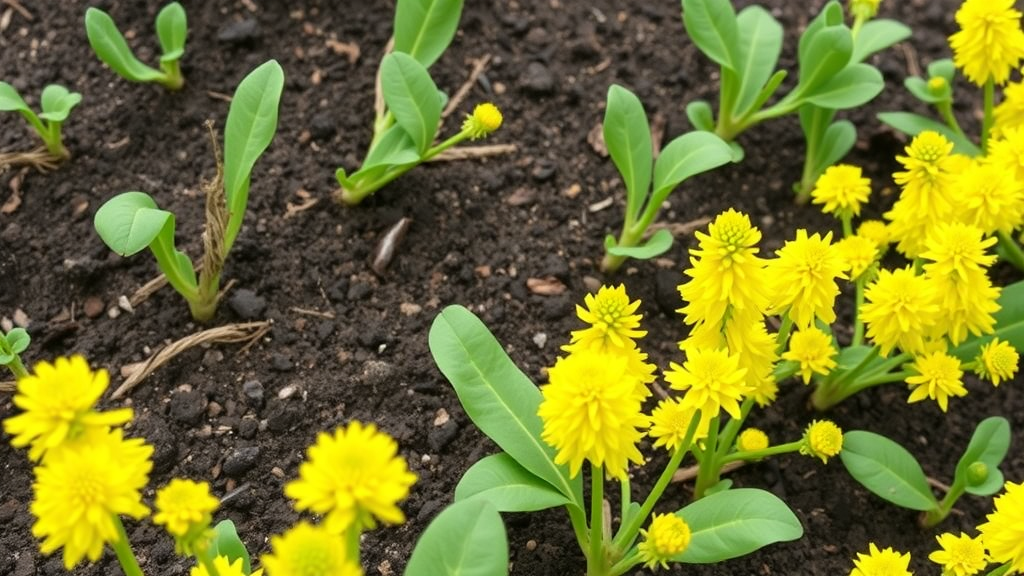
Lead contamination in agricultural soils is one of the most stubborn threats to global food production, quietly robbing crops of yield while slipping into the food chain. Now, a team of researchers in India has shown that a simple, inexpensive intervention—foliar sulphur application—can dramatically blunt the damage that lead inflicts on Indian mustard (Brassica juncea), one of the world’s most important oilseed crops. The study, published in Plant Cell Reports, tracked the physiological, biochemical and molecular responses of mustard plants over an entire growing season, revealing in unprecedented temporal detail how sulphur rewires the plant’s stress machinery to detoxify one of agriculture’s most toxic heavy metals.
The research team, led by Hemanthkumar Manne, Nisha Kumari and Sonia Nain of Chaudhary Charan Singh Haryana Agricultural University, together with colleagues at Uttar Banga Krishi Vishwavidyalaya and Government Degree College Ramban, grew the mustard cultivar RH 749 under three escalating levels of lead stress—100, 200 and 300 parts per million—and then sprayed subsets of the plants with either 100 or 200 ppm of sulphur. Crucially, rather than taking a single snapshot, the investigators sampled the crop at 30, 60 and 90 days after sowing, capturing how the battle between lead toxicity and sulphur-mediated defense unfolds across the plant’s life cycle.
The damage inflicted by lead was severe and, in many respects, worsened as the season progressed. At the highest lead dose of 300 ppm, levels of malondialdehyde—a classic molecular signature of lipid peroxidation and cellular membrane damage—climbed by 30.93 percent at 30 days, 32.73 percent at 60 days and 34.82 percent at 90 days after sowing. Electrolyte leakage, which measures how badly lead has punched holes in cellular membranes, surged even more dramatically, rising by 204 percent at the earliest measurement and remaining elevated by 116 percent and 94.3 percent at the later time points. These figures confirm that lead progressively dismantles the structural integrity of plant cells, setting off a cascade of oxidative destruction.
Yet the plants were not passive victims. Lead exposure triggered a powerful internal counterattack: by 90 days after sowing, the worst-stressed plants had boosted their levels of ascorbic acid by 53.1 percent, glutathione by 27.96 percent and—most strikingly—phytochelatins by a remarkable 362.73 percent. Phytochelatins are small, sulphur-rich peptides that bind heavy metals and lock them away in cellular vacuoles, effectively quarantining the toxin. The enormous surge in phytochelatin production suggests that the mustard plants were pouring their sulphur resources into metal detoxification, a strategy that previous work in rice, pakchoi and poplar has also implicated in heavy metal tolerance.
The cost of this defense, however, was paid at the expense of growth and productivity. Under 300 ppm lead stress, the plants’ transpiration rate fell by 33.6 percent, photosynthetic rate by 20.76 percent and stomatal conductance by 33.36 percent at 90 days after sowing. With stomata closing and the photosynthetic apparatus compromised, yield and oil content—the very traits that make mustard a valuable oilseed—declined sharply. The findings underscore a familiar dilemma in stress physiology: plants can either spend their energy fighting toxins or building harvestable biomass, and lead forces them toward the former.
This is where sulphur changed the story. When lead-stressed plants received the higher sulphur spray of 200 ppm, malondialdehyde accumulation dropped by 13.49 percent and electrolyte leakage by 18.62 percent at 90 days after sowing. The sulphur treatment steadied cellular homeostasis, restoring transpiration, photosynthesis, oil content and yield toward healthier levels. In effect, the foliar spray supplied the raw material the plants needed to mount their chemical defense without cannibalizing their own growth machinery—a distinction that could matter enormously to farmers cultivating mustard on contaminated land.
At the enzymatic level, the researchers found that lead stress activated the plant’s sulphur assimilation pathway, increasing the activity of ATP sulfurylase (ATPS), the gateway enzyme that converts sulphate into a biologically usable form, and glutathione S-transferase (GST), which conjugates toxins to glutathione for safe removal. With sulphur assimilation ramped up, the downstream products of the pathway—ascorbic acid, glutathione and phytochelatins—accumulated in greater quantities, giving the plants a larger arsenal for neutralizing lead ions and the reactive oxygen species they generate. The ascorbate-glutathione cycle, long recognized as the central hub of plant redox regulation, was thus supercharged by the extra sulphur supply.
Perhaps the most compelling evidence came from the molecular level. Transcriptomic analysis revealed that expression of the BjATPS gene—the gene encoding ATP sulfurylase—rose under lead stress, but when plants were sprayed with sulphur, its expression nearly doubled. This finding provides a mechanistic explanation for the whole-plant results: exogenous sulphur does not merely act as a passive nutrient but actively amplifies the transcriptional program of sulphur assimilation, feeding the glutathione and phytochelatin production lines that detoxify lead. It also builds on earlier work by the same group, which had shown that sulphur mitigates lead toxicity in mustard through biochemical and transcriptomic strategies, and on studies demonstrating that ATP sulfurylase activity correlates with stress tolerance in mustard cultivars.
The temporal dimension of the study adds practical weight to its conclusions. By showing that oxidative damage accumulates steadily across the season while the protective response peaks late, the researchers highlight that sulphur supplementation must be timed to support the plant through its most vulnerable phases. Their conclusion is straightforward: sulphur application alleviates lead stress in Brassica seedlings by regulating oxidative biomarkers and antioxidants, thereby easing yield constraints. Because sulphur is already a familiar, affordable fertilizer ingredient, the authors suggest it could be a suitable choice for farmers seeking to mitigate lead toxicity in mustard—serving simultaneously as a defense activator against metal stress and a regulator of normal plant growth and development.
Beyond the immediate agronomic implications, the study contributes to a growing body of science on heavy metal stress in crops, a field increasingly urgent as industrial pollution, mining runoff and wastewater irrigation contaminate farmland worldwide. Brassica species are already prized for their phytoremediation potential, and understanding how sulphur metabolism underpins their metal tolerance could inform breeding programs aimed at developing cultivars that thrive on marginal, contaminated soils. With lead exposure posing risks to both crop productivity and human health, a cheap foliar spray that boosts the plant’s own detoxification machinery offers a rare win-win: cleaner fields, healthier plants and better harvests from soil that would otherwise surrender to toxicity.
Subject of Research: Sulphur-mediated alleviation of lead toxicity in Indian mustard (Brassica juncea)
Article Title: Temporal dynamics of sulphur mediated alleviation of lead toxicity in Brassica juncea
Article References: Manne, H., Kumari, N., Nain, S., Vaishnavi, K., & Zaid, A. (2026). Temporal dynamics of sulphur mediated alleviation of lead toxicity in Brassica juncea. Plant Cell Reports, 45(10), Article 302. https://doi.org/10.1007/s00299-026-03990-8
Image Credits: AI Generated
DOI: 10.1007/s00299-026-03990-8
Keywords: Brassica juncea, lead toxicity, sulphur, phytochelatins, glutathione, ascorbic acid, oxidative stress, ATP sulfurylase, photosynthesis, antioxidant defense, heavy metal stress, Plant Cell Reports
Cite Scienmag News
Alan Morgan. (September 22, 2026). Sulphur Spray Helps Mustard Plants Beat Lead Toxicity, Study Finds. Scienmag. https://scienmag.com/sulphur-spray-helps-mustard-plants-beat-lead-toxicity-study-finds/
Alan Morgan. "Sulphur Spray Helps Mustard Plants Beat Lead Toxicity, Study Finds." Scienmag, 22 September 2026, https://scienmag.com/sulphur-spray-helps-mustard-plants-beat-lead-toxicity-study-finds/. Accessed 5 October 2026.
Alan Morgan. "Sulphur Spray Helps Mustard Plants Beat Lead Toxicity, Study Finds." Scienmag. September 22, 2026. https://scienmag.com/sulphur-spray-helps-mustard-plants-beat-lead-toxicity-study-finds/


