


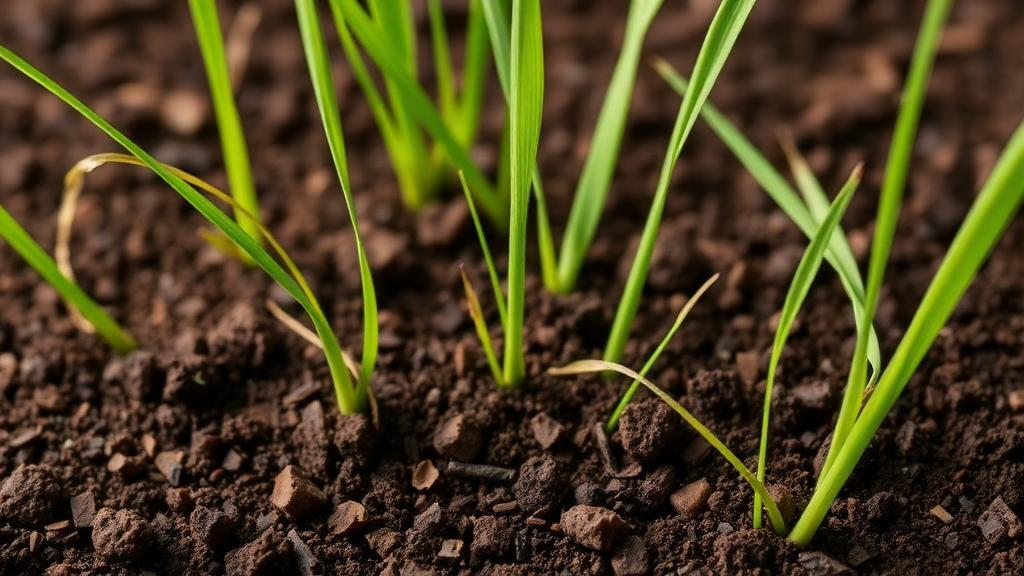
One of the most important forage grasses in the tropics has a stubborn problem: its seeds are reluctant to sprout. Urochloa brizantha, a staple pasture species grazed by ruminants across tropical and subtropical regions of the world, frequently germinates slowly and unevenly, frustrating farmers who depend on rapid, uniform pasture establishment. Now, a team of Brazilian researchers has shown that two simple interventions, physically stripping away the seed’s outer coverings and bathing seeds in biomolecule-rich extracts made from a fungus and a leafy plant, can substantially improve germination and early seedling growth. The findings, published in Discover Plants, point toward sustainable seed treatments that could help tropical livestock producers get more from every kilogram of seed they sow.
The research was carried out at the Federal University of Piauí’s Professora Cinobelina Elvas Campus in Bom Jesus, Brazil, using a commercial seed lot of U. brizantha cv. MG-5 from the 2022/2023 crop year. The team, led by Tiago de Oliveira Sousa and Thalesram Izidoro Pinotti, began by characterizing the seed lot’s baseline quality. A tetrazolium viability test, which stains living tissue red and reveals whether embryos are metabolically active, showed that 86 percent of the seeds were alive and met the minimum standards required for commercialization. Yet when the seeds were actually germinated under ideal laboratory conditions, only 55 percent produced normal seedlings, and the first germination count on day seven was a mere 27 percent. That gap between viability and germination is the signature of dormancy, and it is precisely the problem the researchers set out to solve.
Dormancy in Urochloa species is widely attributed to physical barriers. The seeds are wrapped in glumes, lemmas, and paleas, the same bracts that enclose grass florets, and these structures, together with a rigid seed coat, can restrict water absorption and oxygen diffusion, both essential triggers for germination. Uneven inflorescence emergence, asynchronous flowering within racemes, a low proportion of fertile seeds, and natural seed shattering further complicate matters, meaning commercial seed lots can vary widely in quality. Under Brazilian regulations, seed lots of this species must reach at least 60 percent germination to be sold commercially, so lots that fall short represent both an agronomic and an economic liability.
To tackle the physical barrier, the researchers manually removed the glumes, lemmas, and paleas from half of the seeds, a process called scarification. Crucially, the procedure did not touch the seed coat itself, which in Urochloa is known for its rigidity and impermeability, so there was no risk of damaging the embryo. The effect was dramatic. Scarification raised the germination speed index by 73.7 percent, from 5.90 to 10.25, lifted the first germination count from 43 to 66 percent, and increased final germination from 50 to 69 percent, a gain of 19 percentage points. Scarified seedlings also grew longer and accumulated more biomass, with significantly higher root fresh mass, total fresh mass, root dry mass, total dry mass, and total seedling length than their non-scarified counterparts. The likely mechanism is straightforward: removing the coverings accelerates imbibition, the initial uptake of water that kick-starts the metabolic machinery of germination.
The second intervention was biochemical. The team prepared three crude extracts and tested them as seed treatments alongside distilled water and a commercial mineral fertilizer-based product. Two of the extracts came from Trichoderma orientale, a fungus isolated from the ecotone between the Caatinga and Cerrado biomes in Piauí, grown by solid-state fermentation on two agro-industrial residues: orange peel and maize cobs. The third extract was made from leaves of Pereskia aculeata, a plant better known in Brazil as ora-pro-nóbis, a traditional vegetable prized for its unusually high protein content. Using waste materials as fermentation substrates is both economically and environmentally attractive; maize cobs alone account for roughly 18 kilograms of residue for every 100 kilograms of grain harvested, so converting them into value-added products adds revenue and reduces waste.
Biochemical analysis revealed striking differences among the extracts. The orange-peel extract showed the highest proteolytic activity at 200 units per milliliter, far exceeding values previously reported for fungi such as Aspergillus niger, Aspergillus brasiliensis, and various Fusarium strains. The maize-cob extract reached 75.07 units per milliliter, while the Pereskia extract managed only 27.83. However, when activity was normalized to protein content, the two fungal extracts were statistically indistinguishable, at 588.24 and 625.58 units per milligram, both far above the plant extract’s 55.43. The Pereskia extract instead boasted the highest protein concentration, 0.502 milligrams per milliliter, consistent with leaves that contain 23 percent protein on a dry-matter basis. The substrate clearly mattered: orange peel, rich in pectin, cellulose, and easily metabolized sugars, appears to stimulate abundant protease secretion, while maize cobs, dominated by holocellulose and lignin, seem to favor the selective production of a smaller amount of highly efficient enzyme.
When the extracts were applied by soaking seeds for one hour, every treatment outperformed the water control. The germination speed index rose from 5.82 in the control to between 8.30 and 9.42 across the treated groups, with no significant differences among the treatments themselves. First germination counts climbed from 40 percent to between 56 and 62 percent, and final germination increased from 44 percent to between 61 and 67 percent. Notably, all treated seeds cleared the 60 percent germination threshold required for commercial sale, which the untreated lot failed to meet. The commercial fertilizer product and the crude extracts performed comparably on these germination metrics, suggesting that inexpensive, residue-derived extracts could match a conventional product where germination is concerned.
Seedling development told a more nuanced story. The Pereskia aculeata extract produced the highest shoot dry mass and total dry mass of any treatment and, together with the maize-cob fungal extract, the greatest shoot length. Shoot fresh mass was higher in all three extract treatments than in either the water control or the commercial product. Root length, uniquely, depended on an interaction between treatment and scarification: among scarified seeds, the commercial product and the orange-peel fungal extract produced the longest roots, whereas among non-scarified seeds, the commercial product, the maize-cob extract, and the Pereskia extract led. Intriguingly, for the maize-cob and Pereskia treatments, root length did not differ between scarified and non-scarified seeds, implying that these extracts partially compensated for the physical constraint. Seedling vigor index I, which combines germination percentage with seedling length, rose by 47.7 to 59.5 percent under the treatments relative to the control, and scarification alone boosted it by 53.5 percent. Seedling water content, by contrast, was unaffected by any intervention, indicating that the treatments altered growth and biomass accumulation without disturbing tissue hydration.
Perhaps the most scientifically interesting result is what did not correlate. The extract with the highest proteolytic activity was not the one that produced the best seedlings, and the extract with the lowest activity delivered the greatest shoot growth and dry-mass accumulation. A Pearson correlation network built from the morphophysiological data showed that germination traits were tightly interconnected, with the germination speed index correlating at r = 0.99 with the first germination count and r = 0.97 with final germination, while vigor indices correlated strongly with both germination and seedling length. But germination speed was actually negatively correlated with some biomass traits, such as root dry mass, hinting at trade-offs in how seedlings allocate resources when they establish quickly. The authors conclude that seed responses reflect the integrated bioactivity of each crude extract, in which enzymes, proteins, peptides, amino acids, minerals, and soluble carbohydrates act jointly, rather than proteolysis alone. This functional dissociation opens the door to targeted fractionation and heat-inactivation experiments to identify which constituents actually drive the benefit.
The practical implications are considerable. Under laboratory conditions, a one-hour immersion in the extracts lifted final germination from 44 percent to as high as 68 percent, and scarification pushed it to 69 percent while improving seedling length and biomass. Together, the two approaches define complementary intervention points for seed technology: biochemical conditioning with bioactive crude extracts and physical removal of the structures that restrict water and oxygen uptake. The manual scarification used here serves as a proof of concept for developing scalable mechanical procedures, and the extract performance justifies further optimization of application rates, exposure times, formulation stability, and compatibility with seed storage. The authors caution that their results apply to the evaluated cultivar, seed lot, and controlled germination environment, and that validation across seed lots, storage periods, and field-emergence conditions will be needed before these treatments reach commercial protocols. Still, the vision is compelling: turning orange peels and maize cobs into fungal enzyme factories, and a protein-rich leafy vegetable into a seed treatment, to unlock the potential locked inside one of the tropics’ most important pasture grasses.
Subject of Research: Improving seed germination and early seedling development of Urochloa brizantha using scarification and biomolecule-rich fungal and plant extracts
Article Title: Fungal and plant extracts improve germination and early development of Urochloa brizantha
Article References: Sousa, T. D. O., Pinotti, T. I., Costa, T. B., de Sousa Mesquita, A., Gomes, S. O., Santos, A. M. G., & Nascimento, T. P. (2026). Fungal and plant extracts improve germination and early development of Urochloa brizantha. Discover Plants, 3(1), Article 439. https://doi.org/10.1007/s44372-026-00910-8
Image Credits: AI Generated
DOI: 10.1007/s44372-026-00910-8
Keywords: Urochloa brizantha, seed germination, seed dormancy, scarification, Trichoderma orientale, Pereskia aculeata, solid-state fermentation, proteolytic enzymes, agro-industrial residues, forage grass, seed treatment, seedling vigor
Cite Scienmag News
Alan Morgan. (October 5, 2026). Fungal and Plant Extracts Boost Germination of a Key Tropical Forage Grass. Scienmag. https://scienmag.com/fungal-and-plant-extracts-boost-germination-of-a-key-tropical-forage-grass/
Alan Morgan. "Fungal and Plant Extracts Boost Germination of a Key Tropical Forage Grass." Scienmag, 5 October 2026, https://scienmag.com/fungal-and-plant-extracts-boost-germination-of-a-key-tropical-forage-grass/. Accessed 5 October 2026.
Alan Morgan. "Fungal and Plant Extracts Boost Germination of a Key Tropical Forage Grass." Scienmag. October 5, 2026. https://scienmag.com/fungal-and-plant-extracts-boost-germination-of-a-key-tropical-forage-grass/


