


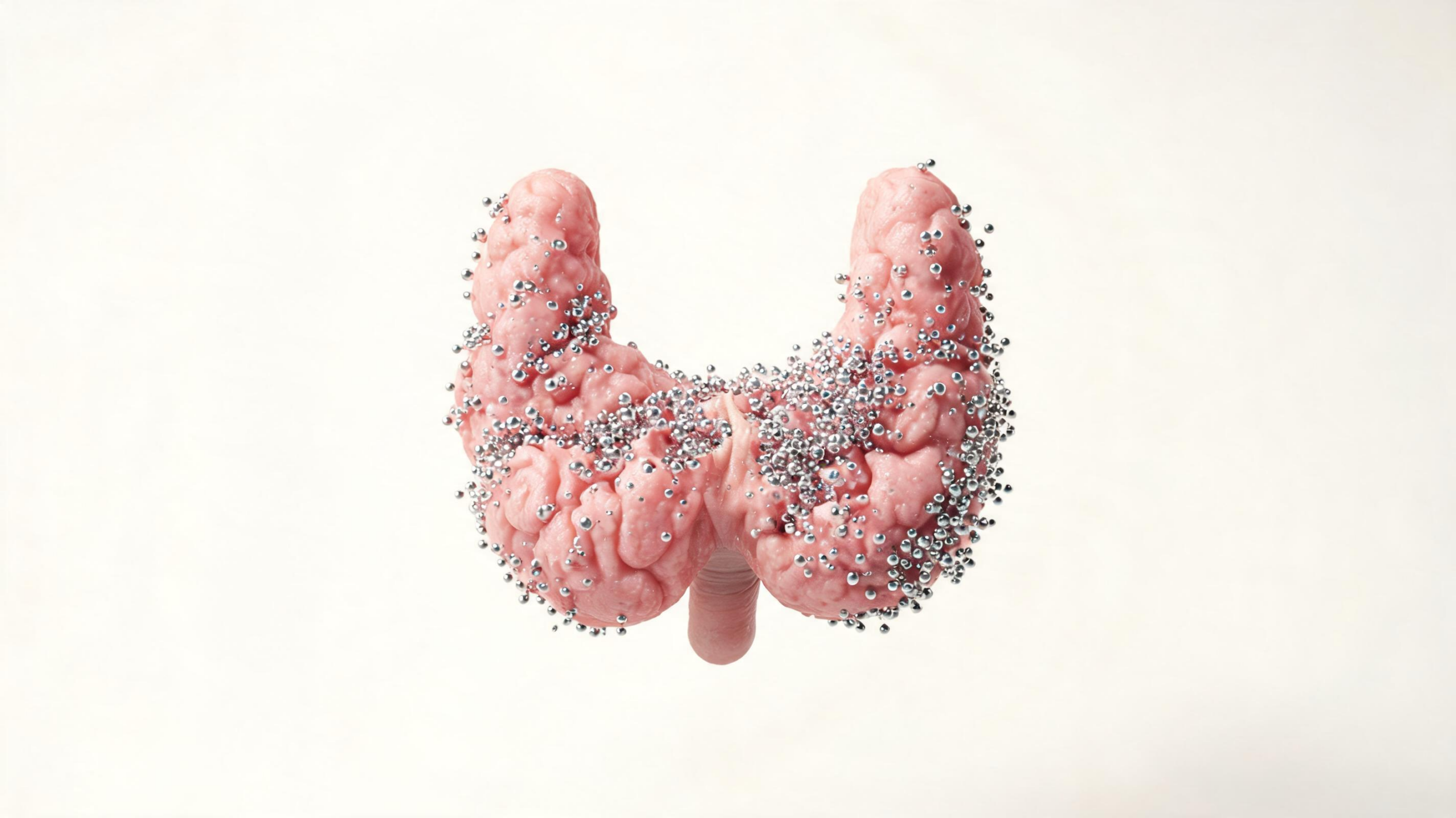
Metallic nanoparticles have quietly become one of the most pervasive materials of the modern world, finding their way into agriculture, commerce, industry and medicine on the strength of their tiny dimensions and unusual physicochemical properties. Yet the same characteristics that make them useful may also make them dangerous. A comprehensive review published in Discover Toxicology argues that the body’s endocrine glands, the tissues that orchestrate hormones governing metabolism, growth, reproduction and stress, are critical targets of nanoparticle toxicity. Drawing together experimental evidence across the thyroid, parathyroid, thymus, pineal gland, pancreas, adrenal glands, placenta and the hypothalamo-pituitary axis, the review maps out the mechanistic paradigms by which these engineered particles interfere with some of the most finely tuned signaling systems in biology.
The central mechanisms are surprisingly convergent. Nanoparticles can enter endocrine cells through circulation and lymphatic routes, bind to hormone receptors and either activate or inhibit downstream signaling pathways. Silver and zinc nanoparticles, for example, can bind estrogen receptors and display estrogenic activity, effectively mimicking natural hormones. Perhaps the most important pathway, however, is the generation of reactive oxygen species. These reactive molecules induce oxidative stress, damaging cellular structures and disrupting the signaling cascades that coordinate hormone synthesis and secretion. In parallel, nanoparticles activate innate immune responses, provoke the release of inflammatory cytokines, interfere with enzymes and transporters involved in endocrine regulation, and impair hormone metabolism. The end result of these disturbances can range from reproductive failure to metabolic syndrome, and the review stresses that the endocrine-disruptor effect of metallic nanoparticles depends heavily on their capacity to release metal ions that inhibit nuclear receptors and interfere with natural hormone action.
The thyroid gland emerges as one of the most intensively studied targets. Titanium dioxide nanoparticles administered to rats at 5 milligrams per kilogram for 21 days produced histopathological changes, including abnormal follicular cell morphology and epithelial damage, alongside a decrease in the sodium/iodide symporter, elevated caspase-3 apoptotic protein, and increased pro-inflammatory factors such as interleukin-1 beta and tumor necrosis factor alpha. In vitro, follicular cell viability declined. Silver nanoparticles affected the messenger RNA expression of thyroid hormone related genes in laying hens, raising serum triiodothyronine without altering thyroxine and prompting tissue-specific expression of genes involved in thyroid hormone metabolism, including deiodinases and the hormone transporter MCT10. Longer term exposure in female rats decreased thyroxine concentrations and caused degeneration of thyroid follicles. Intriguingly, the story is not uniformly negative: biogenic silver nanoparticles of 17 to 35 nanometers have been reported to raise triiodothyronine and thyroxine levels in experimentally hypothyroid rats, suggesting a potential therapeutic dimension.
Zinc oxide nanoparticles add another layer of complexity. Fed to albino rats at high doses for 30 days, they decreased thyroxine and thyroid stimulating hormone while producing histopathological damage. When combined with lead acetate over eight weeks, they lowered triiodothyronine and thyroxine, raised thyroid stimulating hormone and tumor necrosis factor alpha, and triggered significant overexpression of the nuclear factor erythroid 2 related factor, a master regulator of antioxidant response. The review also situates metallic nanoparticles within the broader landscape of thyroid-disrupting chemicals, noting that phthalates, bisphenol-A and polybrominated diphenyl ethers released by micro- and nanoplastics are established thyroid disruptors that enter through the gastrointestinal system and interfere with hormone secretion, transport and the hypothalamo-pituitary-thyroid axis. Transcriptomic studies further show disruption of thyroglobulin synthesis and interference with Pax8 and CERB gene expression, which are crucial for thyroid growth, differentiation and hormone secretion. By contrast, direct studies of the parathyroid gland remain scarce.
The thymus, a primary lymphoid organ where T cells mature, illustrates the overlap between endocrine and immune toxicity. Silver nanoparticles stimulate immune responses and promote cytokines such as interleukin-6, driving inflammation, while at higher concentrations they induce oxidative stress and DNA damage. Zinc oxide nanoparticles can activate human T cells and even preferentially kill cancerous T cells, with toxicity tracking the level of T cell activation, an effect attributed largely to reactive oxygen species. Orally administered zinc oxide caused degenerative changes in the thymus and spleen of rats, reduced thymus weight over three months of sub-chronic exposure, and shifted staining patterns consistent with decreased proliferation and increased p53-associated damage. Cadmium nanoparticles produce thymic atrophy, depletion of CD4-positive and CD8-positive T cells, and oxidative stress and apoptosis, with prenatal exposure producing persistent changes in immune cell repertoires. Cadmium oxide and lead oxide nanoparticles altered T cell populations in mice, while nickel nanoparticles stimulated pro-inflammatory cytokines that affect T cell activation, and titanium dioxide nanoparticles showed a striking dose dependence, provoking inflammation at low doses and cytotoxicity at high doses.
The pineal gland, source of the antioxidant hormone melatonin, faces a double-edged relationship with nanomaterials. Zinc oxide nanoparticles damage both brain and pineal tissue through reactive oxygen species, and in a counterintuitive finding, melatonin pretreatment actually enhanced zinc oxide toxicity in C6 glial cells rather than protecting them. Exposures to aluminum oxide and silver nanoparticles are associated with neurotoxicity and pineal dysfunction. Yet melatonin-loaded nanocarriers are now being deployed therapeutically, delivering the hormone with superior efficacy against disease than free melatonin alone. Melatonin complexed with nanometric gold offered testicular protection, a melatonin palladium complex induced apoptosis in human lung adenocarcinoma cells, and palladium nanoparticles served as platforms for detecting melatonin and related molecules electrochemically. This duality, harm and remedy coexisting in the same material class, runs throughout the review and underscores the difficulty of blanket risk assessments.
At the top of the hormonal hierarchy, the hypothalamo-pituitary axis is vulnerable in ways that ripple across the entire endocrine system. Copper nanoparticles inhibited pituitary gonadotropin secretion in male mice, suppressing luteinizing hormone and follicle stimulating hormone alongside degenerative changes in the anterior pituitary. Nanoparticles interfere with the ability of glial cells to regulate gonadotropin-releasing hormone, and trans-generational effects have been reported, with lithium carbonate nanoparticles affecting both the pituitary-gonadal and pituitary-thyroid axes in female rat progenies. The adrenal glands are similarly susceptible. Nanoparticles can activate the hypothalamic-pituitary-adrenal axis, surging adrenocorticotropic hormone and driving structural and functional changes, while also affecting key steroidogenic enzymes including aromatase, 5-alpha reductase, CYP11A1 and CYP11B1. Silver nanoparticles increased cortical functional activity and proved cytotoxic to adrenal pheochromocytoma cells through ATP depletion, cytoskeletal changes and oxidative stress, and in zebrafish they suppressed the cortisol response to acute stress by altering the hypothalamic-pituitary-interrenal axis at the transcriptomic level. Short-term oral titanium dioxide exposure impaired adrenal cortex and medulla structure in rats without apparent general toxicity, in vitro studies confirmed uptake of magnetic iron oxide nanoparticles by adrenal cortical cell lines, and nano-arsenic was reported to induce adrenal tumors through oxidative tissue damage and hormonal disturbance.
The pancreas and placenta complete the picture. Titanium dioxide nanoparticles caused histopathological and biochemical changes in the rat pancreas, with effects attributed to oxidative stress, inflammation and apoptosis of beta cells, decreased insulin secretion and disrupted carbohydrate metabolism, collectively raising diabetes risk. Yet low-dose zinc oxide nanoparticles normalized pancreatic function in diabetic rats by protecting beta cells through GLP-1 and oxidative stress pathways, and nanoselenium protected endocrine and exocrine pancreatic function in a rat model of acute pancreatitis through antioxidant and anti-inflammatory actions. Nanoparticles are also being pursued for targeted insulin delivery, with polymeric nanoparticles proposed for oral insulin administration and oligonucleotide-loaded particles explored for gene and cell therapy to stimulate insulin production. At the placenta, nanoparticles can cross the blood-placental barrier, disrupt placental function and the release of signaling factors needed for fetal development, and dysregulate the placental secretome with consequences for angiogenesis and vascularization. Ex vivo human placental perfusion studies have illuminated these risks, though the review notes that current regulatory guidelines do not sufficiently address placental toxicity, while smart nanoparticles engineered to target the placenta could eventually improve its function.
The review closes with a call for methodological renewal. Because nanoparticle toxicology involves multiple organs and interdependent molecular mechanisms, no single experimental model can simulate a realistic scenario; the author advocates microfluidic and organ-on-chip systems combined with single-cell culture, multi-omic approaches and in silico models to achieve accurate in vivo evaluation. Attention to biomarkers, mitochondrial versus cytoplasmic sources of reactive oxygen species, and the combined effects of multiple nanoparticles is warranted. A new generation of redox nanoparticles, including cerium oxide, boron cluster and silica-containing particles, offers promising antioxidant properties and the ability to cross the blood-brain barrier for treating endocrine disruption. The overarching conclusion is sobering but constructive: endocrine toxicity must remain central to risk assessment if nanotechnology is to be safely integrated into healthcare, theranostics, industry and the environment.
Subject of Research: Mechanisms of endocrine gland toxicity induced by metallic nanoparticles
Article Title: Endocrine gland specific mechanistic paradigms of toxicity induced by metallic nanoparticles
Article References: Rana, S. V. S. (2026). Endocrine gland specific mechanistic paradigms of toxicity induced by metallic nanoparticles. Discover Toxicology, 3(1), Article 20. https://doi.org/10.1007/s44339-026-00064-y
Image Credits: AI Generated
DOI: 10.1007/s44339-026-00064-y
Keywords: metallic nanoparticles, endocrine glands, oxidative stress, thyroid toxicity, hormone disruption, hypothalamo-pituitary axis, reactive oxygen species, adrenal glands, pancreas, placenta, nanotoxicology, antioxidants
Cite Scienmag News
Sloane Callahan. (September 10, 2026). Metallic Nanoparticles Disrupt Hormone Glands, Comprehensive Review Finds. Scienmag. https://scienmag.com/metallic-nanoparticles-disrupt-hormone-glands-comprehensive-review-finds/
Sloane Callahan. "Metallic Nanoparticles Disrupt Hormone Glands, Comprehensive Review Finds." Scienmag, 10 September 2026, https://scienmag.com/metallic-nanoparticles-disrupt-hormone-glands-comprehensive-review-finds/. Accessed 10 September 2026.
Sloane Callahan. "Metallic Nanoparticles Disrupt Hormone Glands, Comprehensive Review Finds." Scienmag. September 10, 2026. https://scienmag.com/metallic-nanoparticles-disrupt-hormone-glands-comprehensive-review-finds/


