

Tuesday, July 28, 2026
Science
No Result
View All Result
  • Login
  • HOME
  • SCIENCE NEWS
  • CONTACT US
  • HOME
  • SCIENCE NEWS
  • CONTACT US
No Result
View All Result
Scienmag
No Result
View All Result
Home Science News Earth Science

Isotopic evidence reveals thermogenic methane beneath Greenland’s North Ice Sheet

July 28, 2026
in Earth Science
Reading Time: 2 mins read
0
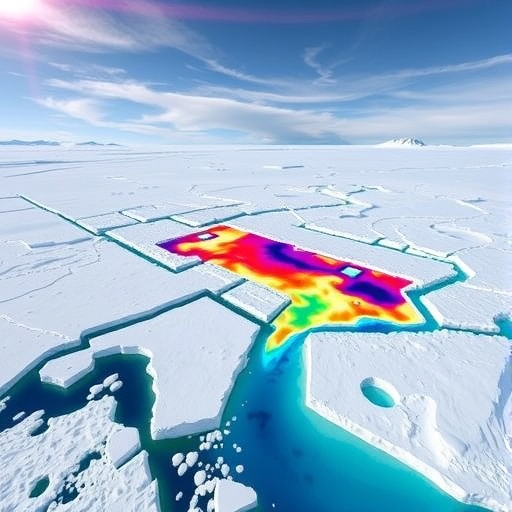
Isotopic evidence reveals thermogenic methane beneath Greenland’s North Ice Sheet

Isotopic evidence reveals thermogenic methane beneath Greenland’s North Ice Sheet

65
SHARES
587
VIEWS
Share on FacebookShare on Twitter
ADVERTISEMENT

A new study has ignited debate about how far below Earth’s surface methane can persist—and where it might come from—by pointing to thermogenic gas beneath the North Greenland Ice Sheet. Using a combination of isotopic measurements and geological constraints, the researchers report evidence that the methane trapped under ice is not simply a relic of ancient microbes, but is more consistent with methane generated through deeper, heat-driven processes.

Methane is often treated as a microbial product in polar environments, yet the Greenland ice system is complex. Ice, sediments, and underlying bedrock create multiple pathways for gas storage and release. Determining methane’s origin is crucial because “who made the methane” strongly influences expectations for how stable it will be over time, and how sensitive it could be to rapid warming.

The team analyzed isotopic signatures—ratios of carbon and hydrogen isotopes within methane and related components—to infer the gas’s formation conditions. Isotopic patterns can act like a fingerprint, distinguishing thermogenic methane formed at elevated temperatures in subsurface settings from methane produced by hydrogenotrophic or acetoclastic microbial metabolisms.

Their geologic reasoning supported this chemical evidence. By linking methane occurrences to regional subsurface structures and sedimentary histories, the authors argue that processes capable of producing thermogenic methane likely occurred beneath Greenland before being sealed or slowed by overlying ice and sediments. In this view, the ice sheet functions less as the birthplace of methane and more as a long-term container.

The study also highlights the power of integrating isotopes with geology in environments where direct sampling is difficult. While Greenland’s ice record can store gases, interpreting those trapped molecules requires careful disentangling of atmospheric contamination, post-depositional alteration, and multiple potential sources.

Taken together, the work suggests that North Greenland may host a methane reservoir with a deeper origin than previously assumed. That matters for projections of Arctic greenhouse forcing, because thermogenic sources may respond differently to changing pressure, temperature, and hydrology than purely microbial systems.

Viral scientific headlines are likely to follow this research because it reshapes a familiar story: methane under ice may not always be “biological.” If thermogenic methane is widespread under polar ice margins, it could alter risk assessments for methane mobilization as ice dynamics and meltwater infiltration evolve.

Still, the authors emphasize that more measurements are needed to map the extent and variability of the signal. Future studies will likely focus on expanding isotopic datasets and coupling them to refined models of subsurface transport.

In an era when every new greenhouse-gas clue matters, the Greenland finding adds urgency—and nuance—to our understanding of Earth’s buried carbon.

Subject of Research: Methane origin beneath the North Greenland Ice Sheet; isotopic and geological evidence for thermogenic methane.

Article Title: Thermogenic methane beneath the North Greenland Ice Sheet revealed by isotopic and geological evidence.

Article References: Ketzer, M., Jakobsson, M., Faehnrich, K. et al. Nat Commun 17, 7265 (2026). https://doi.org/10.1038/s41467-026-75951-4

Image Credits: AI Generated

DOI: https://doi.org/10.1038/s41467-026-75951-4

Keywords: methane, Greenland Ice Sheet, isotopes, thermogenic methane, Arctic greenhouse gases, subsurface geology

Tags: deep geothermal processes in Greenlandgeological constraints on methane formation in polar regionsimpact of heat-driven methane generation on Arctic climateimplications of methane origin for climate stabilityisotopic analysis of methane in polar environmentsisotopic fingerprinting of subsurface gasesmethane origin in Greenlandmethane storage and release pathways under ice sheetsmicrobial versus thermogenic methane signaturessignificance of methane source identification in glacial environmentssubsurface structures influencing methane accumulationthermogenic methane detection beneath ice sheets
Share26Tweet16
Previous Post

OmniAge maps aging biomarkers, linking mitotic clocks to clonal hematopoiesis

Next Post

Meta-analysis Identifies Brain Functional Changes Linked to Suicidal Ideation

Related Posts

Satellite era shows reduced global marine primary productivity and shifted hemispheres
Earth Science

Satellite era shows reduced global marine primary productivity and shifted hemispheres

July 28, 2026
User-Centered Framework Enables Self-Sufficient Zero-Carbon Energy in High Altitudes
Earth Science

User-Centered Framework Enables Self-Sufficient Zero-Carbon Energy in High Altitudes

July 28, 2026
Promises and pitfalls of Mediterranean climate adaptation tools
Earth Science

Promises and pitfalls of Mediterranean climate adaptation tools

July 28, 2026
Tailored Cu-N2S single atoms boost photo-Fenton activity via d–p hybridization
Earth Science

Tailored Cu-N2S single atoms boost photo-Fenton activity via d–p hybridization

July 28, 2026
Crystal Dislocations Govern Sc Incorporation in Hydrothermally Modified Beryl
Earth Science

Crystal Dislocations Govern Sc Incorporation in Hydrothermally Modified Beryl

July 28, 2026
Toward a theory for stable Earth albedo and 21st-century hemispheric symmetry
Earth Science

Toward a theory for stable Earth albedo and 21st-century hemispheric symmetry

July 28, 2026
Next Post
Meta-analysis Identifies Brain Functional Changes Linked to Suicidal Ideation

Meta-analysis Identifies Brain Functional Changes Linked to Suicidal Ideation

  • Mothers who receive childcare support from maternal grandparents show more

    Mothers who receive childcare support from maternal grandparents show more parental warmth, finds NTU Singapore study

    27656 shares
    Share 11059 Tweet 6912
  • University of Seville Breaks 120-Year-Old Mystery, Revises a Key Einstein Concept

    1061 shares
    Share 424 Tweet 265
  • Bee body mass, pathogens and local climate influence heat tolerance

    682 shares
    Share 273 Tweet 171
  • Researchers record first-ever images and data of a shark experiencing a boat strike

    546 shares
    Share 218 Tweet 137
  • Groundbreaking Clinical Trial Reveals Lubiprostone Enhances Kidney Function

    531 shares
    Share 212 Tweet 133
Science

Embark on a thrilling journey of discovery with Scienmag.com—your ultimate source for cutting-edge breakthroughs. Immerse yourself in a world where curiosity knows no limits and tomorrow’s possibilities become today’s reality!

RECENT NEWS

  • Enzyme discovery may help clear deadly zombie cells from human tissues
  • Study Warns of Hidden Sleep Crisis Among Workers Over 50
  • New Shrimpgoby Species Named After Indonesia’s Java “Sunrise”
  • Survey Reveals Gaps in Fungal Diagnostics and Antifungal Access in Latin America

Categories

  • Agriculture
  • Anthropology
  • Archaeology
  • Athmospheric
  • Biology
  • Biotechnology
  • Blog
  • Bussines
  • Cancer
  • Chemistry
  • Climate
  • Earth Science
  • Editorial Policy
  • Marine
  • Mathematics
  • Medicine
  • Pediatry
  • Policy
  • Psychology & Psychiatry
  • Science Education
  • Social Science
  • Space
  • Technology and Engineering

Subscribe to Blog via Email

Enter your email address to subscribe to this blog and receive notifications of new posts by email.

Join 5,146 other subscribers

© 2025 Scienmag - Science Magazine

Welcome Back!

Login to your account below

Forgotten Password?

Retrieve your password

Please enter your username or email address to reset your password.

Log In
No Result
View All Result
  • HOME
  • SCIENCE NEWS
  • CONTACT US

© 2025 Scienmag - Science Magazine

Discover more from Science

Subscribe now to keep reading and get access to the full archive.

Continue reading
