

Monday, July 27, 2026
Science
No Result
View All Result
  • Login
  • HOME
  • SCIENCE NEWS
  • CONTACT US
  • HOME
  • SCIENCE NEWS
  • CONTACT US
No Result
View All Result
Scienmag
No Result
View All Result
Home Science News Medicine

Tertiary lymphoid structures contain stem-like tumor-specific T cells

July 27, 2026
in Medicine, Technology and Engineering
Reading Time: 2 mins read
0
Tertiary lymphoid structures contain stem-like tumor-specific T cells

Tertiary lymphoid structures contain stem-like tumor-specific T cells

65
SHARES
587
VIEWS
Share on FacebookShare on Twitter
ADVERTISEMENT

Tertiary lymphoid structures (TLSs)—immune-cell aggregates that form in many solid tumours—have been linked to better outcomes from immune checkpoint blockade. But how TLSs shape the internal state of tumour-specific T cells has remained an open question. In a new study spanning renal cell carcinoma (RCC), researchers map TLS-associated differences in T cell exhaustion programs and identify how these structures can simultaneously sustain antitumour immunity and enable immune escape.

Analysing 24 treatment-naive RCC tumours, the team reports that tumours containing TLSs accumulate more exhausted CD8⁺ T cells than TLS-negative counterparts. Surprisingly, despite this heightened infiltration, TLS+ tumours display a reduced terminal exhaustion transcriptional program, suggesting a less “locked-in” exhausted state. This indicates that exhaustion in the TLS context may retain plasticity rather than driving irreversible dysfunction.

To connect exhaustion phenotypes to tumour specificity, the authors performed specificity screening of 554 T cell clonotypes expanded from the microenvironment of six RCC tumours. They identified 82 TCRs reactive against tumour cells and/or RCC antigens, establishing a catalogue of tumour-associated lymphocyte specificities within the tumour ecosystem.

Only a fraction of the tumour-reactive repertoire—about 12%—was enriched inside TLSs. Yet this TLS-enriched subset carried an enhanced “stem-like progenitor” exhaustion program, a feature associated with the capacity for renewal and better responsiveness to therapy. By positioning stem-like exhausted T cells in specialized niches, TLSs may help preserve a population that can continue to expand or re-enter functional states.

The authors further integrate these findings with patient-scale profiling across 60 independent RCC tumours. In a key counterbalance to the T cell story, they infer that macrophages located at tumour margins in TLS-containing tumours adopt immunosuppressive phenotypes. These macrophage-rich regions were found to colocalize with exhausted, putative tumour-reactive T cells, providing a plausible mechanism for TLS-driven immune resistance.

Together, the results portray TLSs as reservoirs that concentrate tumour-specific T cells with favourable stem-like features, while simultaneously attracting suppressive myeloid programs that blunt their impact. In other words, the same microanatomy that nurtures T cell renewal can also cultivate local suppression.

From a translational perspective, the work suggests TLSs could be therapeutically leveraged by strategies that boost tumour-reactive stem-like exhaustion states while disrupting the suppressive macrophage circuits that accompany them. Such combination approaches may maximize the benefits of checkpoint blockade by maintaining effective T cell progenitors at the tumour site.

Subject of Research: Tertiary lymphoid structures and tumour-specific T cell exhaustion programs in renal cell carcinoma

Article Title: Tertiary lymphoid structures harbour stem-like tumour-specific T cells.

Article References: Afeyan, A.B., Nagler, A., Tu, C.R. et al. Tertiary lymphoid structures harbour stem-like tumour-specific T cells. Nature (2026). https://doi.org/10.1038/s41586-026-10808-w

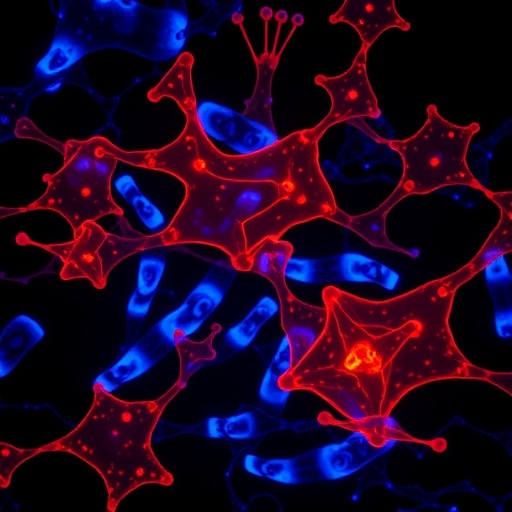
Image Credits: AI Generated

DOI: https://doi.org/10.1038/s41586-026-10808-w

Keywords: tertiary lymphoid structures; renal cell carcinoma; exhausted CD8⁺ T cells; stem-like progenitor exhaustion; tumour-reactive TCR clonotypes; macrophage-mediated immunosuppression; immune checkpoint blockade

Tags: immune checkpoint blockadeimmune escape mechanismslymphoid tissue in tumorsrenal cell carcinomastem-like T cellsT cell exhaustionT cell plasticitytertiary lymphoid structurestumor microenvironmenttumor-infiltrating lymphocytestumor-specific T cell repertoiretumor-specific T cells
Share26Tweet16
Previous Post

Reframing Late-Life Depression: Shifting Focus From Brain Damage to Plasticity

Next Post

Seabirds boost next year’s chick survival by shifting energy use flexibly

Related Posts

ONR Unveils 2026 Science and Technology Strategy for Navy and Marine Corps
Technology and Engineering

ONR Unveils 2026 Science and Technology Strategy for Navy and Marine Corps

July 27, 2026
Poll Finds Many Young Adults Not Prepared to Manage Their Own Healthcare
Medicine

Poll Finds Many Young Adults Not Prepared to Manage Their Own Healthcare

July 27, 2026
Sliding Metasurface Achieves Wide-Angle Beam Steering with Sharp Frequency Filtering
Technology and Engineering

Sliding Metasurface Achieves Wide-Angle Beam Steering with Sharp Frequency Filtering

July 27, 2026
Quasi Two-Stage Heat Pump Enables Efficient Dual-Temperature Heating and Hot Water
Technology and Engineering

Quasi Two-Stage Heat Pump Enables Efficient Dual-Temperature Heating and Hot Water

July 27, 2026
Benchmarking Vision and Pathology Foundation Models for Computational Pathology
Medicine

Benchmarking Vision and Pathology Foundation Models for Computational Pathology

July 27, 2026
Energy use from food consumption can reveal poverty in rural Chinese homes
Technology and Engineering

Energy use from food consumption can reveal poverty in rural Chinese homes

July 27, 2026
Next Post
Seabirds boost next year’s chick survival by shifting energy use flexibly

Seabirds boost next year’s chick survival by shifting energy use flexibly

  • Mothers who receive childcare support from maternal grandparents show more

    Mothers who receive childcare support from maternal grandparents show more parental warmth, finds NTU Singapore study

    27656 shares
    Share 11059 Tweet 6912
  • University of Seville Breaks 120-Year-Old Mystery, Revises a Key Einstein Concept

    1061 shares
    Share 424 Tweet 265
  • Bee body mass, pathogens and local climate influence heat tolerance

    682 shares
    Share 273 Tweet 171
  • Researchers record first-ever images and data of a shark experiencing a boat strike

    546 shares
    Share 218 Tweet 137
  • Groundbreaking Clinical Trial Reveals Lubiprostone Enhances Kidney Function

    531 shares
    Share 212 Tweet 133
Science

Embark on a thrilling journey of discovery with Scienmag.com—your ultimate source for cutting-edge breakthroughs. Immerse yourself in a world where curiosity knows no limits and tomorrow’s possibilities become today’s reality!

RECENT NEWS

  • Physics Reveals Universal Structure of Exceptional Points in Nonlinear Systems
  • ONR Unveils 2026 Science and Technology Strategy for Navy and Marine Corps
  • Brain Metabolism Forecasts Survival in Advanced Non–Small Cell Lung Cancer
  • Ytterbium Thrives as Researchers Celebrate Breakthrough in Science

Categories

  • Agriculture
  • Anthropology
  • Archaeology
  • Athmospheric
  • Biology
  • Biotechnology
  • Blog
  • Bussines
  • Cancer
  • Chemistry
  • Climate
  • Earth Science
  • Editorial Policy
  • Marine
  • Mathematics
  • Medicine
  • Pediatry
  • Policy
  • Psychology & Psychiatry
  • Science Education
  • Social Science
  • Space
  • Technology and Engineering

Subscribe to Blog via Email

Enter your email address to subscribe to this blog and receive notifications of new posts by email.

Join 5,146 other subscribers

© 2025 Scienmag - Science Magazine

Welcome Back!

Login to your account below

Forgotten Password?

Retrieve your password

Please enter your username or email address to reset your password.

Log In
No Result
View All Result
  • HOME
  • SCIENCE NEWS
  • CONTACT US

© 2025 Scienmag - Science Magazine

Discover more from Science

Subscribe now to keep reading and get access to the full archive.

Continue reading
