

Monday, July 27, 2026
Science
No Result
View All Result
  • Login
  • HOME
  • SCIENCE NEWS
  • CONTACT US
  • HOME
  • SCIENCE NEWS
  • CONTACT US
No Result
View All Result
Scienmag
No Result
View All Result
Home Science News Medicine

Blood metabolomics reveals responses to deep brain stimulation in Parkinson’s disease

July 27, 2026
in Medicine
Reading Time: 2 mins read
0
Blood metabolomics reveals responses to deep brain stimulation in Parkinson’s disease

Blood metabolomics reveals responses to deep brain stimulation in Parkinson’s disease

65
SHARES
587
VIEWS
Share on FacebookShare on Twitter
ADVERTISEMENT

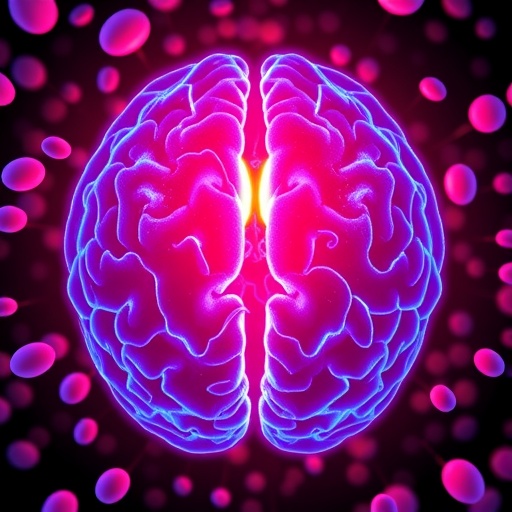
A new clinical metabolomics study reports how deep brain stimulation (DBS) reshapes circulating blood chemistry in people living with Parkinson’s disease. In a viral-science-news style analysis, researchers tracked metabolic shifts associated with stimulation, aiming to move DBS from a purely symptomatic therapy toward a more measurable, mechanism-linked intervention.

The team examined blood metabolomic profiles before and after DBS-related conditions, using high-resolution mass spectrometry to quantify small-molecule signals spanning amino acids, lipids, nucleotides, and energy-related metabolites. By comparing patient samples across stimulation states, the work highlights which biochemical pathways appear sensitive to DBS-driven neural circuit modulation.

Statistical modeling and multivariate pattern recognition were used to separate stimulation-associated metabolic signatures from baseline variability. The investigators report that certain metabolites change in a direction consistent with altered neurotransmitter precursor availability and downstream energy metabolism. These findings suggest DBS may influence systemic biochemical demand, not only local brain activity.

Notably, lipid-associated features showed stimulation-linked trends, implicating membrane turnover and inflammatory lipid signaling as potential contributors to DBS responsiveness. Such metabolic remodeling could reflect how improved motor output and altered autonomic regulation shift peripheral physiology.

The study also discusses biomarkers with potential translational value. A subset of metabolites could, in principle, help stratify patients by biochemical response to DBS, providing a pathway for more adaptive stimulation strategies. While metabolomics does not replace clinical outcomes, it offers a complementary readout that may capture subtle biological effects earlier than symptom ratings.

From a technical standpoint, the workflow emphasizes rigorous normalization, quality control, and metabolite annotation to reduce false positives common in untargeted profiling. The researchers further interpret metabolite patterns through pathway-level enrichment analyses, linking individual molecules to broader biochemical themes.

Overall, the work positions blood metabolomics as a minimally invasive window into DBS biology. If validated in larger, independent cohorts, metabolite panels could inform patient monitoring and guide future trials testing parameter optimization or combination therapies.

Subject of Research: Blood metabolomic responses to deep brain stimulation in Parkinson’s disease patients

Article Title: Characterization of blood metabolomic responses to deep brain stimulation in patients with Parkinson’s disease

Article References: Lin, F., Zhou, L., Chen, L. et al. Characterization of blood metabolomic responses to deep brain stimulation in patients with Parkinson’s disease. npj Parkinsons Dis. (2026). https://doi.org/10.1038/s41531-026-01487-5

Image Credits: AI Generated

DOI: 10.1038/s41531-026-01487-5

Keywords: Deep brain stimulation, Parkinson’s disease, metabolomics, blood biomarkers

Tags: deep brain stimulation metabolic responseenergy metabolism changes after deep brain stimulationhigh-resolution mass spectrometry in neurodegenerationinflammation-related lipid signaling in Parkinson’slipid signaling in Parkinson’s treatmentmetabolic biomarkers for DBS responsivenessneural circuit modulation reflected in blood chemistryneurochemical changes in Parkinson’sneurotransmitter precursor alterations in Parkinson’sParkinson's disease blood metabolomicspersonalized treatment markers for Parkinson’s diseasesystemic biochemical shifts in DBS therapy
Share26Tweet16
Previous Post

Knitted RFID Yarns Enable Smart Fabrics for Motion Sensing and Identification

Next Post

Urban Mobile Green Perception Varies With Visibility and Surrounding Green Context

Related Posts

CCHFV Polymerase Enables RNA Synthesis and Shows Substrate Analog Inhibition
Medicine

CCHFV Polymerase Enables RNA Synthesis and Shows Substrate Analog Inhibition

July 27, 2026
Microbe Lactic Acid Weakens Interferon by Blocking Antiviral Signaling
Medicine

Microbe Lactic Acid Weakens Interferon by Blocking Antiviral Signaling

July 27, 2026
Age- and sex-dependent retinal degeneration in peripherin-2 mutant mice, a model of central areolar choroidal dystrophy
Medicine

Age- and sex-dependent retinal degeneration in peripherin-2 mutant mice, a model of central areolar choroidal dystrophy

July 27, 2026
Skin-to-skin versus incubator care preserves thermal stability in 22–25 week preemies
Medicine

Skin-to-skin versus incubator care preserves thermal stability in 22–25 week preemies

July 27, 2026
Taiwan Develops High-Resolution PM2.5 Model Using Low-Cost Sensors and Satellites
Medicine

Taiwan Develops High-Resolution PM2.5 Model Using Low-Cost Sensors and Satellites

July 27, 2026
Study Finds Falls Risk Perception Influenced by Multiple Factors in Elderly Hip Fracture Patients
Medicine

Study Finds Falls Risk Perception Influenced by Multiple Factors in Elderly Hip Fracture Patients

July 27, 2026
Next Post
Urban Mobile Green Perception Varies With Visibility and Surrounding Green Context

Urban Mobile Green Perception Varies With Visibility and Surrounding Green Context

  • Mothers who receive childcare support from maternal grandparents show more

    Mothers who receive childcare support from maternal grandparents show more parental warmth, finds NTU Singapore study

    27656 shares
    Share 11059 Tweet 6912
  • University of Seville Breaks 120-Year-Old Mystery, Revises a Key Einstein Concept

    1061 shares
    Share 424 Tweet 265
  • Bee body mass, pathogens and local climate influence heat tolerance

    682 shares
    Share 273 Tweet 171
  • Researchers record first-ever images and data of a shark experiencing a boat strike

    546 shares
    Share 218 Tweet 137
  • Groundbreaking Clinical Trial Reveals Lubiprostone Enhances Kidney Function

    531 shares
    Share 212 Tweet 133
Science

Embark on a thrilling journey of discovery with Scienmag.com—your ultimate source for cutting-edge breakthroughs. Immerse yourself in a world where curiosity knows no limits and tomorrow’s possibilities become today’s reality!

RECENT NEWS

  • CCHFV Polymerase Enables RNA Synthesis and Shows Substrate Analog Inhibition
  • Infection Study Maps Protein Contact Sites, Shows Influenza Hijacks Paraspeckles
  • Potassium Approaches Plasmonics’ Low Optical Loss Limit
  • Highly chemoselective access to alkyl-sulfur compounds via N2 extrusion of alkyl hydrazines

Categories

  • Agriculture
  • Anthropology
  • Archaeology
  • Athmospheric
  • Biology
  • Biotechnology
  • Blog
  • Bussines
  • Cancer
  • Chemistry
  • Climate
  • Earth Science
  • Editorial Policy
  • Marine
  • Mathematics
  • Medicine
  • Pediatry
  • Policy
  • Psychology & Psychiatry
  • Science Education
  • Social Science
  • Space
  • Technology and Engineering

Subscribe to Blog via Email

Enter your email address to subscribe to this blog and receive notifications of new posts by email.

Join 5,146 other subscribers

© 2025 Scienmag - Science Magazine

Welcome Back!

Login to your account below

Forgotten Password?

Retrieve your password

Please enter your username or email address to reset your password.

Log In
No Result
View All Result
  • HOME
  • SCIENCE NEWS
  • CONTACT US

© 2025 Scienmag - Science Magazine

Discover more from Science

Subscribe now to keep reading and get access to the full archive.

Continue reading
