

Monday, July 27, 2026
Science
No Result
View All Result
  • Login
  • HOME
  • SCIENCE NEWS
  • CONTACT US
  • HOME
  • SCIENCE NEWS
  • CONTACT US
No Result
View All Result
Scienmag
No Result
View All Result
Home Science News Technology and Engineering

Knitted RFID Yarns Enable Smart Fabrics for Motion Sensing and Identification

July 27, 2026
in Technology and Engineering
Reading Time: 2 mins read
0
Knitted RFID Yarns Enable Smart Fabrics for Motion Sensing and Identification

Knitted RFID Yarns Enable Smart Fabrics for Motion Sensing and Identification

65
SHARES
587
VIEWS
Share on FacebookShare on Twitter
ADVERTISEMENT

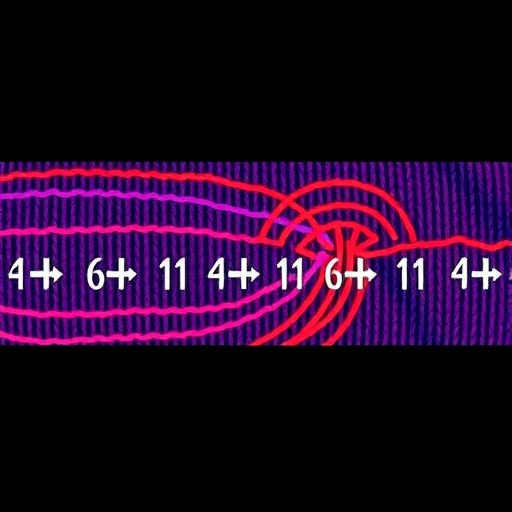
A team of researchers has unveiled a path toward truly interactive clothing by knitting radio-frequency identification (RFID) functionality directly into yarn. Instead of treating smart textiles as separate add-ons, the work integrates RFID-responsive material strands during fabric formation, enabling garments to sense movement and support identification without relying on bulky electronics. The result points to a new class of wearables where “threads” can behave like distributed sensors.

The study, published in npj Flexible Electronics, describes knitted RFID yarns engineered to operate as thin, flexible transducers across the textile plane. By embedding the RFID capability at the yarn level, the fabric can distribute electromagnetic interactions over many fibers, improving robustness during bending and stretching. This is especially important for motion-heavy applications where conventional sensor sheets can crack or delaminate.

A core technical idea is that the knitted architecture changes how signals propagate through the fabric. As the wearer moves, mechanical deformation alters the micro-geometry of the knit, affecting the electrical and electromagnetic coupling that the RFID system relies on. That coupling shift can be read by an external interrogator, translating subtle posture and motion patterns into measurable changes.

Beyond sensing, the same RFID functionality can serve as a lightweight identification layer. In practical terms, a smart fabric could be scanned to determine whether a textile item is present, authenticated, or paired with a specific device profile—useful for inventory tracking, secure uniforms, or assistive contexts where identifying the wearer’s gear matters.

The researchers emphasize motion sensing as a key outcome. When fabric undergoes stretching, twisting, or bending, the yarn network responds in a way that can be captured by RFID interrogation. With appropriate signal processing, these responses can be mapped to motion signatures, turning everyday garment dynamics into data.

Fabric-based RFID is attractive because it scales with manufacturing: knitting naturally produces repeatable patterns over large areas. That scalability could lower barriers compared with weaving in discrete antenna patches or attaching rigid modules after the fact. It also opens room for garment designs that remain comfortable while still communicating wirelessly.

The work also highlights flexibility as a design constraint. RFID structures must maintain functionality through repeated deformation cycles. Knitted yarn integration is designed to keep the sensing and identification interfaces distributed, reducing the stress concentration common in planar, rigid devices.

Taken together, the research suggests a “smart fabric” roadmap where identification and sensing are not separate technologies but a unified woven function. If further validated for long-term durability, wash resistance, and real-world motion complexity, RFID yarns could become a viral new ingredient in next-generation wearable technology, enabling clothes that recognize, respond, and report without visible electronics.

Subject of Research: Smart fabrics using knitted RFID yarns for motion sensing and identification

Article Title: Knitting RFID yarns towards smart fabrics for motion sensing and identification.

Article References: Li, W., Chen, F., Xu, L. et al. npj Flex Electron (2026). https://doi.org/10.1038/s41528-026-00619-4

Image Credits: AI Generated

DOI: 10.1038/s41528-026-00619-4

Tags: conductive yarns for motion sensingdurable RFID textiles for flexible electronicselectromagnetic coupling in knitted fabricsflexible RFID transducers in fabricsintegrated RFID sensors in knitwearknitted RFID yarns for wearable sensorsmicro-geometry effects on RFID signalsmotion detection in smart textilesresponsive smart fabrics for health and activity monitoringRFID-based identification in garmentsRFID-enabled smart clothingSmart textile RFID integration
Share26Tweet16
Previous Post

Structural Factors, Not Reconstruction Spending, Drove Depopulation After Japan’s 2011 Disasters

Next Post

Blood metabolomics reveals responses to deep brain stimulation in Parkinson’s disease

Related Posts

Flexible Payments for Environmental Services Boost Cost-Effectiveness in Brazilian Amazon
Technology and Engineering

Flexible Payments for Environmental Services Boost Cost-Effectiveness in Brazilian Amazon

July 27, 2026
Meta-analysis Compares Nasal Interfaces and Face Masks During Preterm Birth Respiratory Support
Technology and Engineering

Meta-analysis Compares Nasal Interfaces and Face Masks During Preterm Birth Respiratory Support

July 27, 2026
Uber and Lyft’s Impact on Jobs, Wages, and Economic Growth
Technology and Engineering

Uber and Lyft’s Impact on Jobs, Wages, and Economic Growth

July 27, 2026
Neural Network Models Free Recall, Revealing Multiple Memory Strategies
Technology and Engineering

Neural Network Models Free Recall, Revealing Multiple Memory Strategies

July 27, 2026
KAIST Creates AI That Theorizes the World from Observation, Like Children
Technology and Engineering

KAIST Creates AI That Theorizes the World from Observation, Like Children

July 27, 2026
Insulator-Free Topological Photonic Multi-Lane Highways Pave the Way for Light
Medicine

Insulator-Free Topological Photonic Multi-Lane Highways Pave the Way for Light

July 27, 2026
Next Post
Blood metabolomics reveals responses to deep brain stimulation in Parkinson’s disease

Blood metabolomics reveals responses to deep brain stimulation in Parkinson’s disease

  • Mothers who receive childcare support from maternal grandparents show more

    Mothers who receive childcare support from maternal grandparents show more parental warmth, finds NTU Singapore study

    27656 shares
    Share 11059 Tweet 6912
  • University of Seville Breaks 120-Year-Old Mystery, Revises a Key Einstein Concept

    1061 shares
    Share 424 Tweet 265
  • Bee body mass, pathogens and local climate influence heat tolerance

    682 shares
    Share 273 Tweet 171
  • Researchers record first-ever images and data of a shark experiencing a boat strike

    546 shares
    Share 218 Tweet 137
  • Groundbreaking Clinical Trial Reveals Lubiprostone Enhances Kidney Function

    531 shares
    Share 212 Tweet 133
Science

Embark on a thrilling journey of discovery with Scienmag.com—your ultimate source for cutting-edge breakthroughs. Immerse yourself in a world where curiosity knows no limits and tomorrow’s possibilities become today’s reality!

RECENT NEWS

  • Flexible Payments for Environmental Services Boost Cost-Effectiveness in Brazilian Amazon
  • Meta-analysis Compares Nasal Interfaces and Face Masks During Preterm Birth Respiratory Support
  • Age- and sex-dependent retinal degeneration in peripherin-2 mutant mice, a model of central areolar choroidal dystrophy
  • Skin-to-skin versus incubator care preserves thermal stability in 22–25 week preemies

Categories

  • Agriculture
  • Anthropology
  • Archaeology
  • Athmospheric
  • Biology
  • Biotechnology
  • Blog
  • Bussines
  • Cancer
  • Chemistry
  • Climate
  • Earth Science
  • Editorial Policy
  • Marine
  • Mathematics
  • Medicine
  • Pediatry
  • Policy
  • Psychology & Psychiatry
  • Science Education
  • Social Science
  • Space
  • Technology and Engineering

Subscribe to Blog via Email

Enter your email address to subscribe to this blog and receive notifications of new posts by email.

Join 5,146 other subscribers

© 2025 Scienmag - Science Magazine

Welcome Back!

Login to your account below

Forgotten Password?

Retrieve your password

Please enter your username or email address to reset your password.

Log In
No Result
View All Result
  • HOME
  • SCIENCE NEWS
  • CONTACT US

© 2025 Scienmag - Science Magazine

Discover more from Science

Subscribe now to keep reading and get access to the full archive.

Continue reading
