


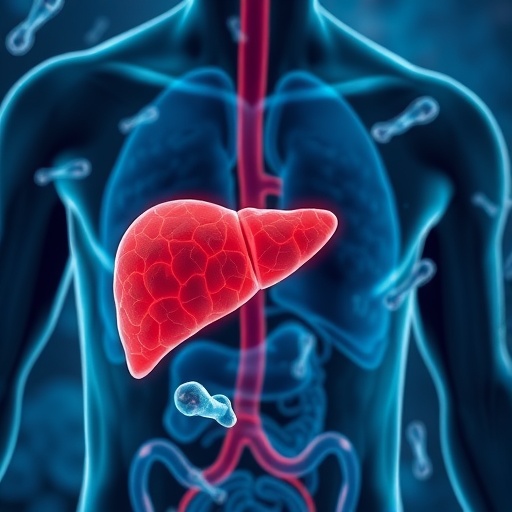
The human gut harbors trillions of bacteria, and for decades, scientists have suspected that this vast microbial ecosystem holds clues to one of medicine’s most puzzling liver diseases. Now, researchers at the University of Gothenburg believe they have found a critical piece of the puzzle: a small molecule produced by gut bacteria that may help drive primary sclerosing cholangitis, a rare and devastating condition that scars the bile ducts and can ultimately destroy the liver.
Primary sclerosing cholangitis, commonly abbreviated as PSC, is a chronic disease in which the bile ducts—the narrow channels that carry bile from the liver to the intestine—become inflamed and progressively narrowed by scar tissue. As the ducts stiffen and close, bile backs up in the liver, inflicting damage that can culminate in cirrhosis, liver failure, and an elevated risk of cancers of the bile duct and liver. The disease primarily strikes young adults, and its only definitive cure is liver transplantation. Sweden, like the rest of Scandinavia, carries a comparatively high burden of PSC, and yet no drug currently exists that can stop or reverse its course. Against this backdrop of therapeutic helplessness, any insight into the disease’s underlying biology carries enormous weight.
The connection between PSC and the intestine has long been one of the disease’s defining enigmas. Between 60 and 80 percent of PSC patients also suffer from inflammatory bowel disease, and researchers have repeatedly observed that the gut microbiome of PSC patients differs markedly from that of healthy individuals. These observations fueled a persistent hypothesis: somehow, the bacteria dwelling in the gut were contributing to the destruction of the bile ducts. But the mechanism remained stubbornly invisible. Correlation abounded; causation was nowhere to be found.
The new study, published in Nature Metabolism, points to a potential missing link: a metabolite called imidazole propionate, or ImP. ImP is formed when certain gut bacteria break down dietary components, and it has previously attracted scientific attention for its role in other metabolic diseases. According to the research team, led by Antonio Molinaro, a researcher at the University of Gothenburg and senior consultant hepatologist at Sahlgrenska University Hospital, patients with PSC showed elevated circulating levels of this bacterial metabolite. More strikingly, the concentration of ImP in the blood served as a predictor of clinical outcomes: patients with higher levels faced poorer survival prospects over time.
But the researchers did not stop at association. In experiments with mice, they demonstrated that chronic administration of imidazole propionate was sufficient to induce liver inflammation, mimicking key features of the human disease. This was a pivotal step, because it transformed ImP from a mere biomarker into a plausible causal agent. If a bacterial metabolite can provoke liver inflammation in a living organism, the long-suspected gut-liver axis in PSC acquires a concrete molecular foundation.
The study also illuminated how the damage occurs at the cellular level. When ImP encounters the cholangiocytes—the protective cells that line the bile ducts—it triggers activated signaling within these cells that drives both inflammation and fibrosis. Fibrosis, the excessive deposition of hard scar tissue, is the process that renders organs stiff and dysfunctional, and in PSC it is precisely the mechanism by which the bile ducts progressively lose their function. By identifying the specific molecular pathway through which ImP acts, the researchers have supplied what Molinaro describes as a potential biological explanation for the connection between gut bacteria and PSC.
“The study suggests that PSC may arise when metabolites produced by an altered gut microbiota continuously reach and damage the bile ducts,” Molinaro explains. “The results thus provide a potential biological explanation for the long-suspected link between gut bacteria and PSC. Importantly, we also identified the molecular pathway underlying these effects.”
That last point—the identification of a defined molecular pathway—is what elevates the findings from intriguing observation to potential therapeutic roadmap. In modern medicine, knowing that a factor is involved in a disease is only half the battle; the true prize is an actionable target. ImP offers several such targets simultaneously. “This opens up several possible future avenues for treatment: reducing the bacterial production of ImP, inhibiting the bacterial enzymes responsible for its production, or blocking the signaling pathway through which ImP appears to cause damage,” says Molinaro.
Each of these strategies represents a distinct therapeutic frontier. Reducing bacterial production of ImP might be achieved through dietary interventions or microbiome-directed therapies designed to reshape the gut ecosystem. Inhibiting the specific bacterial enzymes that convert dietary precursors into imidazole propionate would represent an approach somewhere between an antibiotic and a metabolic drug—precisely targeting microbial chemistry while sparing the broader bacterial community. And blocking the downstream signaling pathway in the bile duct cells would constitute a classic drug-development strategy, one that pharmaceutical researchers could pursue with small molecules designed to interrupt the inflammatory cascade before it scars the ducts.
The researchers are careful, however, not to overstate the case. ImP is not presented as the sole cause of PSC. The disease is widely understood to arise from a complex interplay of genetic susceptibility, immunological dysfunction, and environmental triggers, layered on top of changes in the gut microbiota. PSC does not respond to immunosuppressive therapies the way many other autoimmune or inflammatory conditions do, which has long hinted that its drivers are unusual and multifactorial. The new findings do not overturn that picture; rather, they suggest that ImP may be one significant contributor among several—a thread that, when pulled, explains a substantial part of the clinical presentation of the disease.
Even so, the implications are profound. For a disease with no approved medical therapy, the identification of a circulating, microbiome-derived metabolite that both correlates with disease severity and can induce liver pathology in animal models is a rare and valuable advance. It reframes PSC not merely as an autoimmune attack on the bile ducts, but as a disease in which the metabolic output of an altered gut ecosystem acts as a continuous, low-grade assault on the liver’s drainage system. Every meal, in this view, feeds the bacteria; the bacteria feed the production of ImP; and the ImP, absorbed into the portal circulation, travels directly to the liver and its bile ducts.
The portal vein, which carries nutrient-rich blood from the intestine to the liver, is precisely why the gut-liver axis is so consequential. The liver is the first major organ to encounter everything the gut absorbs, and the bile ducts are intimately exposed to this traffic. A microbial metabolite that survives digestion and absorption therefore has a direct route to the very tissue it damages. The Gothenburg study gives this anatomical reality a molecular protagonist.
The path from mouse experiments to human therapy is, of course, long and uncertain. Clinical trials will need to establish whether lowering ImP levels in patients—or interrupting its signaling—slows the progression of fibrosis and improves survival. Biomarker studies will need to confirm whether ImP can serve as a reliable prognostic tool, allowing clinicians to identify which patients are at greatest risk of deterioration. And the microbiome science will need to determine which bacterial species and enzymes are responsible for ImP production, and how they might be selectively restrained without wholesale disruption of a gut ecosystem that health depends upon.
Yet the study’s publication in Nature Metabolism signals that the scientific community regards these findings as a substantive contribution. For patients with PSC—a population that includes many young adults facing a progressive disease with a transplant as their only escape—the research offers something that has been in short supply: a concrete, mechanistic explanation for their illness, and several plausible routes toward the first effective medical treatment.
The work also resonates beyond PSC. Imidazole propionate has been implicated in insulin resistance and other metabolic conditions, and the study adds to a growing body of evidence that microbial metabolites are not passive byproducts of digestion but active chemical messengers capable of reshaping the biology of distant organs. The liver, positioned at the gateway between gut and body, appears particularly vulnerable to these molecular messengers—and, perhaps, particularly amenable to therapies that target them.
For now, the discovery stands as a testament to the power of interdisciplinary research, bridging hepatology, microbiology, and metabolomics. A molecule forged by bacteria in the dark of the intestine, the study suggests, may hold the key to understanding—and one day treating—one of the liver’s most intractable diseases.
Cite Scienmag News
Morgan Morrow. (September 4, 2026). Gut bacteria linked to severe liver disease, researchers discover. Scienmag. https://scienmag.com/gut-bacteria-linked-to-severe-liver-disease-researchers-discover/
Morgan Morrow. "Gut bacteria linked to severe liver disease, researchers discover." Scienmag, 4 September 2026, https://scienmag.com/gut-bacteria-linked-to-severe-liver-disease-researchers-discover/. Accessed 4 September 2026.
Morgan Morrow. "Gut bacteria linked to severe liver disease, researchers discover." Scienmag. September 4, 2026. https://scienmag.com/gut-bacteria-linked-to-severe-liver-disease-researchers-discover/


