

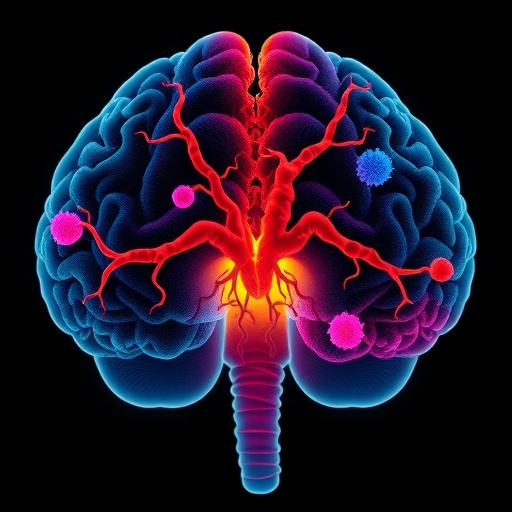
A silent symphony of genetic notes orchestrates the intricate folds and volumes of our brain’s deepest structures—the hippocampus, amygdala, thalamus, and striatum. When this symphony is disrupted, the consequences can ripple into the full-blown psychosis of schizophrenia. A groundbreaking study, published in the journal Schizophr, has now mapped the shared genetic architecture between the brain’s subcortical susceptibility phenotypes and schizophrenia, revealing an intricate genetic entanglement that could transform how we predict, diagnose, and treat one of psychiatry’s most enigmatic conditions.
Led by Xie and colleagues, the research team harnessed the statistical muscle of large-scale genome-wide association studies (GWAS) from tens of thousands of individuals. They compared the genetic underpinnings of subcortical brain volumes—key hubs for emotion, memory, and executive function—with those of schizophrenia. The result is not a few scattered connections but a sprawling, overlapping landscape of genetic variants that simultaneously sculpt brain morphology and elevate risk for psychosis. This pleiotropy, where a single genetic locus influences multiple traits, points to deep biological seams where neural development and psychopathology are stitched together.
Subcortical structures are the brain’s relay stations and integrative centers. The hippocampus lays down memories; the amygdala colors experience with fear and reward; the thalamus gates sensory information; and the striatum coordinates movement and habit formation. In schizophrenia, post-mortem and neuroimaging studies have long reported volume reductions and shape abnormalities in these regions. The new work reveals that the genetic variants driving individual differences in these subcortical volumes are significantly enriched in the genomic regions associated with schizophrenia. Using linkage disequilibrium score regression, the team calculated genetic correlations that were moderate but highly significant, especially for the thalamus and hippocampus, suggesting that the same sets of genes tune both anatomical endophenotypes and disease liability.
Digging deeper, the researchers performed a multi-trait analysis of GWAS (MTAG) and colocalization analyses to pinpoint specific loci. They identified over a dozen genomic regions where the same causal variant likely influences both a subcortical volume and schizophrenia, revealing a genetic cross-wiring that ties neuroanatomy to psychosis risk at the molecular level.
Among the implicated genes were players in synaptic pruning, glutamatergic signaling, and immune regulation—pathways that have independently surfaced in both neurodevelopmental and psychiatric genetics. For example, a locus near the FOXP1 gene, known for language and brain development, showed overlapping signals for striatal volume and schizophrenia risk. Another on chromosome 3, near the DRD3 gene encoding a dopamine receptor, tied thalamic volume to psychosis susceptibility, echoing the dopamine hypothesis of schizophrenia. These molecular overlaps suggest that the structural changes seen in brain scans are not mere epiphenomena but are genetically anchored precursors to the disorder.
Perhaps the most intriguing layer of the study is its use of Mendelian randomization to explore causal directions. The team found robust evidence that genetically predicted smaller hippocampal and thalamic volumes are causally associated with an increased risk of schizophrenia, while the reverse effect was negligible. This implies that the brain’s structural deviations are not simply consequences of psychotic episodes or medication, but rather reflect a vulnerability framework laid down early in development. It is as if the genetic lottery that doles out a slightly smaller thalamus or a less plastic hippocampus also stacks the deck for psychosis later in life.
The translational implications are profound. Subcortical volumes, measured non-invasively via MRI, could serve as quantitative endophenotypes—biomarkers that bridge the gap between the genetic blueprint and the clinical syndrome. Clinicians might one day combine polygenic risk scores for subcortical morphology with standard clinical assessments to identify individuals at ultra-high risk, long before the first delusion or hallucination surfaces. Furthermore, the shared genetic pathways open new avenues for drug repurposing; compounds that modulate synaptic maintenance or glutamate cycling could simultaneously shore up structural brain integrity and dampen psychotic symptoms. The study’s findings have already sparked interest in trials using neuroprotective agents in at-risk populations with subtle subcortical volume deviations.
Nevertheless, the authors caution against genetic determinism. The environment, from prenatal infection to urban upbringing, still exerts substantial influence, and the polygenic nature of both brain structure and schizophrenia means that no single gene acts in isolation. The study relied primarily on European-ancestry cohorts, limiting its immediate generalizability, though efforts to replicate in more diverse biobanks are underway. Despite these nuances, the research marks a paradigm shift from viewing brain imaging and genomics as parallel railways to integrating them into a unified map of psychiatric vulnerability.
The work by Xie et al. is a testament to the power of big data and collaborative science, blending neuroimaging, genomics, and sophisticated statistics to illuminate the darkest corners of mental illness. As we learn to read the genetic script that shapes our brain’s inner architecture, the ghosts of schizophrenia may finally become tangible entities we can predict, intercept, and perhaps even prevent. The subcortical brain is no longer just a silent partner in psychosis—it is a key narrator of a story written in base pairs.
Subject of Research: Shared genetic architecture between schizophrenia and subcortical brain susceptibility phenotypes.
Article Title: Shared genetic architecture between schizophrenia and subcortical brain susceptibility phenotypes
Article References: Xie, Y., Du, J., Zhao, Y. et al. Shared genetic architecture between schizophrenia and subcortical brain susceptibility phenotypes. Schizophr (2026). https://doi.org/10.1038/s41537-026-00782-7
Image Credits: AI Generated
DOI: 10.1038/s41537-026-00782-7
Keywords: schizophrenia, subcortical brain volumes, genome-wide association study, genetic correlation, neuroimaging genetics, pleiotropy, Mendelian randomization, polygenic risk


