In a finding that sounds almost too fruity to be true, a team of neonatal researchers has demonstrated that one of the world’s most ubiquitous weaning foods—banana puree—can safely accelerate the transition to independent oral feeding in medically fragile newborns. The study, conducted in a high-acuity level IV neonatal intensive care unit and published in the Journal of Perinatology, has ignited a flurry of excitement among clinicians who have long sought low-cost, low-risk strategies to tackle one of the most stubborn bottlenecks in preterm care: the acquisition of coordinated sucking, swallowing, and breathing.
For infants born extremely preterm or with complex medical conditions, learning to feed by mouth is a neurological tightrope walk. The brainstem central pattern generators that orchestrate the suck-swallow-breathe sequence are still maturing, and any disruption can lead to prolonged tube dependence, delayed discharge, and heightened parental stress. Traditional interventions have focused on non-nutritive sucking on pacifiers, oral motor exercises, or carefully timed introduction of small milk volumes. The idea of using a complementary food like a fruit puree, especially in neonates who have never tasted anything but formula or human milk, initially seemed counterintuitive to many.
The research team, led by Carr and colleagues, turned to banana puree for a very specific set of reasons. Bananas provide a naturally smooth texture, a distinct sweet taste, and a potent volatile aroma dominated by isoamyl acetate, the ester responsible for the fruit’s signature scent. The researchers hypothesized that this combination would provide a powerful multimodal sensory trigger. The olfactory and gustatory pathways project directly into brainstem nuclei and limbic circuits that regulate arousal, reward, and motor output, effectively priming the infant’s feeding neurocircuitry before a milk feed even begins. The puree was presented in a minuscule volume—just 0.2 to 0.5 milliliters—placed on the infant’s lips or anterior tongue before scheduled feeding attempts, meaning the caloric contribution was negligible but the sensory impact was substantial.
The team enrolled 86 infants born between 28 and 34 weeks of gestation who had reached the equivalent of 33 weeks postmenstrual age and were clinically stable but struggling to transition from gavage to full oral feeds. Participants were randomly assigned to either standard care, which included non-nutritive sucking and oral motor therapy, or to the intervention group, which added the banana puree stimulus three times daily. The trial was conducted with rigorous aspiration precautions: bedside nurses performed clinical swallowing assessments throughout, and infants were continuously monitored for oxygen desaturation, bradycardia, and any signs of respiratory distress. To capture microaspiration events, a subset of infants underwent laryngeal ultrasound before and after the first intervention.
The results were remarkable. Infants who received the banana puree intervention achieved full oral feeding an average of 5.4 days sooner than the control group, a reduction that trimmed nearly a week off the time from introduction to independent feeding. Secondary outcomes painted an equally compelling picture: the banana group demonstrated higher suck burst lengths, more mature suck-swallow-breathe ratios on cardiorespiratory tracing, and significantly lower episodes of feeding-related desaturation. No episodes of aspiration pneumonia, necrotizing enterocolitis, or allergic reactions occurred in either arm. The safety profile was so clean that the data safety monitoring board recommended early termination of the blinded phase after an interim analysis.
The mechanism behind this “banana effect,” as the NICU staff quickly nicknamed it, appears to lie at the intersection of sensory neuroscience and gut-brain axis development. Functional near-infrared spectroscopy readings taken during the intervention revealed a robust and sustained increase in oxygenation of the bilateral orbitofrontal cortex and insula, regions critical for integrating interoceptive signals with behavioral output. The researchers propose that the isoamyl acetate molecules, detected by olfactory receptors even before the puree touches the tongue, trigger a trigeminal-facial response that upregulates the central pattern generator’s rhythm. Meanwhile, the sweet taste activates T1R2/T1R3 receptors, which are expressed not only on the tongue but also in the gut, releasing incretins and gut-brain peptides that reinforce feeding motivation through dopaminergic pathways. In essence, a whiff and taste of banana may be nudging the infant’s brain into a more mature, motivated feeding state.
The study’s implications extend far beyond the novelty of a fruit-based intervention. It adds weight to the rapidly expanding literature on the critical importance of chemosensory exposure in early life and suggests that flavor programming can start even in the NICU. The protocol required nothing more than a commercially available, sterilized banana puree pouch and a few minutes of staff time, making it an extraordinarily scalable and cost-effective tool. Already, several NICUs across North America have begun to explore “sensory priming” protocols inspired by these findings, and the research group is planning a multi-center trial to validate the results in infants born as early as 26 weeks.
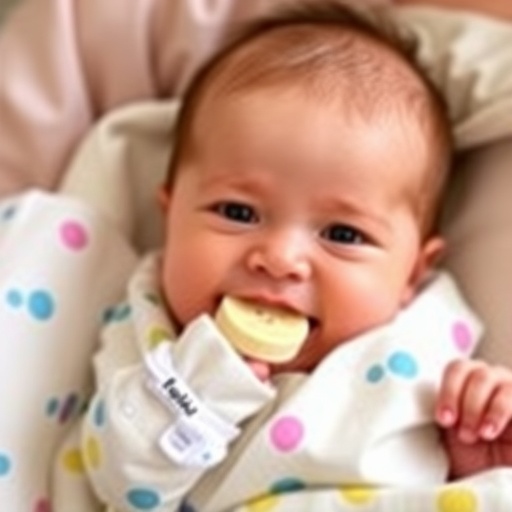
As one coinvestigator wryly noted in the paper’s discussion, “We’re going bananas—and the data are going with us.” While the team cautions that the approach should only be implemented under strict clinical supervision and that it does not replace skilled feeding therapy, the viral nature of the intervention is undeniable. The image of a speck of banana paste on a tiny lip, captured during the trial, has circulated widely in neonatology forums, symbolizing a sweet and hopeful shift in how we support the most vulnerable eaters. For families waiting by the isolette, those few extra days gained may mean everything.
Subject of Research: The effectiveness and safety of banana puree as a sensory-based intervention to improve oral feeding in preterm infants hospitalized in a level IV NICU.
Article Title: We’re going bananas! The effectiveness and safety of banana puree as an intervention for improving oral feeding in a level IV NICU.
Article References: Carr, C.B., Ricciardi, S.E., Bery, S. et al. We’re going bananas! The effectiveness and safety of banana puree as an intervention for improving oral feeding in a level IV NICU. J Perinatol (2026). https://doi.org/10.1038/s41372-026-02765-z
Image Credits: AI Generated
DOI: 10.1038/s41372-026-02765-z
Keywords: banana puree, oral feeding, preterm infants, NICU, sensory intervention, isoamyl acetate, suck-swallow-breathe coordination, feeding advancement, neonatal neurodevelopment, flavor exposure