


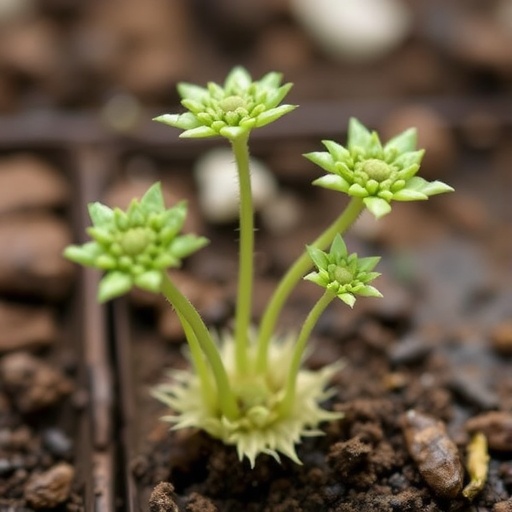
In the dynamic realm of ecological and evolutionary biology, the relationship between plants and their symbiotic partners continues to unveil complexity that shapes the resilience of ecosystems in the face of climate change. A groundbreaking study by Shen, Zhang, Si, and colleagues, recently published in Communications Earth & Environment, delves into how different types of mycorrhizal associations fundamentally influence woody plants’ biomass responses to drought, highlighting the intersection of microbial partnerships, climatic conditions, and evolutionary trajectories.
Woody plants, integral to terrestrial ecosystems across the globe, play a vital role in carbon sequestration and maintaining biodiversity. Their ability to withstand abiotic stresses like drought is paramount to ecosystem stability and carbon cycling under changing climatic regimes. Central to this resilience is the symbiotic relationship between plants and mycorrhizal fungi—a mutualistic association where fungi colonize plant roots, aiding nutrient and water uptake while receiving carbohydrates in return. Shen and colleagues’ research reveals that the type of mycorrhizal association profoundly shapes the woody plants’ drought response patterns, providing new insights into how such partnerships affect ecosystem dynamics under water-limited conditions.
The study meticulously categorized woody plants by their mycorrhizal types—primarily ectomycorrhizal (EM) and arbuscular mycorrhizal (AM) fungi associations—and analyzed global data sets linking biomass production changes to drought events. Their analyses uncover divergent trends: EM-associated plants demonstrate a distinct climatic dependence in their biomass responses compared to AM-associated plants. This underscores not only the ecological significance of fungal symbiosis but also the evolutionary implications shaping plant adaptation mechanisms. Crucially, the researchers harness phylogenetic models to trace rates of evolutionary change linked to these mycorrhizal types, demonstrating an accelerated evolutionary response to drought conditions in EM-associated woody species.
At the heart of the findings lies the intricate balance within plant-fungi partnerships. EM fungi, primarily colonizing temperate and boreal trees, are known for their ability to enhance nutrient acquisition from organic matter, potentially conferring enhanced drought tolerance under cooler, high-latitude climates. AM fungi, more dominant in tropical and subtropical biomes, facilitate mineral nutrient uptake directly from soil solutions. Shen et al. propose that these functional differences drive the climatic dependencies and evolutionary rates of drought responses observed in their extensive cross-species analyses. The study’s data-driven approach contrasts earlier generalized assumptions, providing clarity on how specific symbiotic interactions modulate stress resilience at broad ecological and evolutionary scales.
One of the pioneering methodologies employed in this research is the coupling of global drought biomass datasets with advanced phylogenetic comparative models. This approach allowed the authors to disentangle the phylogenetic signal inherent in drought responses from environmental noise. By quantifying evolutionary rates of biomass plasticity to drought across different mycorrhizal associations, the study bridges ecological physiology with macroevolutionary patterns, a fusion rarely achieved in plant ecology research. This synthesis is groundbreaking because it not only identifies the functional impacts of fungal symbiosis on plant performance but anchors these effects within evolutionary timescales, projecting future plant adaptation potentials.
Furthermore, the study addresses the climatic dependence aspect by demonstrating that EM-associated species exhibit stronger biomass reductions under drought in warmer climates, whereas AM-associated plants display more uniform but less pronounced responses across gradients. This climatic nuance amplifies the ecological importance of mycorrhizal identity, implying that climate-driven shifts in mycorrhizal communities could have cascading effects on forest biomass stability. The findings invite deeper investigation into feedback loops whereby climate change alters fungal communities, which in turn influence plant drought resilience, highlighting a complex interplay at ecosystem and evolutionary steps.
Shen and colleagues also contextualize their findings within the broader framework of global change biology. As droughts increase in frequency and severity worldwide due to anthropogenic climate shifts, understanding how symbiotic fungi influence plant responses is crucial for predicting vegetation dynamics and carbon budgets. The enhanced evolutionary rates of drought response in EM hosts suggest rapid adaptive potential that could buffer climate impacts in certain biomes. Conversely, the lower rates observed in AM associations might indicate greater vulnerability or reliance on plasticity. These differential evolutionary trajectories underscore the necessity for tailored conservation strategies that incorporate belowground microbial dynamics.
The implications of this study extend beyond academic circles, touching on forestry management, restoration ecology, and climate mitigation efforts. By identifying mycorrhizal type as a key modulator of drought resilience, foresters and conservationists can prioritize species and microbial communities best suited for future climates, effectively harnessing natural symbioses to build ecosystem resilience. Additionally, the evolutionary insights present an opportunity to guide selective breeding or assisted migration programs with greater precision, aligning species’ inherent adaptive capacities with projected environmental challenges.
Technically, the research integrates genomic and ecological datasets with sophisticated statistical modeling, representing the cutting edge of interdisciplinary science. Tree biomass data were derived from extensive field studies and remote sensing, linked with mycorrhizal status derived from fungal barcoding and root microbial profiling databases. The evolutionary modeling employed Bayesian phylogenetic frameworks incorporating divergence times and trait evolution models, enabling robust estimation of rates of change specific to drought biomass responses. This multi-faceted toolkit allowed the team to parse complex biological interactions with high resolution and confidence.
Moreover, the study also highlights knowledge gaps that warrant further inquiry. For instance, the mechanistic underpinnings of how EM fungi facilitate faster evolutionary adaptation remain speculative, meriting molecular and physiological investigations into gene expression, signaling pathways, and nutrient cycling during drought stress. Similarly, the spatial variability of fungal community composition and its temporal shifts under changing climates add layers of complexity. Shen et al. advocate for integrating longitudinal monitoring with experimental manipulations to experimentally validate and refine their model predictions.
Another captivating aspect of this work is its challenge to long-held views on mycorrhizal benefits. While mycorrhizal fungi have been primarily studied for nutrient acquisition assistance, this research illuminates their role as evolutionary facilitators, accelerating plant lineage diversification in response to environmental stress. This perspective reframes symbiotic fungi not just as ecological partners but as agents of evolutionary innovation, powerful drivers in the adaptive landscape of terrestrial flora.
The broader scientific community has greeted this publication with enthusiasm for its innovative integration of ecological, evolutionary, and microbial dimensions. It opens avenues for interdisciplinary collaboration among ecologists, evolutionary biologists, microbiologists, and climate scientists. Such convergence is urgently needed to build predictive models that incorporate multiple levels of biological complexity, crucial for informing policy and ecosystem management in a warming world.
In conclusion, Shen, Zhang, Si, and their team have delivered a transformative contribution that reshapes our understanding of plant-fungi symbioses under drought stress. By revealing the nuanced influence of mycorrhizal type on climatic dependency and evolutionary rates of drought biomass responses, their work pushes the frontier of knowledge on plant adaptation and ecosystem response to global change. As drought continues to threaten forest carbon stocks and biodiversity, insights from this study equip scientists and practitioners with vital knowledge to anticipate, mitigate, and potentially harness biological symbioses for resilience.
This landmark study reinforces the necessity of viewing plants not as isolated entities but as interconnected components within complex symbiotic networks. The future of terrestrial ecosystems may well hinge on these intimate belowground relationships, which modulate the pace and direction of evolution amid the mounting challenges of climate change. As research continues to unravel these dynamics, the fusion of evolutionary biology with microbial ecology promises a new paradigm in understanding and protecting the green infrastructure of our planet.
Cite Scienmag News
Gavin Prescott. (June 11, 2026). Mycorrhizal Types Influence Plant Drought Response Evolution. Scienmag. https://scienmag.com/mycorrhizal-types-influence-plant-drought-response-evolution/
Gavin Prescott. "Mycorrhizal Types Influence Plant Drought Response Evolution." Scienmag, 11 June 2026, https://scienmag.com/mycorrhizal-types-influence-plant-drought-response-evolution/. Accessed 3 September 2026.
Gavin Prescott. "Mycorrhizal Types Influence Plant Drought Response Evolution." Scienmag. June 11, 2026. https://scienmag.com/mycorrhizal-types-influence-plant-drought-response-evolution/


