

Monday, July 27, 2026
Science
No Result
View All Result
  • Login
  • HOME
  • SCIENCE NEWS
  • CONTACT US
  • HOME
  • SCIENCE NEWS
  • CONTACT US
No Result
View All Result
Scienmag
No Result
View All Result
Home Science News Space

Link Between Carotid Hemodynamics and Cerebral Blood Flow in Early Simulated Microgravity

July 27, 2026
in Space
Reading Time: 2 mins read
0
Link Between Carotid Hemodynamics and Cerebral Blood Flow in Early Simulated Microgravity

Link Between Carotid Hemodynamics and Cerebral Blood Flow in Early Simulated Microgravity

65
SHARES
587
VIEWS
Share on FacebookShare on Twitter
ADVERTISEMENT

Microgravity during spaceflight can trigger headward fluid shifts and disrupt cerebral blood flow, potentially contributing to visual impairment, spatial disorientation, and cognitive changes in astronauts. Yet, many studies have focused on later stages of simulated microgravity, leaving the early “postural transition” period less understood—especially how blood-flow fluctuations link to changes in upstream arteries.

A team from Capital Medical University, collaborating with the National Space Science Center, addressed this gap in a study published in Space: Science & Technology. Using a head-down bed rest (−6°) protocol, they examined early cerebrovascular coupling mechanisms in 33 healthy male volunteers. Measurements were taken at baseline and after 12 hours to capture rapid hemodynamic adaptation.

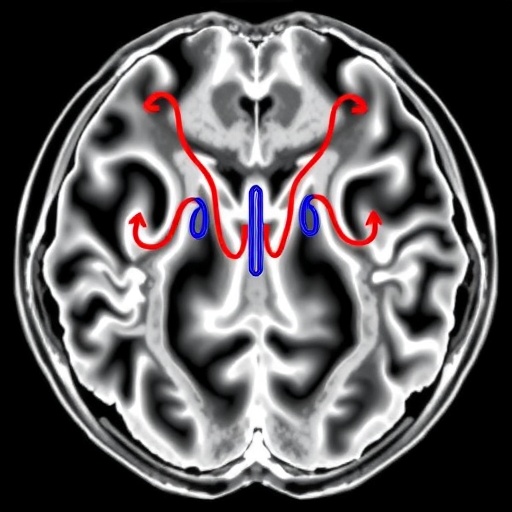
To overcome constraints of spaceflight research, the investigators combined Doppler ultrasound with three-dimensional pseudo-continuous arterial spin labeling (3D PC-ASL) magnetic resonance perfusion imaging. Ultrasound provided real-time, portable metrics of blood flow dynamics in the bilateral internal carotid and vertebral arteries, while MRI quantified regional cerebral blood flow across anterior and posterior brain territories.

After 12 hours, heart rate dropped significantly, while internal carotid artery parameters remained largely stable. In contrast, the vertebral arteries showed clear early sensitivity: left vertebral peak systolic and mean velocities decreased, and the right vertebral resistance index, pulsatility index, and systolic-to-diastolic ratio all declined. These patterns point to vertebrobasilar modulation as an early hallmark of simulated microgravity physiology.

MRI perfusion results revealed a significant reduction in cerebral blood flow across all brain regions, with a stronger decrease in the posterior circulation than in the anterior circulation. The posterior network—supplying brainstem, cerebellum, and occipital areas—may therefore be particularly vulnerable during early microgravity exposure, potentially increasing risks related to balance and spatial orientation.

Statistical coupling analysis showed that posterior-circulation cerebral blood flow changes were independently associated with multiple vertebral ultrasound parameters, including the left vertebral systolic-to-diastolic ratio, changes in end-diastolic velocity, and right vertebral blood flow volume. Baseline cerebral blood flow levels, rather than acute arterial adjustments, primarily predicted anterior-circulation changes.

Overall, the study provides mechanistic evidence that regional cerebral perfusion declines during short-term microgravity are not uniform, and that vertebral artery hemodynamics carry predictive information about posterior brain perfusion. This supports the feasibility of using ultrasound-based biomarkers for early cerebral blood-flow assessment when MRI is impractical in space.

While promising, the researchers note limitations: the cohort included only young men, subjective symptom tracking (e.g., dizziness) was not collected, and no in-flight validation was performed. Future work is expected to broaden demographics, incorporate mission-relevant comparisons, and test on-orbit ultrasound deployment for long-duration crew health monitoring.

Subject of Research: Cerebrovascular coupling during early simulated microgravity; predictive use of Doppler ultrasound for cerebral blood flow.
Article Title: Not provided.
News Publication Date: 24-Jun-2026
Web References: http://dx.doi.org/10.34133/space.0671
References: 10.34133/space.0671
Image Credits: Space: Science & Technology

Keywords

Microgravity, head-down bed rest, Doppler ultrasound, vertebral artery, cerebral blood flow, arterial spin labeling, posterior circulation, space medicine, brain health monitoring

Tags: 3D PC-ASL MRI for cerebral perfusioncarotid and vertebral artery blood flow changescerebral blood flow measurement techniques in space researchcerebrovascular coupling mechanisms in microgravityDoppler ultrasound in microgravity studiesearly cerebrovascular response to simulated microgravityimpact of microgravity on visual and cognitive functionsmicrogravity-induced headward fluid shiftspostural transition effects on cerebral circulationrapid cerebrovascular adaptation during spaceflightspaceflight cerebral hemodynamicsspaceflight-induced
Share26Tweet16
Previous Post

Wearable ring monitors glucose and ketones in sweat simultaneously

Next Post

Migrating birds create seasonal greenhouse gas hotspots in restored wetlands

Related Posts

Cutting forever-chemical pollution in farmlands at a fraction of costs
Space

Cutting forever-chemical pollution in farmlands at a fraction of costs

July 27, 2026
Rocks from the Moon’s unexplored far side reshape lunar history
Space

Rocks from the Moon’s unexplored far side reshape lunar history

July 26, 2026
UK Leads NASA Mission to Build Instrument for Finding Earth-like Worlds
Space

UK Leads NASA Mission to Build Instrument for Finding Earth-like Worlds

July 26, 2026
Europa Shows Limited Fluid Exchange Between Deep Ocean and Shallow Layer
Space

Europa Shows Limited Fluid Exchange Between Deep Ocean and Shallow Layer

July 26, 2026
Magnetic Signals in Nuclei Reveal How Stars Build Chemical Elements
Space

Magnetic Signals in Nuclei Reveal How Stars Build Chemical Elements

July 26, 2026
Kilometer-Scale Jovian Moon Characterized for Potential JUICE Flyby
Space

Kilometer-Scale Jovian Moon Characterized for Potential JUICE Flyby

July 26, 2026
Next Post
Migrating birds create seasonal greenhouse gas hotspots in restored wetlands

Migrating birds create seasonal greenhouse gas hotspots in restored wetlands

  • Mothers who receive childcare support from maternal grandparents show more

    Mothers who receive childcare support from maternal grandparents show more parental warmth, finds NTU Singapore study

    27656 shares
    Share 11059 Tweet 6912
  • University of Seville Breaks 120-Year-Old Mystery, Revises a Key Einstein Concept

    1061 shares
    Share 424 Tweet 265
  • Bee body mass, pathogens and local climate influence heat tolerance

    682 shares
    Share 273 Tweet 171
  • Researchers record first-ever images and data of a shark experiencing a boat strike

    546 shares
    Share 218 Tweet 137
  • Groundbreaking Clinical Trial Reveals Lubiprostone Enhances Kidney Function

    531 shares
    Share 212 Tweet 133
Science

Embark on a thrilling journey of discovery with Scienmag.com—your ultimate source for cutting-edge breakthroughs. Immerse yourself in a world where curiosity knows no limits and tomorrow’s possibilities become today’s reality!

RECENT NEWS

  • Mental Disorder-Related Deaths Among U.S. Adolescents Rise, 1999–2023
  • OTUB1 Suppresses Autophagy-Dependent Ferroptosis in Liver Cancer by Stabilizing p62
  • Lessons from history guide the future of AI in medical decision-making
  • Stuffed Toys Release PFAS into Saliva, Raising Oral Exposure Concerns

Categories

  • Agriculture
  • Anthropology
  • Archaeology
  • Athmospheric
  • Biology
  • Biotechnology
  • Blog
  • Bussines
  • Cancer
  • Chemistry
  • Climate
  • Earth Science
  • Editorial Policy
  • Marine
  • Mathematics
  • Medicine
  • Pediatry
  • Policy
  • Psychology & Psychiatry
  • Science Education
  • Social Science
  • Space
  • Technology and Engineering

Subscribe to Blog via Email

Enter your email address to subscribe to this blog and receive notifications of new posts by email.

Join 5,146 other subscribers

© 2025 Scienmag - Science Magazine

Welcome Back!

Login to your account below

Forgotten Password?

Retrieve your password

Please enter your username or email address to reset your password.

Log In
No Result
View All Result
  • HOME
  • SCIENCE NEWS
  • CONTACT US

© 2025 Scienmag - Science Magazine

Discover more from Science

Subscribe now to keep reading and get access to the full archive.

Continue reading
