


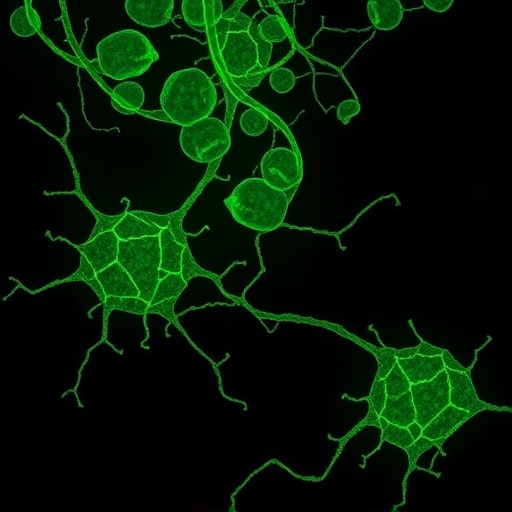
When a virus invades the lungs, the immune system mounts a noisy, visible battle: fever, inflammation, floods of white blood cells rushing to the site of infection. But long after the symptoms fade, a quieter drama continues in the tissue itself. Immunologists have known for decades that the lung retains a garrison of tissue-resident memory T cells—specialized sentinels that station themselves at the sites where pathogens first entered and stand ready to respond instantly upon reinfection. What has remained far murkier is how these sentinels are established in the first place, and who, in the crowded cellular landscape of healing lung tissue, helps them take up their posts and stay functional for months. A new study published in Nature Immunology now identifies an unexpected ally in this process: a long-lived population of monocyte-derived cells that persists in the lung for more than four months after influenza infection and provides essential molecular support for building protective CD8+ T cell memory.
Monocytes are typically cast as short-lived first responders. Produced in the bone marrow, they circulate in the blood and pour into tissues during the earliest phases of inflammation, where they differentiate into macrophages and dendritic cells that engulf debris, present antigens and amplify alarm signals. The conventional view holds that their contributions are concentrated in the acute phase of infection and that, once inflammation subsides, most of them die off or leave. The new research, led by Kim Lim, Anita Dahal, Xin Lv and colleagues, upends that timeline. Using a reporter mouse model in which the chemokine receptor CCR2—one of the defining markers of inflammatory monocytes—is tagged with a fluorescent tdTomato protein, the team could track the fate of newly recruited CCR2+ monocytes long after the initial inflammatory wave had passed. Remarkably, a subset of these cells did not vanish. They persisted in the lung for more than four months following influenza virus infection, differentiating into a distinct memory-stage population that retained the tdTomato lineage tag but had changed dramatically in phenotype and function.
The persistence itself was striking, but the real question was whether these long-lived cells mattered. To find out, the researchers selectively depleted the memory-stage CCR2-tdTomato+ population in mice that had already recovered from influenza. The consequences were immediate and profound. The formation of lung CD8+ tissue-resident memory T cells—the CD8+ TRM population that constitutes the front line of defense at the respiratory mucosa—was significantly reduced. More importantly from a clinical standpoint, the animals lost a substantial measure of heterosubtypic protection: the broad, strain-crossing immunity that allows a survivor of one influenza subtype to mount a faster, stronger response against a different subtype. This form of protection depends heavily on memory CD8+ T cells, which recognize conserved internal viral proteins shared across strains, and its loss after depletion of the monocyte-derived cells demonstrated that the innate compartment was providing something the T cells could not supply for themselves.
The mechanism, when the team dissected it, turned out to be elegantly local. The memory-stage CCR2-tdTomato+ cells were not scattered randomly through the lung. Instead, they colocalized physically with CD8+ TRM cells, occupying the same tissue niches, positioned side by side with the very sentinels they appeared to support. This spatial arrangement suggested a direct, partner-like relationship rather than a diffuse, whole-organism effect. Molecular analysis revealed the key: these monocyte-derived cells were high expressors of galectin-1, a beta-galactoside-binding lectin with well-documented immunoregulatory activities. The cells secreted galectin-1 into their immediate microenvironment, and the lectin acted on CD8+ T cells in two complementary ways. First, galectin-1 directly activated CD8+ T cells, providing a stimulatory signal to the memory precursors residing in the tissue. Second—and perhaps more subtly—galectin-1 enhanced the ability of the CD8+ T cells to sense transforming growth factor-β, or TGF-β, the cytokine that serves as the master instructive signal for tissue-resident identity.
That second function deserves particular attention, because TGF-β sensing is precisely what separates a circulating memory T cell from a bona fide tissue-resident one. TGF-β drives the transcriptional program that upregulates CD69 and CD103, retains T cells within epithelial and mucosal barriers, and installs the characteristic residency phenotype that allows TRM cells to respond at the site of pathogen entry rather than waiting for reinforcements from the circulation. By amplifying TGF-β responsiveness in nearby CD8+ T cells, the galectin-1-high monocyte-derived population was, in effect, teaching freshly arriving T cells how to become permanent residents of the lung. Without that instruction, the memory precursor pool thinned out, the residency program faltered, and the protective garrison never fully assembled. The study thus delineates an innate immune “help” pathway—analogous in spirit to the well-known help that CD4+ T cells provide to CD8+ memory responses, but executed here by an innate myeloid cell acting through a secreted lectin.
The therapeutic implications emerge naturally from the mechanism. If the natural galectin-1 signal improves the generation of functional lung-resident memory CD8+ T cells, then supplying galectin-1 artificially during vaccination might do the same in a controlled, clinically useful way. The researchers tested exactly that hypothesis. When recombinant galectin-1 was administered intranasally as an adjuvant alongside influenza vaccination, mice developed superior memory CD8+ T cell responses compared with animals vaccinated without the lectin. In other words, a single innate-derived molecule, delivered directly to the respiratory mucosa where it normally acts, was sufficient to strengthen the quality of the memory pool that vaccines against respiratory pathogens most want to build. This is a notable result because influenza vaccines in current use primarily elicit antibodies against the highly variable surface protein hemagglutinin, leaving T-cell-mediated, strain-transcending protection comparatively underdeveloped. An adjuvant that specifically promotes the lung TRM compartment could complement existing antibody-centered strategies and move the field toward vaccines that confer broader, longer-lasting mucosal immunity.
The findings also contribute to a broader rethinking of the myeloid lineage. Over the past decade, researchers have increasingly recognized that macrophages and monocyte-derived cells are not a homogeneous mass of phagocytes but a collection of specialized populations with niche-specific, sometimes non-redundant functions. The present work extends that principle into the memory phase of immunity, showing that a monocyte lineage cell can survive for months, adopt a stable memory-stage identity, and perform a nurturing role in the adaptive immune architecture of the tissue. It raises obvious follow-up questions that the field will now pursue: How do these cells survive the harsh, inflammatory environment of the recovering lung? Do they retain antigen or encounter it through local antigen-presenting networks? Do analogous galectin-1-high, monocyte-derived populations exist in other barrier tissues such as the gut, skin or brain, where TRM cells likewise depend on local niches? And how is the galectin-1 effect calibrated, given that the same lectin can exert immunosuppressive functions in other contexts, including tumor microenvironments?
There are, of course, important caveats in translating the work to humans. The experiments were conducted in mice, and while the CCR2-to-memory-stage differentiation pathway is conserved in principle across mammals, the longevity and phenotype of human monocyte-derived lung populations after influenza infection remain to be characterized—no small challenge given the difficulty of sampling lung tissue in recovering patients. Galectin-1 is also a molecule with pleiotropic biology; it binds a wide array of glycosylated receptors and can influence angiogenesis, fibrosis and T cell apoptosis depending on dose, context and oligomerization state. Any clinical development as a mucosal adjuvant would need to navigate those complexities carefully. Still, the concept demonstrated here—that innate help can be chemically packaged and delivered to the airway to engineer better T cell memory—is a compelling proof of principle that reframes how respiratory vaccines might be designed.
For immunologists studying tissue residency, the study supplies a missing piece of the assembly instructions. The lung CD8+ TRM niche, it turns out, is not built by T cells alone but co-constructed by an unexpectedly durable innate partner that lingers long after the emergency is over, whispering galectin-1 into its immunological neighborhood. For vaccine developers, it suggests that the future of mucosal immunization may lie not only in choosing the right antigen but in recruiting—or supplying—the right innate helpers. And for the broader public, it offers a vivid reminder that immunity is not merely a memory stored in the adaptive archive, but a living, physical ecosystem in the tissue, in which cell neighbors of vastly different lineages collaborate to keep the walls guarded long after the battle has been forgotten by the rest of the body.
Cite Scienmag News
Kristina Jarvis. (September 4, 2026). Galectin-1-high monocytes boost functional memory CD8+ T cell generation. Scienmag. https://scienmag.com/galectin-1-high-monocytes-boost-functional-memory-cd8-t-cell-generation/
Kristina Jarvis. "Galectin-1-high monocytes boost functional memory CD8+ T cell generation." Scienmag, 4 September 2026, https://scienmag.com/galectin-1-high-monocytes-boost-functional-memory-cd8-t-cell-generation/. Accessed 4 September 2026.
Kristina Jarvis. "Galectin-1-high monocytes boost functional memory CD8+ T cell generation." Scienmag. September 4, 2026. https://scienmag.com/galectin-1-high-monocytes-boost-functional-memory-cd8-t-cell-generation/


