


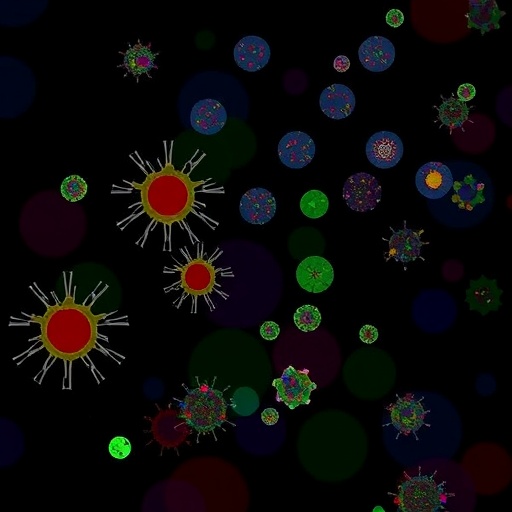
In a groundbreaking new study published in Nature Communications, researchers have unveiled unprecedented insights into the heterogeneity and dynamic behavior of dengue virus (DENV)-specific CD8+ T cells during dengue infection. This study, representing a major leap forward in our understanding of the cellular immune response to dengue, elucidates the intricate interplay between viral antigen stimulation and T cell differentiation that underpins both protective immunity and immunopathology in dengue virus infection.
Dengue virus, a mosquito-borne flavivirus affecting hundreds of millions globally each year, often elicits a complex immune response. While antibodies have traditionally been considered the main defenders, it has become increasingly clear that T cell immunity, particularly that mediated by CD8+ cytotoxic T lymphocytes, plays a pivotal role in controlling viral replication and shaping disease outcomes. Yet, until now, the precise phenotypic and functional diversity of these T cells and their temporal evolution during infection were poorly understood.
The research team, led by Srikor, Sungnak, and Trakoolsoontorn, employed cutting-edge single-cell multi-omics approaches to profile thousands of DENV-specific CD8+ T cells extracted from patients at various stages of acute dengue infection and subsequent convalescence. This granular analysis uncovered unexpected heterogeneity within the CD8+ T cell compartment, revealing distinct subpopulations characterized by unique transcriptional signatures, epigenetic landscapes, and metabolic profiles.
Crucially, the findings demonstrate that the CD8+ T cell response evolves dynamically throughout the course of infection. Early acute-phase cells exhibited a highly activated, proliferative phenotype with increased expression of cytotoxic effector molecules such as granzyme B and perforin, alongside metabolic adaptations favoring aerobic glycolysis. This effector state is instrumental in rapidly curbing viral replication in the initial phase of infection.
As the infection progressed into the resolution and memory phases, the composition of the CD8+ T cell pool shifted markedly. The researchers observed expansion of subsets expressing markers traditionally associated with long-lived memory T cells, including TCF1 and CD127. These cells displayed gene expression patterns indicative of metabolic flexibility and quiescence, which are hallmarks of durable immunological memory capable of rapid reactivation upon re-exposure to DENV antigens.
One of the most compelling revelations was the heterogeneous nature of exhaustion within DENV-specific CD8+ T cells. Unlike classical chronic viral infections, where T cells often undergo terminal exhaustion marked by high levels of inhibitory receptors and functional impairment, dengue virus elicited a spectrum of intermediate exhaustion states. These states preserved partial effector functions and permit a poised readiness for viral clearance without inducing overt immune dysfunction, suggesting a nuanced regulatory mechanism balancing antiviral activity and tissue damage.
The study also sheds light on the spatial distribution of these diverse CD8+ T cell subsets. Detailed analyses suggested migration patterns between peripheral blood and lymphoid tissues, providing insights into how localization impacts the function and fate of dengue-specific T cells. This spatial dynamic is critical for understanding how the immune system orchestrates localized tissue responses while sustaining systemic immunity.
Moreover, the data highlight the influence of viral antigen load and inflammatory milieu on shaping the CD8+ T cell landscape. High antigen titers and pro-inflammatory signals promoted effector differentiation, while resolution of inflammation favored memory formation and metabolic reprogramming. This underlines the importance of finely tuned immune regulation to avoid immunopathology while ensuring viral control.
From a translational perspective, these findings have profound implications for dengue vaccine and therapeutic development. Defining the precise phenotypic and functional attributes of protective CD8+ T cell responses opens avenues for rational design of vaccines capable of eliciting robust, long-lasting cellular immunity. Current dengue vaccines primarily focus on antibody induction; integrating T cell-targeted strategies could dramatically enhance efficacy and durability.
Furthermore, understanding the heterogeneity of exhaustion states informs the potential use of immunomodulatory therapies to reinvigorate suboptimal T cell responses in severe dengue cases. Strategies leveraging immune checkpoint blockade or metabolic manipulation may restore antiviral functions without exacerbating immunopathology, a delicate balance underscored by this study.
This research sets a new benchmark in dengue immunology by combining high-resolution single-cell technologies with longitudinal patient sampling, providing a comprehensive temporal and functional atlas of DENV-specific CD8+ T cells. The insights gained have broad relevance not only for dengue but also for other acute viral infections where T cell immunity plays a crucial role in disease resolution.
Looking forward, further studies are required to validate these findings across diverse patient populations and dengue virus serotypes. Additionally, integrative analyses incorporating other immune subsets such as CD4+ T cells, B cells, and innate immune cells will be vital to build a holistic view of the immune landscape during dengue infection.
In sum, this seminal work significantly advances our mechanistic understanding of how human CD8+ T cells respond to dengue virus infection. By illuminating the complexity and dynamism of the antiviral T cell response, it paves the way for novel immunotherapeutic interventions and improved vaccine designs that could ultimately reduce the global burden of dengue fever and its severe manifestations.
Cite Scienmag News
Kristina Jarvis. (June 3, 2026). Diverse Dynamics of Dengue-Specific CD8+ T Cells. Scienmag. https://scienmag.com/diverse-dynamics-of-dengue-specific-cd8-t-cells/
Kristina Jarvis. "Diverse Dynamics of Dengue-Specific CD8+ T Cells." Scienmag, 3 June 2026, https://scienmag.com/diverse-dynamics-of-dengue-specific-cd8-t-cells/. Accessed 3 September 2026.
Kristina Jarvis. "Diverse Dynamics of Dengue-Specific CD8+ T Cells." Scienmag. June 3, 2026. https://scienmag.com/diverse-dynamics-of-dengue-specific-cd8-t-cells/


