


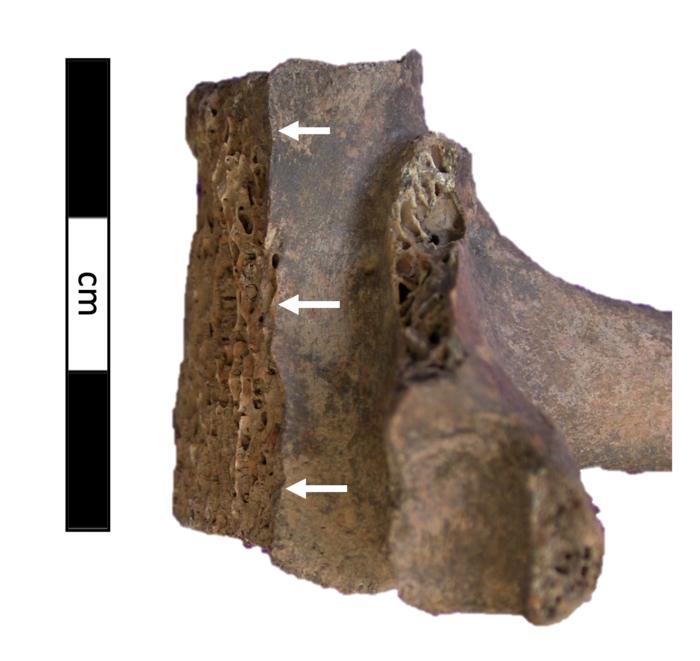
In a groundbreaking study published in Frontiers in Environmental Archaeology, researchers have unveiled remarkable insights into the technological innovations of the Bronze Age in the southern Levant, centering on butchering practices and the adoption of metal tools. Using cutting-edge imaging analysis, specifically scanning electron microscopy (SEM), this research sheds unprecedented light on how ancient communities in the region transitioned to utilizing metal implements for processing animal carcasses, marking a significant leap in technological sophistication.
The research centers on the archaeological site of Tell Aphek, Israel, where an array of faunal remains—specifically vertebrae from goats and sheep—display distinct chop marks produced by metal axes. These chop marks, clearly distinguishable from those made by lithic tools, provide direct evidence of early metal tool use in butchering tasks. This revelation challenges previously held assumptions about the pace and nature of technological adoption during the Bronze Age, underscoring the regional variations in tool use and butchery methods.
Butchering, a fundamental activity tied closely to human survival and culinary practices, is often overlooked in archaeological research in favor of more conspicuous artifacts. However, by focusing on the microscopic details of bone modifications, the researchers were able to characterize the morphological features of metal tool cuts, differentiating them from earlier stone tool marks. The study utilized SEM imaging to capture high-resolution images that reveal microstriations and surface textures indicative of metal tool engagement, providing a rigorous analytical method to trace technological changes.
The shift from stone to metal tools during the Bronze Age revolutionized many aspects of daily life, but the specifics of this transition often remain elusive. The SEM evidence presented from Tell Aphek reveals that metal axes were not only introduced but effectively integrated into butchering technologies, facilitating more efficient dismemberment of animal carcasses. These tools allowed for cleaner, more precise cuts, likely improving processing speed and yield – factors crucial to Bronze Age societies balancing growing populations with subsistence needs.
This study also situates its findings within broader socio-economic and cultural frameworks. The emergence of metal butchering tools points to a sophisticated metalworking tradition within the southern Levant, necessitating specialized knowledge in metallurgy alongside subsistence activities. The integration of metal in routine butchery may reflect both technological ingenuity and potential social differentiation in access to such tools, implicating evolving trade networks and community structures.
Moreover, the researchers emphasize the importance of using SEM to identify and differentiate tool marks, as traditional macroscopic analyses often fall short in distinguishing between material types. This methodology provides archaeologists a nuanced lens to revisit previously analyzed faunal assemblages, potentially rewriting regional technological timelines. The high precision of SEM imaging enables detailed measurements of cut edge morphology, including micro-chipping and polish patterns specific to metal implements.
The archaeological context of Tell Aphek offers a rich tapestry for understanding the technological trajectory during the Bronze Age. As a site with well-stratified deposits, it offers a chronological sequence showing gradual but distinct cultural and technological shifts. The presence of metal tool marks in later layers confirms the increasing adoption of metal tools, illustrating a technological diffusion likely connected with expanded trade routes and cross-cultural interactions within the ancient Near East.
Importantly, these tangible marks on animal bones carry implications beyond mere technological description; they speak to prehistoric economic practices, dietary preferences, and possibly ritual behavior. The choice of butchering tools affects not only the efficiency of meat processing but also the types of cuts produced, influencing food consumption and waste management within ancient communities.
This research reiterates the dynamic nature of Bronze Age societies and highlights how technological innovations permeated everyday tasks such as butchering, which in turn impacted broader economic and social realms. By leveraging modern imaging technologies, archaeologists gain deeper insight into how these societies adapted and evolved, painting a comprehensive picture of life in the ancient southern Levant.
Furthermore, the implications of this study extend to methodological advances in archaeological science. SEM as a standard tool for identifying tool mark provenance opens new avenues for research, enabling retrospective analyses of collections worldwide, augmenting our understanding of technological adoption worldwide, not just in the Levant.
The findings exemplify interdisciplinary collaboration, drawing from archaeology, materials science, and anthropology to decode human past through microscopic evidence. This approach not only enhances the resolution with which we view technological shifts but also fosters innovation in archaeological practice, encouraging future studies to adopt similar high-tech analytical frameworks.
Ultimately, the investigation into metal chop marks on animal vertebrae from Tell Aphek transcends a mere technical discovery; it evidences a transformative period where human ingenuity leveraged new materials to reshape subsistence strategies and social organization. This study stands as a testament to the profound impact of metallurgy in shaping human history, captured on the very bones of the past.
Cite Scienmag News
Courtney Benton. (May 19, 2026). Ancient Bone Butchering Marks Reveal When Bronze Age People Adopted Advanced Metal Tools. Scienmag. https://scienmag.com/ancient-bone-butchering-marks-reveal-when-bronze-age-people-adopted-advanced-metal-tools/
Courtney Benton. "Ancient Bone Butchering Marks Reveal When Bronze Age People Adopted Advanced Metal Tools." Scienmag, 19 May 2026, https://scienmag.com/ancient-bone-butchering-marks-reveal-when-bronze-age-people-adopted-advanced-metal-tools/. Accessed 3 September 2026.
Courtney Benton. "Ancient Bone Butchering Marks Reveal When Bronze Age People Adopted Advanced Metal Tools." Scienmag. May 19, 2026. https://scienmag.com/ancient-bone-butchering-marks-reveal-when-bronze-age-people-adopted-advanced-metal-tools/


