


In a groundbreaking study published in the esteemed journal Current Biology, researchers have uncovered astonishing genetic links tracing back to the 17th-century colonial settlement of St. Mary’s City, Maryland. This research, a collaborative effort between the 23andMe Research Institute, Harvard University, and the Smithsonian Institution, illuminates the profound legacy of early English settlers and their living descendants, significantly advancing our understanding of American colonial history through the lens of genetics.
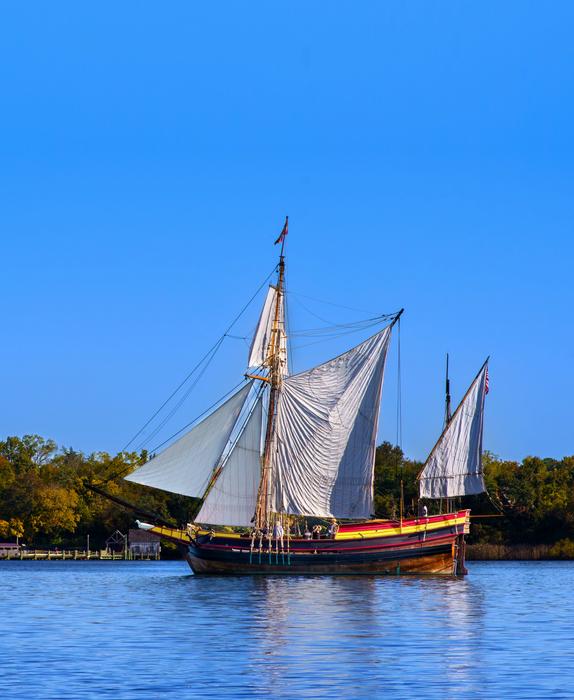
St. Mary’s City, established in 1634 as the first English settlement in Maryland, has long been recognized as a pivotal location in early American history. Despite its historical prominence and relatively rich archival record, substantial lacunae remain concerning the identities and movements of its original inhabitants. This study leverages cutting-edge ancient DNA technologies combined with expansive genealogical databases, ushering in a new era of interdisciplinary historical analysis.
The research team conducted a meticulous DNA analysis of 49 individuals interred in St. Mary’s City’s Chapel Field cemetery, a burial ground used between 1634 and 1730. By examining these ancient genetic samples, scientists were able to reconstruct familial relationships within this early population and trace the migratory paths of their descendants across North America. The findings also elucidate patterns of migration within the nascent United States, revealing genetic echoes of documented historical population movements, such as the migration of Maryland Catholics to Kentucky in the late 18th and early 19th centuries.
Central to the study is an innovative framework that synergizes genomic data with reported family histories. This approach enabled researchers to propose identities for individuals previously unknown from historical records. Among these is the extraordinary potential identification of Thomas Greene, Maryland’s second colonial governor, who perished in 1651. This identification not only sheds light on a significant historical figure but also exemplifies the unprecedented power of combining genetic data with archival and archaeological evidence.
Integral to this exploration is the analysis of the Calvert family lineage, the influential dynasty behind Maryland’s founding. The study revisits DNA recovered from rare lead coffins excavated from the Brick Chapel, linking Philip Calvert, the colony’s fifth governor, his spouses Anne Wolseley Calvert and Jane Sewell, and their offspring. Interestingly, the genetic evidence uncovered connections extending to three additional Calvert family members interred within the cemetery. This discovery refines our understanding of familial structures and succession within colonial leadership.
Moreover, beyond the Calverts, the research delineates extended familial networks involving at least five other families inhabiting the settlement, including a rare multigenerational lineage. The presence of such familial continuity amidst high mortality rates underscores the demographic and social dynamics in early colonial Maryland, intricacies that were previously inaccessible through conventional historical methodologies.
The genomic signatures unearthed were not confined to Maryland alone. By comparing the ancient DNA to genetic data from over 11.5 million contemporary individuals within the 23andMe database, the team traced the ancestral origins of settlers back predominantly to Great Britain, focusing on specific regions such as western England and Wales, alongside a notable Irish component. These insights paint a nuanced picture of the colonial population’s heterogeneity and its ethno-geographic roots.
Beyond ancestral mapping, this comparative genetic approach unearthed a robust signal corresponding to a well-documented post-Revolutionary War migration of Catholics from Maryland to Kentucky. This migration, extending from approximately 1780 to 1820, was driven by a confluence of economic hardship and religious discrimination. The genetic trail resulting from this movement underscores the broader potential of genomics to validate and deepen interpretations of historical demographic events.
At the heart of these revelations lies a novel methodological paradigm: utilizing broad genetic connections to living people to infer the identities of long-deceased individuals whose names have been lost to history. This strategy was exemplified by the triangulation of genetic and genealogical data to identify the likely remains of Governor Thomas Greene, his wife Anne, and their son Leonard—figures previously enigmatic yet critical in Maryland’s colonial narrative.
This integrative research relied heavily on collaboration with descendant communities who trace their heritage directly to the original Ark and Dove settlers of 1634. Their active engagement provided invaluable genealogical context and personal histories, substantially enriching the interpretative power of the genetic data. This partnership between scientists and community stakeholders represents a model for ethically responsible and socially inclusive historical genetics research.
The implications of this work extend far beyond Maryland. It offers a replicable blueprint for unraveling historical mysteries worldwide by combining ancient DNA analysis with large-scale genetic databases and traditional genealogical scholarship. The possibilities for reconstructing lost identities, elucidating migration patterns, and filling gaps in the historical record are vast and transformative.
From a technical perspective, the study utilized state-of-the-art ancient DNA extraction and sequencing methods optimized for the often degraded remains typical of early colonial cemeteries. Analytical pipelines incorporated identity-by-descent (IBD) segment analysis, allowing precise detection of genetic relatedness at various degrees of kinship. These data were then integrated with self-reported genealogies contributed by database participants, enabling refined triangulation of ancestral lineages and demographic reconstructions.
Professor David Reich of Harvard Medical School, a senior author on the study, emphasized the unique synergy between written records and genetic data. While colonial archives provide an indispensable framework, the ancient DNA analyses uncover connections invisible to traditional historiography, demonstrating that genetics can reveal unexpected dimensions of our shared past.
Looking ahead, the research team anticipates applying this integrative genetic-genealogical methodology to other foundational American sites and historical populations. Such endeavors promise to deepen our collective grasp of early American history, the formation of communities, and the enduring genetic legacies that continue to shape identities across the United States.
The 250th anniversary of the United States offers a poignant moment to reflect on the scientific advances that bridge past and present. This innovative study not only enriches historical knowledge but also underscores the profound connections binding millions of present-day Americans to their colonial ancestors, fostering a renewed appreciation for the nation’s complex and interwoven heritage.
News Publication Date: 14-May-2026
Web References:
Cite Scienmag News
Juliet Wilcox. (May 14, 2026). Historical DNA Links 1.3 Million Descendants to 17th-Century Maryland Settlers, Potentially Revealing Colony’s Second Governor. Scienmag. https://scienmag.com/historical-dna-links-1-3-million-descendants-to-17th-century-maryland-settlers-potentially-revealing-colonys-second-governor/
Juliet Wilcox. "Historical DNA Links 1.3 Million Descendants to 17th-Century Maryland Settlers, Potentially Revealing Colony’s Second Governor." Scienmag, 14 May 2026, https://scienmag.com/historical-dna-links-1-3-million-descendants-to-17th-century-maryland-settlers-potentially-revealing-colonys-second-governor/. Accessed 4 September 2026.
Juliet Wilcox. "Historical DNA Links 1.3 Million Descendants to 17th-Century Maryland Settlers, Potentially Revealing Colony’s Second Governor." Scienmag. May 14, 2026. https://scienmag.com/historical-dna-links-1-3-million-descendants-to-17th-century-maryland-settlers-potentially-revealing-colonys-second-governor/


