


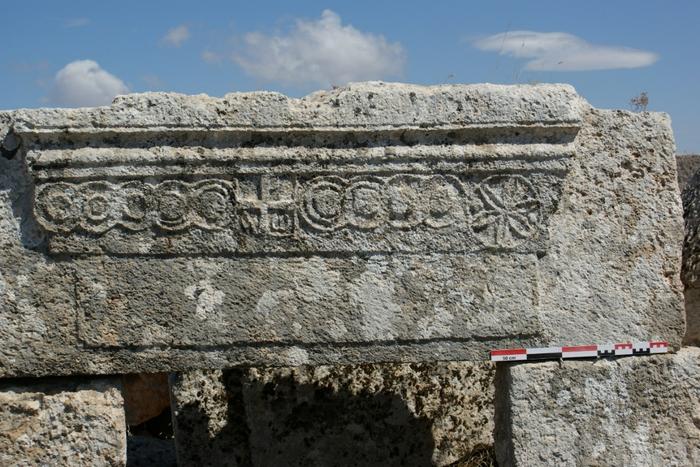
In the limestone expanses of northern Syria, the remnants of Roman-Byzantine villages stand as silent testaments to a complex and layered past, weathered by nearly a millennium and a half of natural and human forces. These deserted settlements, frequently termed the “Dead Cities,” provide invaluable architectural and archaeological data, offering deep insights into rural life during Late Antiquity. Among these, the village of Ba’ude emerges as a particularly compelling example due to its preserved domestic architecture and its role in illustrating the socioeconomic and cultural fabric of the early Byzantine era.
Recent comprehensive architectural surveys conducted in 2024 have shed new light on Ba’ude’s built environment, focusing intently on residential buildings rather than imposing religious structures, which historically monopolized archaeological attention. This paradigm shift towards domestic architecture not only rebalances our understanding of the community’s daily rhythms but also highlights the intricate spatial organization and localized construction methods typical of the era. The research, recently published in the Bulletin of the American Society of Overseas Research, meticulously catalogues the materials, methods, and stylistic elements that defined village life across this volcanic mountain terrain.
Located amid the rugged topography that straddles the Aleppo and Idlib governorates, Ba’ude was once a vibrant Syriac-speaking Christian community. The village’s architecture encapsulates a range of building typologies — from residential houses and courtyards to the rare presence of a pyramidal tomb, press, and church remnants. Although these structures vary dramatically in their states of preservation, they collectively reveal an advanced, albeit regionally distinct, vernacular tradition that skillfully exploited local limestone. The study’s findings underscore the adaptability and resourcefulness of the builders, who harmonized aesthetic preferences, functional needs, and material constraints in ways not previously appreciated in such rural contexts.
One standout architectural feature is the village’s prolific use of stone carved with a simplicity that belies its durability and craftsmanship. This simplicity contrasts with the ornate facades that characterize better-known urban Byzantine constructions, pointing to a rural aesthetic optimized for pragmatic longevity rather than ostentation. Notably, the study identified three distinctive main entrances, each marked by a small vestibule topped with an arch—a recurring architectural motif that appeared to serve both defensive and symbolic functions, thereby negotiating privacy and accessibility within these homes.
Intriguingly, the preservation disparities between ground and upper floors afford valuable clues regarding construction techniques and the forces of deterioration over time. Ground-floor rooms tend to retain more intact facades, whereas upper floors have often succumbed to collapse. This degradation pattern informs both the structural challenges ancient builders faced and the current fragility threatening the village’s physical integrity. Courtyard walls, once central to domestic spatial planning, have mostly vanished, save for fragmented foundations that hint at the original expanse of private open spaces integral to daily life.
The pyramidal tomb, located on the southwestern edge of Ba’ude, stands as a remarkably well-preserved anomaly amid generalized ruin. Its enduring profile not only exemplifies the funerary architecture of the region but also signals the hierarchical and perhaps religious nuances embedded in village spatiality. Conversely, the near-complete destruction of the village church underscores the uneven preservation conditions exacerbated by both natural wear and recent human activities. Damage from the 14-year civil war that ended in 2024, alongside ongoing agricultural clearance and unauthorized expansion, continues to erode the archaeological fabric, blurring the line between ruin and cultural survival.
Beyond its immediate archaeological value, Ba’ude’s domestic architecture provides a strategic framework for heritage conservation policies and sustainable development. The research articulates a compelling argument for integrating these ancient spatial paradigms within modern urban planning and cultural tourism strategies. By emphasizing the role of local communities as custodians of their heritage, the study advocates for participatory preservation approaches that honor both cultural identity and economic vitality. This community-centered strategy resonates particularly strongly in a region where decades of conflict have disrupted traditional modes of stewardship.
The implications of this research extend further, highlighting the urgent need for comprehensive international cooperation and institutional support. With the Gerda Henkel Foundation presently the sole major entity invested in safeguarding these endangered villages, there exists a pressing call for enhanced funding, technical expertise, and logistical commitment from broader global heritage organizations. Ensuring the long-term protection of Ba’ude and its sister settlements demands a concerted effort that transcends geopolitical complexities, recognizing that the loss of these sites constitutes an irreparable diminution of humanity’s shared past.
Significantly, the inscription of 36 of these archaeological sites on the UNESCO World Heritage List in 2011 affirms their exceptional universal value. This designation not only acknowledges the historical and cultural richness of the Dead Cities but also frames them as paradigmatic examples of ancient rural settlement systems. The villages embody a complex interplay of human-environment interaction over centuries, revealing integrated spatial, economic, and agricultural practices centered on viticulture and olive cultivation that sustained local populations.
At the core of this preservation challenge lies the fundamental insight that domestic architecture encapsulates the most vivid records of past social life. Unlike monumental religious institutions, these everyday spaces directly reflect the lived experiences, social hierarchies, and material cultures of historical populations. The study’s detailed analysis of Ba’ude’s residences, therefore, fills a critical gap, enabling a more holistic reconstruction of Roman-Byzantine rural life and architecture.
In concluding reflections, the study’s authors poignantly emphasize that every stone carries the memory of a bygone civilization. The progressive loss of these architectural remains, whether through war, neglect, or land use pressures, erases not only physical structures but also the intangible narratives interwoven with human identity and cultural continuity. Ba’ude, in its current precarious state, epitomizes both the profound historical significance of the Dead Cities and the existential vulnerability of cultural heritage amidst modern challenges.
Cite Scienmag News
Courtney Benton. (May 20, 2026). Innovative Construction Methods and Domestic Designs Unearthed in Roman-Byzantine Syrian Villages. Scienmag. https://scienmag.com/innovative-construction-methods-and-domestic-designs-unearthed-in-roman-byzantine-syrian-villages/
Courtney Benton. "Innovative Construction Methods and Domestic Designs Unearthed in Roman-Byzantine Syrian Villages." Scienmag, 20 May 2026, https://scienmag.com/innovative-construction-methods-and-domestic-designs-unearthed-in-roman-byzantine-syrian-villages/. Accessed 3 September 2026.
Courtney Benton. "Innovative Construction Methods and Domestic Designs Unearthed in Roman-Byzantine Syrian Villages." Scienmag. May 20, 2026. https://scienmag.com/innovative-construction-methods-and-domestic-designs-unearthed-in-roman-byzantine-syrian-villages/


