


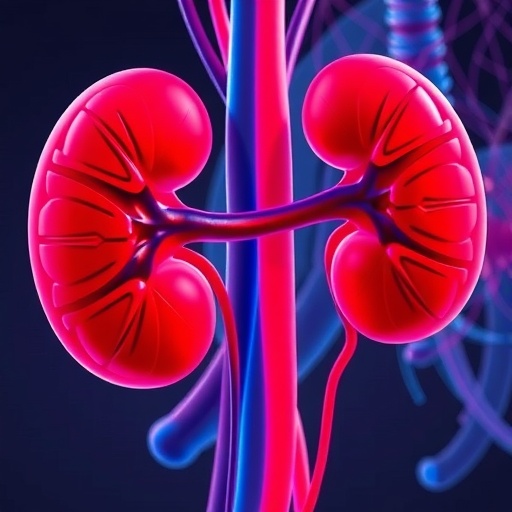
In a recent groundbreaking clinical investigation published in JAMA, researchers have rigorously examined the efficacy and safety profile of low-dose rivaroxaban in patients suffering from advanced chronic kidney disease (CKD) with an elevated cardiovascular risk. The study meticulously addressed a crucial gap in nephrology and cardiovascular medicine, exploring whether anticoagulation in this vulnerable population could translate into tangible cardiovascular benefits without an unacceptable increase in bleeding complications.
Chronic kidney disease represents a complex clinical challenge, with a notoriously high burden of cardiovascular morbidity and mortality. The pathophysiological interplay between renal dysfunction and cardiovascular risk factors often culminates in heightened incidences of thrombotic events. This has propelled the hypothesis that anticoagulants such as rivaroxaban, a direct factor Xa inhibitor, might mitigate such risks by preventing thrombus formation and subsequent adverse cardiovascular outcomes.
The multicenter trial enrolled individuals exhibiting advanced stages of CKD, defined by severely diminished glomerular filtration rates, alongside established elevated cardiovascular risk profiles. Participants were randomized to receive low-dose rivaroxaban or a matching placebo, with the primary endpoint being a composite measure of major cardiovascular events, including myocardial infarction, stroke, and cardiovascular death. Secondary endpoints involved rigorous monitoring for adverse events, particularly bleeding complications.
Over the course of the trial duration, data analyses revealed a sobering outcome. Low-dose rivaroxaban did not confer a statistically significant reduction in the incidence of the composite cardiovascular endpoint compared to placebo. This finding challenges prior assumptions that anticoagulation necessarily improves cardiovascular outcomes in advanced CKD patients, underscoring the nuanced pathophysiology intrinsic to this demographic.
Conversely, the safety data illuminated a markedly increased risk of major bleeding events within the rivaroxaban cohort. These bleeding complications, encompassing gastrointestinal hemorrhage as well as other severe bleeding requiring medical intervention, highlight the precarious balance between therapeutic benefit and adverse effects in anticoagulant use in renal impairment contexts.
The heightened bleeding risk is particularly consequential in the CKD population, where uremic platelet dysfunction and vascular fragility inherently predispose patients to hemorrhagic complications. Rivaroxaban’s renal clearance mechanisms further complicate dosing and drug accumulation, potentially exacerbating bleeding risks when renal function is compromised.
This trial’s insights are pivotal in informing clinical decision-making, cautioning against extrapolating anticoagulation benefits observed in the general population uncritically to advanced CKD patients. The findings advocate for personalized therapeutic strategies that carefully weigh hemorrhagic risks against incremental cardiovascular protection, rather than a one-size-fits-all approach.
Moreover, the study challenges the ongoing prescription practices and clinical guidelines that might endorse low-dose anticoagulation in similar patient subsets. It impels further investigation into alternative therapeutic avenues, perhaps focusing on antiplatelet agents, novel drug combinations, or non-pharmacological interventions tailored specifically for renal-impaired individuals.
Mechanistically, the study elucidates the complex interplay between anticoagulant pharmacodynamics and the altered hemostatic milieu in CKD. Factors such as endothelial dysfunction, altered coagulation cascade protein synthesis, and uremic toxins create a hemostatic environment where traditional anticoagulants may exert unpredictable effects, necessitating cautious clinical application.
In academic and medical communities, this study has stirred considerable interest, encouraging nephrologists, cardiologists, and pharmacologists to collaboratively revisit and refine risk stratification algorithms. A multidisciplinary approach could optimize therapeutic indices, fostering safer, evidence-based anticoagulant use in this fragile cohort.
Furthermore, this trial’s presentation at the 63rd European Renal Association Congress underscores its significance within the nephrology field, inviting robust discourse and future research initiatives. Follow-up studies might delve into genetic polymorphisms affecting drug metabolism in CKD, dosimetric adjustments, or emerging agents with enhanced safety profiles.
In conclusion, while low-dose rivaroxaban demonstrates theoretical promise in mitigating cardiovascular risks, this comprehensive clinical evaluation decisively indicates no substantial benefit in patients with advanced CKD accompanied by high cardiovascular risk, juxtaposed against a troubling increase in major bleeding. These findings necessitate reevaluation of current anticoagulant strategies in renal disease and herald a paradigm shift towards more nuanced, personalized therapeutic regimens.
News Publication Date: [Not specified in the provided information]
Web References: DOI:10.1001/jama.2026.9379
References: Detailed author contributions, conflict of interest disclosures, and funding information are available in the original JAMA publication.
Cite Scienmag News
Jerry Hayes. (June 4, 2026). Low-Dose Rivaroxaban and Its Impact on Cardiovascular Events in Advanced Kidney Disease. Scienmag. https://scienmag.com/low-dose-rivaroxaban-and-its-impact-on-cardiovascular-events-in-advanced-kidney-disease/
Jerry Hayes. "Low-Dose Rivaroxaban and Its Impact on Cardiovascular Events in Advanced Kidney Disease." Scienmag, 4 June 2026, https://scienmag.com/low-dose-rivaroxaban-and-its-impact-on-cardiovascular-events-in-advanced-kidney-disease/. Accessed 5 September 2026.
Jerry Hayes. "Low-Dose Rivaroxaban and Its Impact on Cardiovascular Events in Advanced Kidney Disease." Scienmag. June 4, 2026. https://scienmag.com/low-dose-rivaroxaban-and-its-impact-on-cardiovascular-events-in-advanced-kidney-disease/


